Vietnam: From Ha Long Bay to the Mekong Delta
Travel guide · editorialA vacation in Vietnam usually follows the country's long coastline from north to south: from the limestone karsts of Ha Long Bay to the imperial city of Hue and the lantern-lit lanes of Hội An, all the way to the floating markets of the Mekong Delta. Along the way, you'll likely eat as well and as cheaply as almost anywhere, and despite the length of the country, a trip to Vietnam is easy to organize.
Regions from the Mountains to the Delta
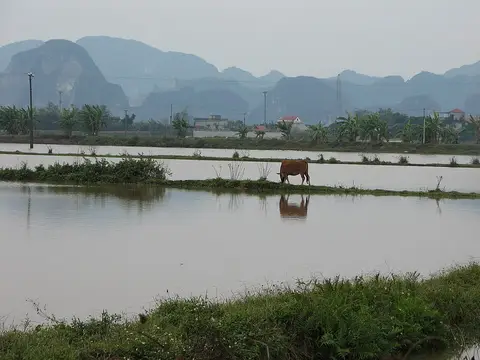
Vietnam stretches more than 1,600 kilometers from north to south, and at its narrowest point it is barely 50 kilometers wide. The north is shaped by the Red River Delta and the mountains along the border with China and Laos, where rice terraces climb the slopes around Sa Pa and Mù Cang Chải and ethnic groups such as the Hmong and Dao come to the markets in their own traditional dress. In the northeast, thousands of limestone islands rise from the green water of Ha Long Bay and Lan Ha Bay, and inland the scene repeats itself in Ninh Bình, where rowboats glide between rice paddies and rock formations. Central Vietnam consists of a narrow coastal strip with beaches and the Truong Son Mountains at its back; Phong Nha National Park is home to some of the largest caves in the world. The Central Highlands around Dalat are cool and green, with pine forests and coffee plantations, and in the south the Mekong branches into a network of canals, orchards, and rice fields.
Hanoi, Hue, and Hội An
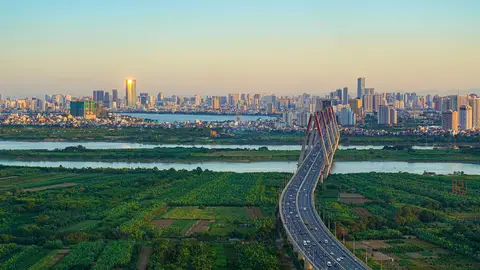
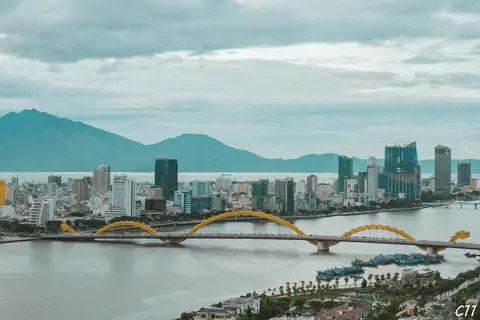
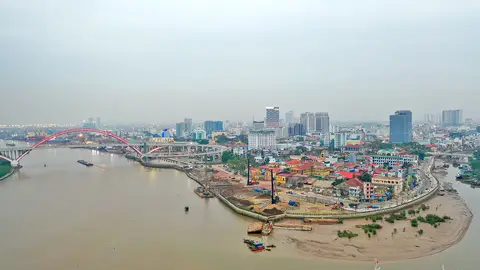
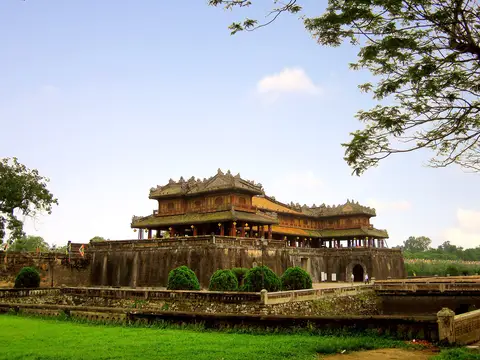
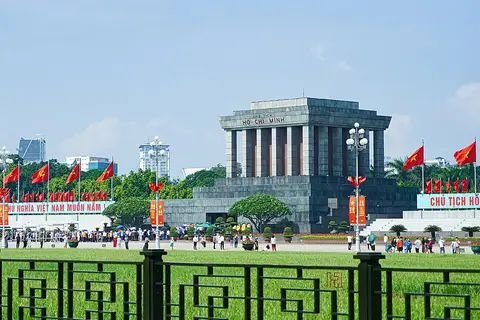
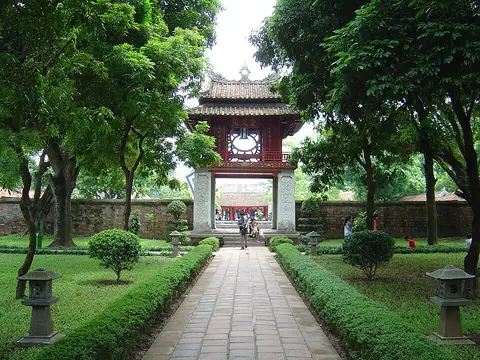
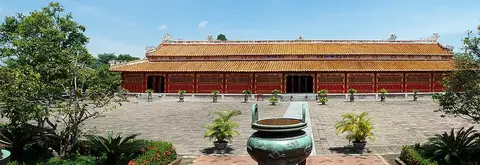
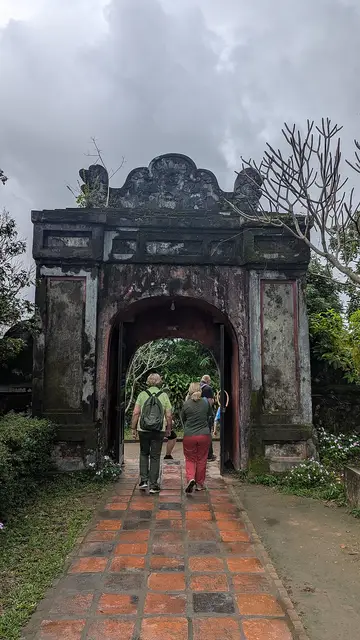
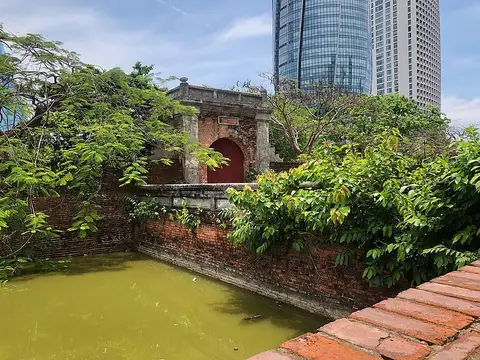
Hanoi is the capital and feels surprisingly unhurried despite its millions of motorbikes. In the Old Quarter, the streets still bear the names of the guilds that once sold silk, silver, or paper here; in the morning, people gather for tai chi at Hoàn Kiếm Lake, and on weekend evenings the lakeshore becomes a pedestrian zone. The Temple of Literature, Vietnam's first university, dating from the 11th century, the Ho Chi Minh Mausoleum, and the Museum of Ethnology offer insight into the country's history. The port city of Hải Phòng is the jumping-off point for Cát Bà Island and Lan Ha Bay. Hue was the seat of the Nguyễn emperors from 1802 to 1945; the Citadel with its Purple Forbidden City and the imperial tombs along the Perfume River are among the most important sights in Vietnam. To the south, the Hai Van Pass, with spectacular views, leads to Đà Nẵng, a modern coastal city with a long beach and the Marble Mountains. Half an hour farther on lies Hội An, where old merchant houses, Chinese assembly halls, and the Japanese Bridge glow in the light of silk lanterns in the evening. Tailors here make custom suits and dresses within a day.
Ho Chi Minh City and the South
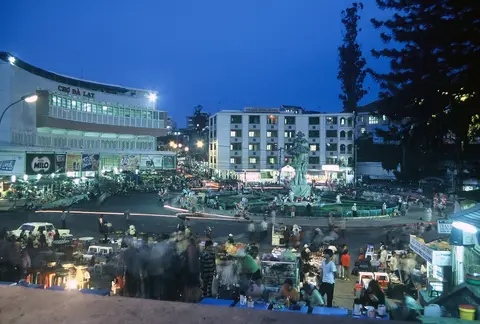
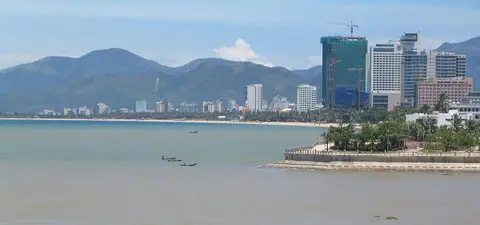
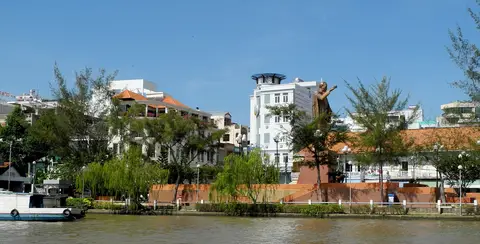
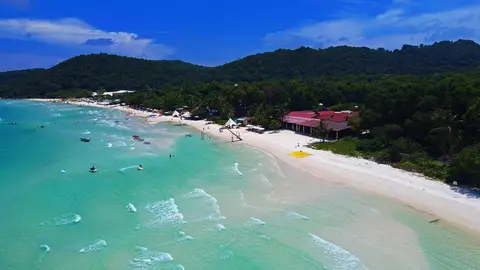
Ho Chi Minh City, still often called Saigon in everyday life, is the country's largest and economically strongest city. French colonial buildings such as Notre-Dame Cathedral and the Central Post Office stand alongside skyscrapers, the War Remnants Museum powerfully shows the consequences of the Vietnam War, and at Bến Thành Market and the street kitchens of District 4 you can eat your way through southern Vietnamese cuisine. A day trip leads to the Củ Chi Tunnels, which guerrilla fighters dug over hundreds of kilometers. In the Mekong Delta, Cần Thơ is the best base: early in the morning, boats pull up at the Cái Răng floating market, loaded with pineapples, pumpkins, and watermelons, with vendors hanging a sample of their goods from a pole. Phú Quốc Island in the Gulf of Thailand has developed into the south's main beach destination, with sandy beaches, pepper gardens, and the fish sauce for which the island is famous. Dalat in the highlands was once the French summer retreat and is now popular for hiking, flower growing, and strawberries, while Nha Trang on the coast is known for diving and long beaches.
Culture, History, and Everyday Life
Vietnam's history has been shaped by a thousand years of Chinese rule, the independent kingdom of Đại Việt, the French colonial period, and the wars of the 20th century. These influences blend together in everyday life: Confucian ancestor altars in almost every home, baguettes from the French tradition, pagodas next to Catholic churches. In the south, the Cao Đài religion, with its colorful main temple in Tây Ninh, is a special feature. The most important festival is Tết, the Lunar New Year in January or February, when many businesses close for several days, families gather, and peach and kumquat trees decorate the streets. If you travel during this period, book transportation well in advance. Vietnam is officially a socialist one-party state, but travelers hardly notice this; you'll meet a young, enterprising population.
Eating and Drinking in Vietnam
Vietnamese cuisine is fresh, rich in herbs, and varies greatly by region. Phở, the noodle soup with beef or chicken broth, originated in the north and is eaten for breakfast in Hanoi, where you'll also find bún chả, grilled pork with rice noodles and sweet-and-sour sauce. Hue is known for the spicy beef noodle soup bún bò Huế and a variety of small rice cakes from the imperial kitchen, Hội An for cao lầu and probably the best bánh mì in the country. In the south, the cooking is sweeter; people eat cơm tấm with broken rice and grilled pork chop, or bánh xèo, crispy pancakes that you wrap in lettuce leaves. Meals are often eaten on low plastic stools by the side of the road. Coffee is a passion: strong and filtered with condensed milk, as egg coffee in Hanoi, or with coconut. Add to that fresh draft beer for a few cents and sugarcane juice.
Getting There and Getting Around in Vietnam
Vietnam Airlines flies nonstop from Frankfurt and Munich to Hanoi and Ho Chi Minh City; the flight takes about eleven to twelve hours, and connecting flights are available via Bangkok, Singapore, Doha, or Dubai. German citizens can enter visa-free for tourist stays of up to 45 days; for longer trips, an e-visa valid for up to 90 days is available. Check the current entry requirements before you travel. Domestic flights with Vietnam Airlines, Vietjet, or Bamboo Airways are inexpensive and connect Hanoi, Đà Nẵng, Ho Chi Minh City, Phú Quốc, and other cities in one to two hours. The Reunification Express train between Hanoi and Saigon is slow but appealing, especially the coastal stretch between Hue and Đà Nẵng. For overland routes, there are sleeper buses and limousine minibuses. Self-drive rental cars are rare for tourists; instead, you can book a car with a driver or use ride-hailing apps such as Grab.
Best Time to Visit Vietnam
Because the country extends so far from north to south, the best time to visit Vietnam varies by region. The north around Hanoi and Ha Long Bay is dry from October to April, though in December and January it can get quite cool, with temperatures of 59 to 68 degrees Fahrenheit (15 to 20 degrees Celsius) and drizzle; summer is hot and rainy. Central Vietnam, including Hue, Đà Nẵng, and Hội An, is at its best from February to August, with swimming temperatures from April, while from September to December heavy rain, flooding, and typhoons are possible. In the south, including Ho Chi Minh City, the Mekong Delta, and Phú Quốc, the dry season runs from December to April at 86 to 93 degrees Fahrenheit (30 to 34 degrees Celsius), and from May to November there are heavy showers in the afternoon. In the highlands around Dalat, it is mild and spring-like year-round. If you want to see the whole country, February and March usually offer the best compromise.
Vietnam Destinations for a Round Trip
A typical round trip of two to three weeks begins in Hanoi, heads to Ha Long Bay and Ninh Bình, then continues by plane or night train to Hue, Hội An, and Đà Nẵng, on to Ho Chi Minh City and the Mekong Delta, and ends with a few days on the beach at Phú Quốc. Less-visited destinations in Vietnam lie in the far north, where the Hà Giang Loop leads by motorcycle over passes and through deep gorges, and on the coast around Quy Nhơn, where fishing villages and empty beaches still define the scene.