Discover Phú Quốc: Island Beaches, Pepper, and Fish Sauce
Travel guide · editorialVietnam's largest island lies in the Gulf of Thailand, closer to Cambodia than to the Vietnamese mainland. A vacation on Phú Quốc means white-sand beaches, sunsets over the sea, pepper plantations, and one of the world's most famous fish sauces.
From Prison Island to Vacation Island
For a long time, Phú Quốc was a remote island of fishermen and pepper farmers. It is said that Nguyễn Ánh, later Emperor Gia Long, found refuge here from the Tây Sơn rebels in the 18th century. During the Vietnam War, the South Vietnamese regime ran a large prison camp for prisoners of war here; the site is now a memorial. Since the 2000s, the island has developed rapidly: an international airport, large resorts, theme parks, and a cable car have all been built. In 2025, Phú Quốc became a special zone within the new An Giang Province, and the island is set to host the APEC summit in 2027.
Beaches and Sights on Phú Quốc
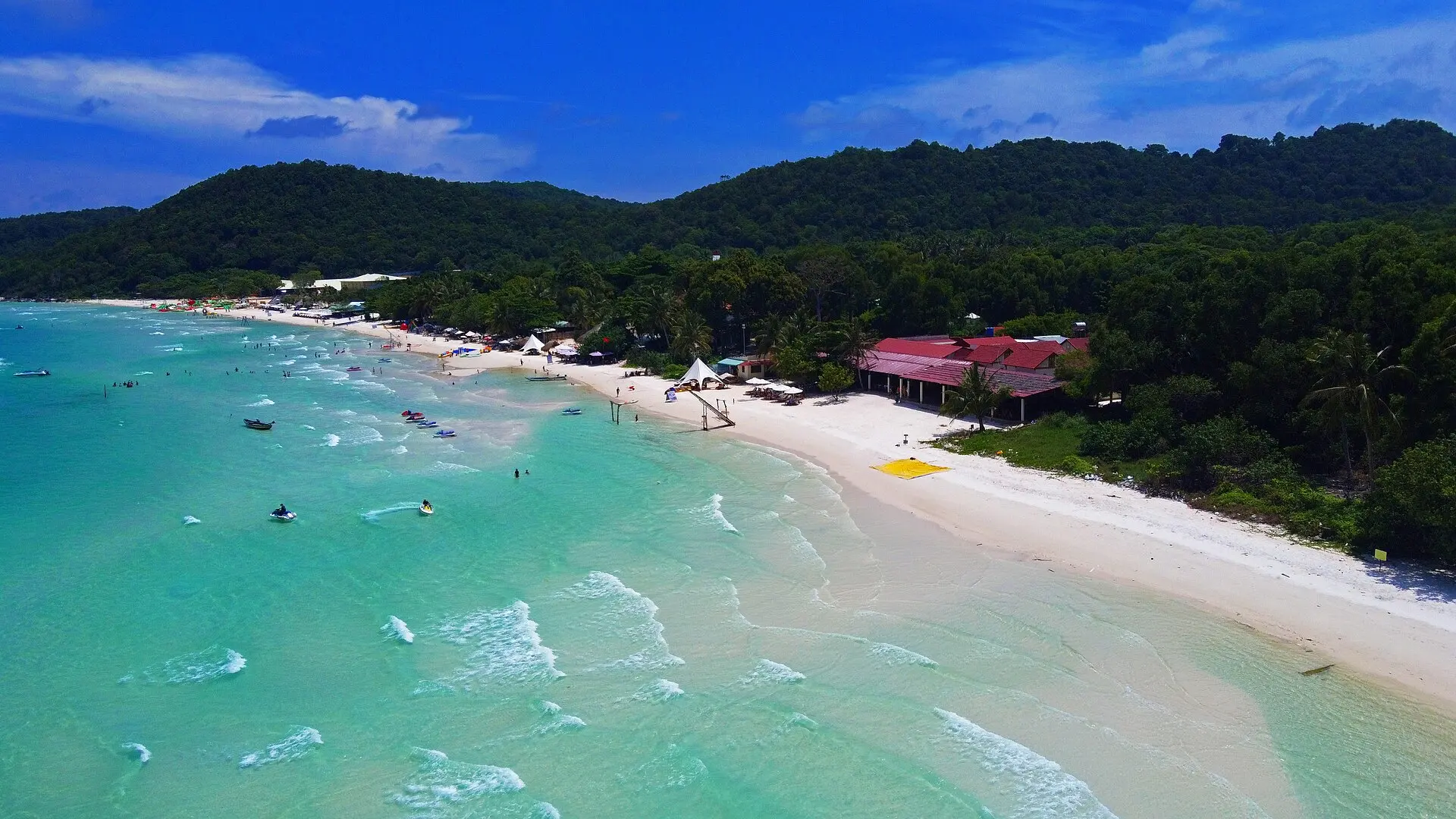
Long Beach on the west coast stretches for about 12 miles (20 km) and is famous for its sunsets. In the southeast you'll find Sao Beach with powder-fine sand and turquoise water, and in the north quieter bays such as Gành Dầu and Rạch Vẹm, where starfish lie in the shallows. The cable car to Hòn Thơm spans five miles (eight km) across the sea to the An Thới Islands, a popular spot for snorkelers. In the south, the Cây Dừa prison museum recalls the war years. In the main town of Dương Đông, you'll find the lighthouse temple Dinh Cậu perched on a rock and a lively night market. Much of the northern part of the island is national park, with rainforest and hiking trails.
Eating on Phú Quốc
Phú Quốc is famous for its fish sauce: anchovies ferment for months in large wooden barrels, and you can see the process at several workshops. Equally well known is the pepper, whose plantations you can visit, as well as sim wine made from rose myrtle berries. The markets offer sea urchin, squid, crab, and gỏi cá trích, a salad of raw herring with coconut and herbs. The Dương Đông night market is the best place to try seafood.
Island Life and Nightlife
Away from the resorts, Phú Quốc shows its old face. In the fishing harbor of Hàm Ninh on the east coast, stilt houses stand over the water, and women sell dried seahorses, crabs, and shell jewelry. In the south near An Thới, the fleet of fishing boats is moored; at night they catch squid under glaring lamps. In the evening, life shifts to Dương Đông and Long Beach, where beach bars with bean bags celebrate the sunset. In the south of the island, Sunset Town, a Mediterranean-style hotel and entertainment town, has sprung up, with evening shows and fireworks.
Getting There and Best Time to Visit
The international airport has connections to Hanoi, Ho Chi Minh City, and numerous cities across Asia, plus some charter flights from Europe. Ferries link the island with Rạch Giá and Hà Tiên on the mainland. Foreign visitors can stay on Phú Quốc visa-free for up to 30 days, as long as they don't leave the island. Once there, you can rent a scooter, take taxis, or use Grab. The best time to visit is between November and April, with calm seas and little rain. From May to October, the southwest monsoon brings waves and showers to the west coast; the beaches in the east are calmer then.