Lào Cai: Sa Pa, Fansipan, and the Terraces of Mù Cang Chải
Travel guide · editorialMist over rice terraces, Hmong women in indigo-blue traditional dress, and the highest peak in Indochina: Lào Cai Province is the classic destination for a mountain vacation in northern Vietnam. Since its merger with Yên Bái in 2025, it also includes the famous terraces of Mù Cang Chải.
Highlands Along the Red River
Lào Cai lies about 300 kilometers northwest of Hanoi on the border with China's Yunnan Province. The Red River enters Vietnam here and cuts a deep valley, along which the border town of Lào Cai and, farther downstream, Yên Bái, the new administrative seat, are located. To the west, the Hoàng Liên Sơn Mountains rise up, topped by Fansipan at 3,143 meters. Numerous ethnic groups live in the valleys: Hmong, Dao, Giáy, Tày, and Xa Phó. The region is sparsely populated, and many villages can only be reached by steep dirt roads.
Sights in Lào Cai
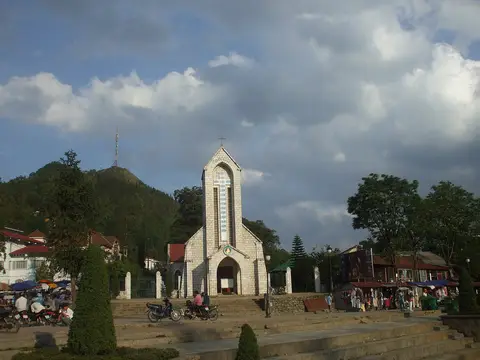
The French developed Sa Pa, at an elevation of around 1,500 meters, into a hill station in the 1920s. The stone church in the center dates from that period; otherwise the town has grown rapidly and is dominated by hotels. If you're looking for peace and quiet, hike down into the Mường Hoa Valley to the villages of Lao Chải and Tả Van, where rice terraces climb the slopes and you can stay overnight with local families. Since 2016, a cable car has run almost to the top of Fansipan; the summit with its temples has since become a mass-tourism destination, while the two-day hike remains a challenge for trekkers. The Ô Quy Hồ Pass offers views of the mountains. In Bắc Hà, a large market takes place every Sunday, where Flower Hmong in brightly colored clothing trade horses, buffalo, and corn liquor.
Mù Cang Chải and Yên Bái
In the southwest of the province lies Mù Cang Chải, whose rice terraces are known around the world from photographs. In September and early October the slopes glow golden, and in May and June the mountains are reflected in the flooded fields. The Khau Phạ Pass is among the most spectacular roads in Vietnam and a paragliding spot. In the Mường Lò Valley near Nghĩa Lộ live the Thái, whose dances and rice fields are just as appealing. Thác Bà Lake near Yên Bái is a large reservoir with islands and caves.
Food and Drink
At the markets you'll find thắng cố, a stew of horse meat and offal that is traditional among the Hmong. Salmon and sturgeon from cold-water farms have become a new specialty in Sa Pa. Other dishes include grilled pork from the mountain villages, bamboo shoots, and the corn liquor from Bắc Hà. In Yên Bái, try xôi ngũ sắc, the five-colored sticky rice of the Thái.
Getting There and Best Time to Visit
The expressway from Hanoi to Lào Cai cuts the trip to Sa Pa to about five to six hours, and many buses run directly. Alternatively, you can take the night train to the border town of Lào Cai and cover the last stretch by bus. The best times to visit are March through May and September and October. In winter it can freeze in Sa Pa, and it occasionally even snows; in summer it rains heavily, and landslides block roads.