Discover Sa Pa: Rice Terraces and Fansipan
Travel guide · editorialMist drifting over rice terraces, market women in indigo-blue traditional dress, and the highest mountain in Indochina right on your doorstep: Sa Pa is northern Vietnam's top hiking destination. A vacation in Sa Pa combines trekking through the valleys of the highland peoples with cool mountain air and a cable car ride up Fansipan.
From Hill Station to Hiking Destination
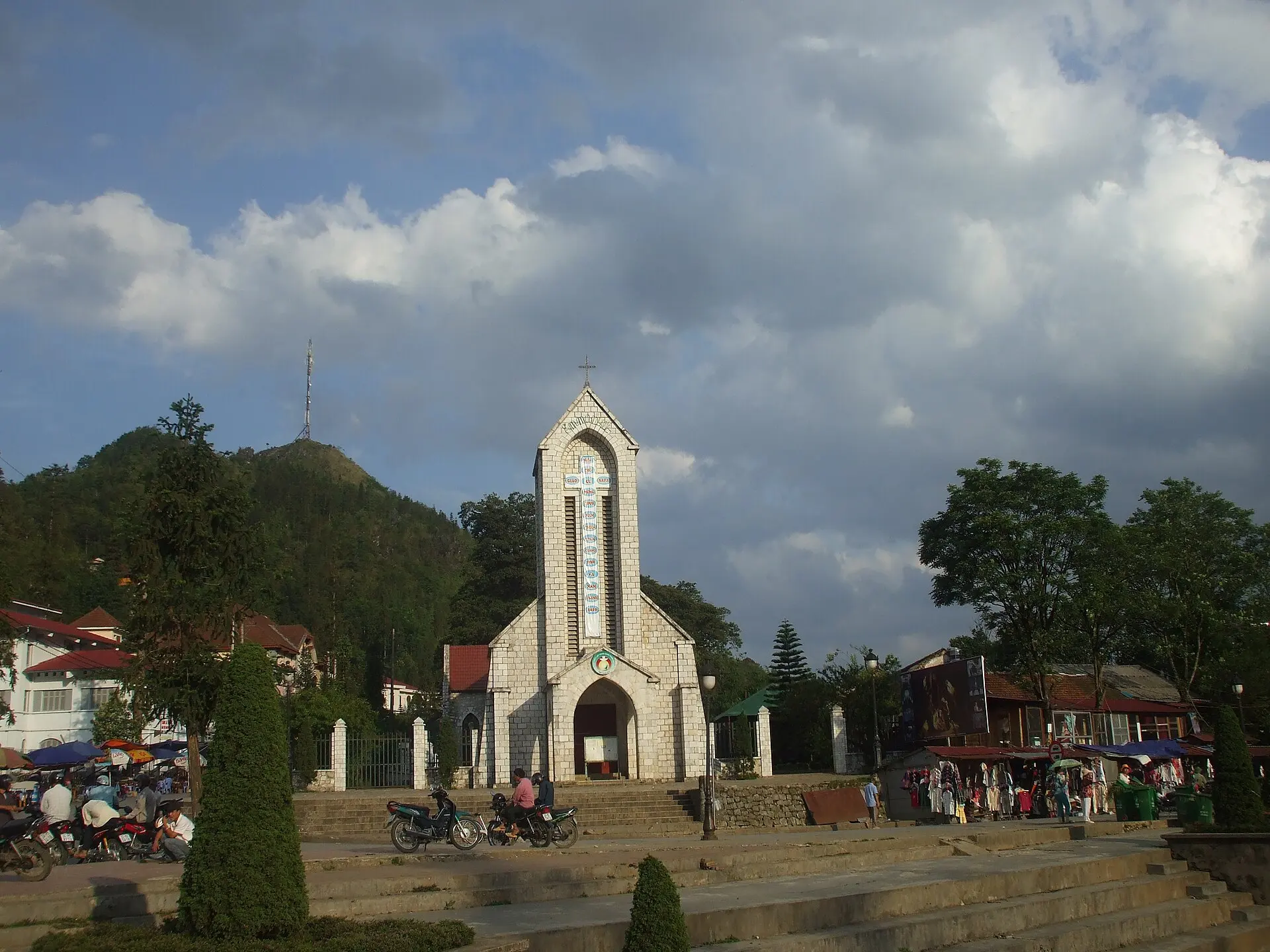
The valleys around Sa Pa have been home for centuries to ethnic groups such as the Black H'Mông, the Red Dao, the Tày, and the Giáy, who have transformed the slopes into elaborate rice terraces. In the early 20th century, the French founded a hill station here to escape the summer heat of the delta, building villas and the stone church. After years of isolation, Sa Pa opened up to travelers in the 1990s, and the town quickly grew into a hub for hotels and homestays. Since 2025, Sa Pa has been part of the enlarged Lào Cai Province, which also absorbed the former Yên Bái Province.
Sights in Sa Pa
At the center of town is the Stone Church, dating from 1895, where vendors and visitors gather on weekends. Next to it is a small lake where people stroll in the evening. Hàm Rồng Mountain, right behind the town, invites you on a short climb with its orchid gardens and viewpoints. The biggest attraction is Fansipan, which at 3,143 meters is the highest mountain in Vietnam, Laos, and Cambodia. A cable car takes visitors almost to the summit in about 20 minutes, where pagodas and a large Buddha statue stand. If you like, you can climb the mountain on foot in two days. A funicular railway runs from the town's station to the base station.
Trekking to the Villages
The classic hike leads into the Mường Hoa Valley to the villages of Lao Chải and Tả Van, where H'Mông and Giáy families live and offer homestays. Centuries-old stone carvings in the valley bear witness to its earliest inhabitants. Other destinations include Cát Cát, a H'Mông village with a waterfall near town, and Tả Phìn, known for the Red Dao herbal baths. Local guides, many of them women, accompany hikers and tell of indigo batik, hemp weaving, and rice farming. For longer treks, sturdy footwear is recommended, as the paths become slippery after rain. On weekends, a trip to the market in Bắc Hà is worthwhile, where Flower H'Mông in vivid colors trade buffalo, horses, and fabrics.
Eating in Sa Pa
In the mountains, the food is hearty: Lẩu cá hồi, a hot pot with salmon and trout from the cool mountain streams, grilled meat on bamboo skewers, thắng cố, a H'Mông stew, and black chicken. In the evening, vendors grill corn on the cob, sweet potatoes, and eggs by the roadside. Corn liquor and warm ginger tea round things out. The restaurants in Sa Pa also serve Western food, many with views over the valley.
Getting There and Best Time to Visit
From Hanoi, you can reach Sa Pa by bus via the expressway in about five to six hours. Alternatively, an overnight train runs to Lào Cai, from where it's an hour by bus or taxi up into the mountains. The best time to visit is spring and fall; in September and October, the rice terraces glow golden yellow before the harvest, and in spring they are freshly flooded. Winters can get bitterly cold, and it occasionally even snows; summers are rainy.