Ho Chi Minh City: A Metropolis Between the Mekong and the Sea
Travel guide · editorialMost people who think of a vacation in Ho Chi Minh City picture streams of motorbikes, street food stalls, and colonial facades. Since the 2025 administrative reform, however, the city province extends far beyond Saigon: the industrial land of Bình Dương and the coast of Vũng Tàu are now part of it. That makes Vietnam's largest metropolis a single administrative unit that combines big-city life, factory floors, and beach weekends.
A City Growing Southward
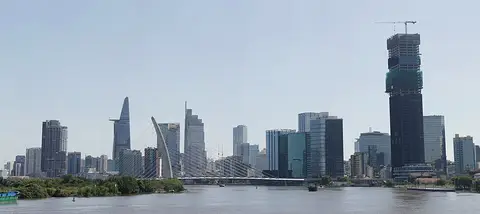
Ho Chi Minh City lies on the Saigon River, about 60 kilometers (37 miles) from where it empties into the South China Sea. To the west begins the flat alluvial plain of the Mekong Delta, and to the north lie the factory towns around Thủ Dầu Một, which belonged to the former Bình Dương Province. To the southeast, the territory stretches across the mangrove forests of Cần Giờ to the Vũng Tàu peninsula and the sandy beaches of Long Hải and Hồ Tràm. About 14 million people now live here on roughly 6,800 square kilometers (2,625 square miles) – more than in any other region of the country. Most locals, by the way, still simply say Saigon, especially when they mean the old city center.
Sights in Ho Chi Minh City
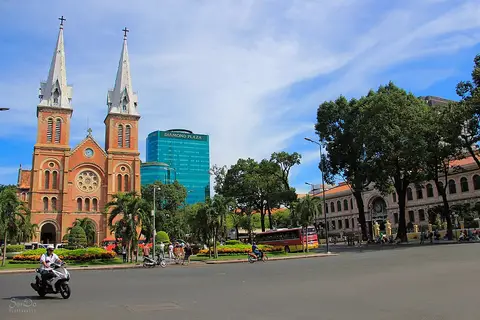
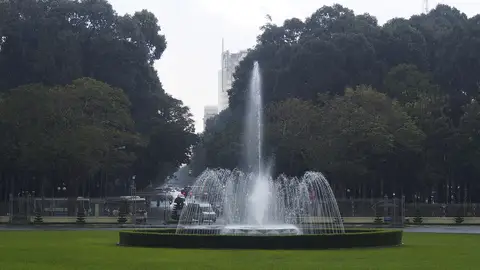
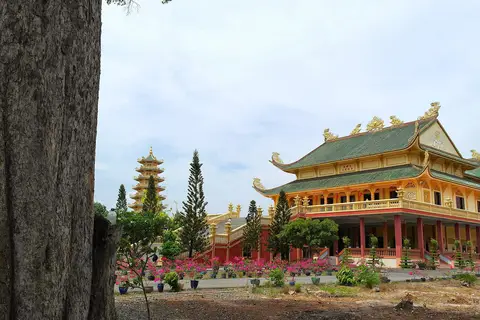
The heart of the city beats in former District 1. Here you'll find Notre-Dame Cathedral, built of red brick with materials from France between 1886 and 1891, and right next to it the yellow-painted Central Post Office with its cast-iron hall. The Independence Palace recalls April 30, 1975, when North Vietnamese tanks rolled through its gates. If you want to understand the war years from the Vietnamese perspective, visit the War Remnants Museum, whose photographs deeply move many visitors. A counterpoint is Bến Thành Market with its clock tower, and in the evening the Nguyễn Huệ pedestrian street, where families stroll and teenagers dance. In Chợ Lớn, the Chinese-influenced district, the Thiên Hậu and Bà Thiên Hậu pagodas are fragrant with coils of burning incense. About 70 kilometers (43 miles) to the northwest, the Củ Chi Tunnels lead underground, a sprawling network used by the Viet Minh and later the National Liberation Front.
Coast and Surroundings: Vũng Tàu, Long Hải, Hồ Tràm
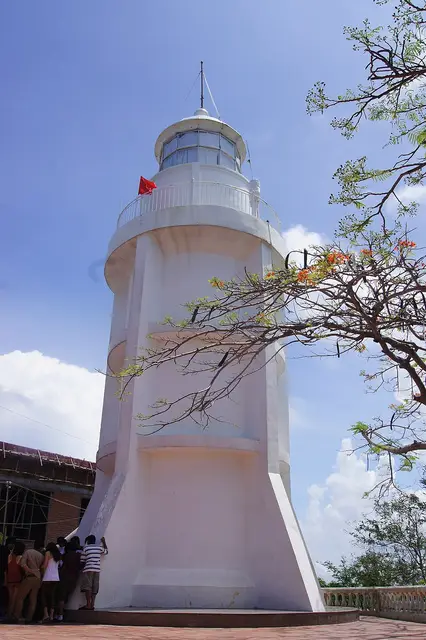
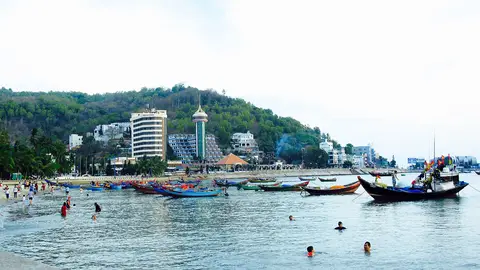
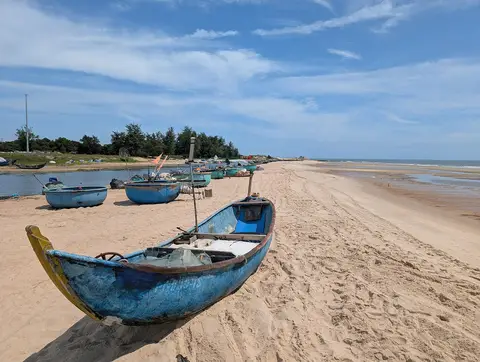
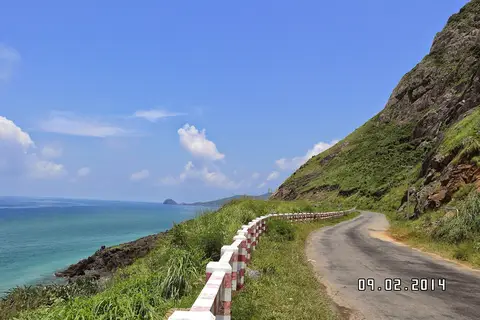
Since the incorporation of Bà Rịa–Vũng Tàu, the city has a real coastline. Vũng Tàu, known in colonial times as Cap Saint-Jacques, is the classic weekend getaway for Saigon residents: on the local hill Núi Nhỏ, a 32-meter (105-foot) statue of Christ spreads its arms, the lighthouse offers views over the bay, and fish restaurants line Bãi Sau beach. Things are quieter in Long Hải and along the long beaches of Hồ Tràm, where resorts nestle among casuarina trees. Bà Rịa is the sober administrative town behind the coast, and the island of Côn Đảo, with its prison history and turtle beaches, also belongs to the city province and can be reached by plane. The Cần Giờ mangrove reserve, a UNESCO biosphere reserve, is home to macaques and saltwater crocodiles.
Eating and Drinking in Saigon
Hardly any city in Asia eats so much on the street. For breakfast there's cơm tấm, broken rice with grilled pork chop and a fried egg, or a bowl of phở, which is served sweeter here and with more herbs than in Hanoi. Bánh mì, the baguette with pâté and pickled vegetables, costs little on every corner. In the evening, friends meet for ốc, clams and snails in tamarind or coconut sauce, along with iced coffee with condensed milk, cà phê sữa đá. If you want to sample your way through, you can take a motorbike food tour through neighborhoods like Bàn Cờ or District 4. In Vũng Tàu, the specialty is bánh khọt, small crispy rice pancakes with shrimp.
Getting Around and Getting There
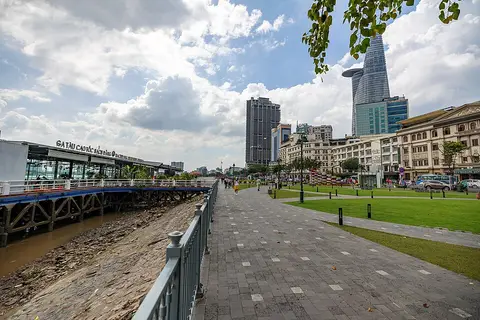
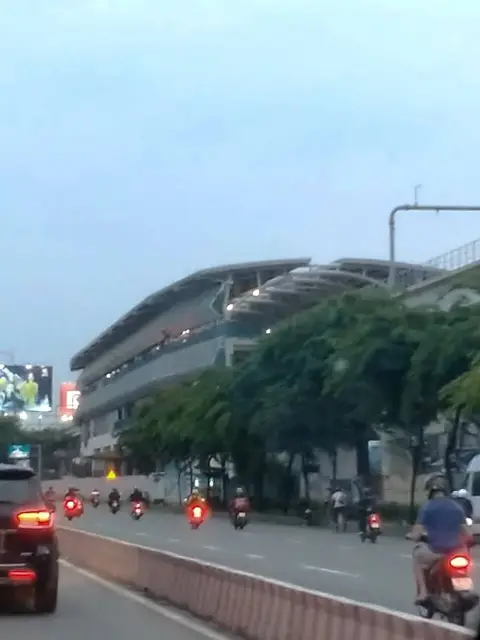
Tân Sơn Nhất Airport (SGN) lies in the middle of the urban area and is usually reached from Europe with a connection in Asia or the Gulf; the new Long Thành mega-airport in neighboring Đồng Nai Province is meant to relieve it in the future. Since late 2024, the first metro line has run from Bến Thành Market to Thủ Đức. Otherwise, the best way to get around is with the Grab app by motorbike or car. Speedboats to Vũng Tàu leave from Bạch Đằng Wharf and take about two hours; by expressway it's about as quick. The Reunification Express to Hanoi departs from Saigon Station.
Best Time to Visit Ho Chi Minh City
The climate is tropical and hot year-round, around 80 to 95 °F. The best time to visit is during the dry season from December to April, though March and April get sticky and hot. From May to November, strong afternoon showers sweep through almost daily, briefly flooding the streets but drying off quickly afterward. Around the Tết New Year festival in January or February, Nguyễn Huệ Street is decked out with flowers, but many shops close for a few days.