
Hải Phòng: Port City, Cát Bà, and the Hải Dương Countryside
Travel guide · editorialHải Phòng is northern Vietnam's gateway to the sea, a port and industrial city that is still well worth a stop thanks to Cát Bà Island and Lan Hạ Bay. Since 2025, the old province of Hải Dương, with its pagodas and lychee orchards, has been part of it as well. A trip to Hải Phòng combines colonial boulevards, karst islands, and the cultural landscape of the delta.
Between the Delta and the Gulf
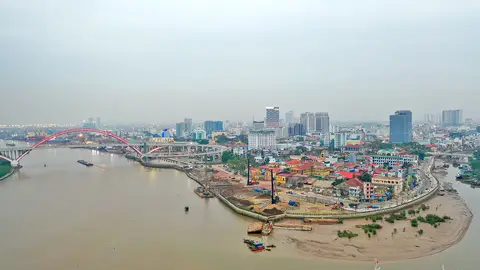
The city-province lies about 120 kilometers (75 miles) east of Hanoi in the estuary of the Red River system, where numerous branches such as the Cấm and the Bạch Đằng flow into the sea. To the east, the limestone islands of the Cát Bà archipelago rise from the Gulf of Tonkin, and to the south the Đồ Sơn Peninsula juts into the sea. West of the city begins the flat rice plain of the former Hải Dương Province, which was merged into Hải Phòng in July 2025. Hải Dương city and the hills of Chí Linh are located there. In total, around 4.6 million people live in the region. Far out in the gulf, the small island of Bạch Long Vĩ also belongs to the city's territory.
The City of Flame Trees
Hải Phòng is known as the "City of Red Flame Trees" because in May and June the phượng trees along its boulevards burst into bright red bloom. The French expanded the port starting in 1874, and the Opera House of 1912 on the central square, the colonial-style City Museum, and several old trading houses date from that era. Today the port is one of the largest in the country, and the city is correspondingly busy. The banks of the Bạch Đằng River are historic ground: here, in 938 and 1288, Vietnamese commanders defeated Chinese and Mongol fleets by driving iron-tipped stakes into the riverbed. Dư Hàng Pagoda and Hàng Kênh Communal House with its wood carvings show the traditional side of Hải Phòng.
Sights in Hải Phòng: Cát Bà and Lan Hạ Bay
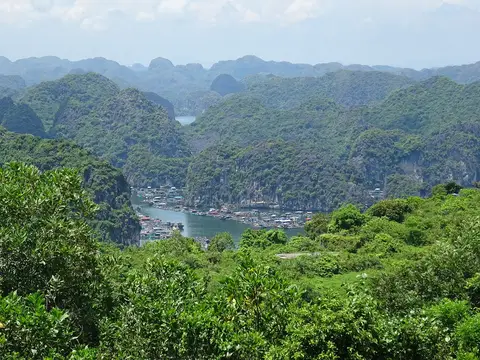
The main attraction is Cát Bà Island, the largest in the archipelago and, together with Ha Long Bay, part of a UNESCO World Heritage Site since 2023. More than half of the island is taken up by a national park, home to the critically endangered golden-headed langur, one of the rarest primates in the world with only about seventy animals left. Hiking trails lead to viewpoint summits, and Hospital Cave served as a bombproof field hospital during the Vietnam War. Lan Hạ Bay, southeast of the island, is a quieter counterpart to Ha Long Bay: kayaks glide between karst peaks, floating fishing villages sit in sheltered lagoons, and you can swim at small beaches. The coast at Đồ Sơn is a traditional seaside resort with colonial villas and a casino, and a buffalo fighting festival is held here in the fall.
Hải Dương and the Hinterland
The western part is rich in religious sites. In Chí Linh you'll find Côn Sơn, where the scholar Nguyễn Trãi lived in the 15th century, and Kiếp Bạc Temple honors the general Trần Hưng Đạo, victor over the Mongols. Thanh Hà is famous for its lychees, harvested in June. In the villages of the delta, water puppet theater is performed, an art form that originated in this area.
Food and Drink
Hải Phòng has a cuisine all its own. Bánh đa cua, a soup of wide red rice noodles in field crab broth, is the city's signature dish. Nem cua bể, large square spring rolls filled with sea crab, are part of every family celebration. On Cát Bà, you can eat mantis shrimp, oysters, and fish fresh from the floating farms. Bánh đậu xanh, a sweet mung bean pastry, comes from Hải Dương and is a popular souvenir.
Getting There and Best Time to Visit
Cát Bi Airport (HPH) is served by domestic flights from Saigon and Đà Nẵng, and from Hanoi you can get here by expressway in about 90 minutes. Ferries and speedboats to Cát Bà depart from Bến Gót or Đình Vũ harbor; a cable car now also connects the island with the mainland. The best time to visit is in spring from April to June and in fall from September to November. Summers are hot and typhoons are possible, while winters are foggy and cool.