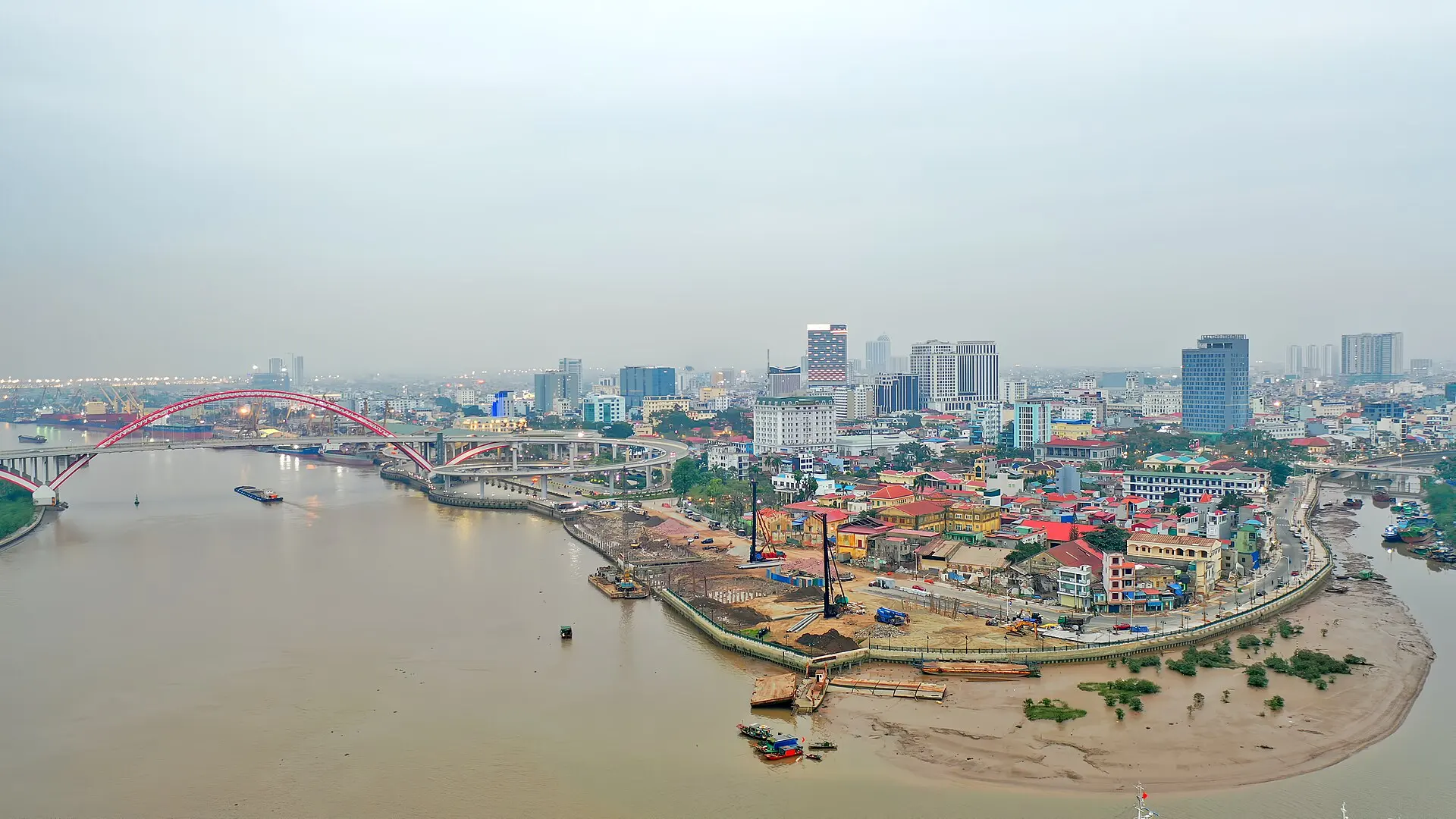

Discover Hải Phòng: Port City of Flame Trees
Travel guide · editorialIn May, the avenues of Hải Phòng turn a brilliant red when the flame trees bloom. A trip to Hải Phòng takes you to northern Vietnam's most important port city, with its colonial buildings, hearty noodle soups, and out to Cát Bà Island and Lan Ha Bay.
Port on the Red River
The area at the mouth of the Cấm River was an anchorage from early on. The best-known figure is the general Lê Chân, who fought the Chinese alongside the Trưng Sisters in the 1st century; a city district and a temple bear her name. From 1874, the French developed Hải Phòng into the port for Tonkin, building canals, boulevards, and warehouses. In November 1946, the French fleet shelled the city, one of the events that triggered the First Indochina War. During the Vietnam War, the U.S. mined the harbor in 1972. Today Hải Phòng is an industrial and logistics hub with a modern deep-water port. In 2025, the neighboring province of Hải Dương was merged into the city, which greatly increased its population.
Sights in Hải Phòng
In the center, in the wards of Hồng Bàng and Lê Chân, stands the Opera House, opened in 1912, with its light-colored façade, surrounded by a square where families stroll in the evening. Điện Biên Phủ and Hoàng Văn Thụ streets are lined with colonial villas, banks, and the city museum in a neo-Gothic building. The Temple of Lê Chân and the Dư Hàng Pagode with its wood carvings reveal the city's older history. A little way out of town stands the Hàng Kênh communal house, one of the most beautiful đình in northern Vietnam, with elaborate wooden dragons. In the afternoon, a walk along the Tam Bạc River is worthwhile; its banks have been turned into a promenade.
Đồ Sơn and Cát Bà
About 12 miles southeast, the Đồ Sơn peninsula juts into the sea, a seaside resort with hills, beach hotels, and the water buffalo fighting festival held every autumn. The biggest attraction, however, is Cát Bà Island, which is part of the city. A large part of it is national park with limestone mountains, caves, and forests, home to the critically endangered golden-headed langur. From Cát Bà, boats and kayak tours set out into Lan Ha Bay, the southern continuation of Ha Long Bay with limestone cliffs, lagoons, and floating fishing villages. Since 2023, the Cát Bà Archipelago, together with Ha Long Bay, has been a UNESCO World Heritage Site.
Eating in Hải Phòng
Hải Phòng is famous for its cuisine. You absolutely have to try Bánh đa cua, a soup of red, wide rice noodles with field crab, water spinach, and pork. Just as typical are bánh mì cay, small, slender baguettes with pâté and chili that people eat by the dozen, and nem cua bể, large spring rolls with sea crab. In the markets and alleys around Ngô Quyền ward, you'll find clams, snails, and saltwater fish. Many locals have breakfast at sidewalk food stalls, and in the evening people meet at bia hơi joints. If you head to Cát Bà, try the grilled squid on the island and the shellfish from the bay's fish farms, served in floating restaurants.
Nightlife and City Life
In the evening, the area around the Opera House and the banks of the Tam Bạc River come alive. Cafés with rooftop terraces, karaoke bars, and beer halls fill up, and in the new districts of Hải An and around the airport, shopping malls with cinemas and restaurants have sprung up. Hải Phòng is also football-crazy: matches at Lạch Tray Stadium are known for their loud atmosphere. In May, the city celebrates the Flame Tree Festival with parades and concerts.
Getting There and Best Time to Visit
Cát Bi Airport is close to the center and has flights from Ho Chi Minh City, Đà Nẵng, and a few cities in Asia. From Hanoi, you can reach Hải Phòng by train in a little over two hours or by expressway in about 90 minutes. Ferries and speedboats connect the mainland with Cát Bà. The best time to visit is in spring from March to May and in fall from September to November. Summer is hot and humid with a risk of typhoons; winter is cool and often gray.