Discover Cần Thơ: The Floating Markets of the Mekong Delta
Travel guide · editorialBefore sunrise, boats loaded with pineapples, pumpkins, and watermelons chug toward the market on the river: Cần Thơ is the largest city in the Mekong Delta and its heart. A trip to Cần Thơ leads you to floating markets, orchards, and canals where daily life unfolds on the water.
Capital of the West
Cần Thơ grew up in the 19th century on the banks of the Hậu, the southern main branch of the Mekong, as a trading post for rice and fruit. Under the French, the city became an administrative seat, and rice mills and warehouses were built. Today it is known in Vietnam as "Tây Đô," the Capital of the West. The Cần Thơ Bridge, which opened in 2010 and is one of the longest cable-stayed bridges in Southeast Asia, has significantly shortened the travel time to Saigon. With the 2025 administrative reform, the provinces of Sóc Trăng and Hậu Giang were merged into the city, raising the population to over four million.
Sights in Cần Thơ
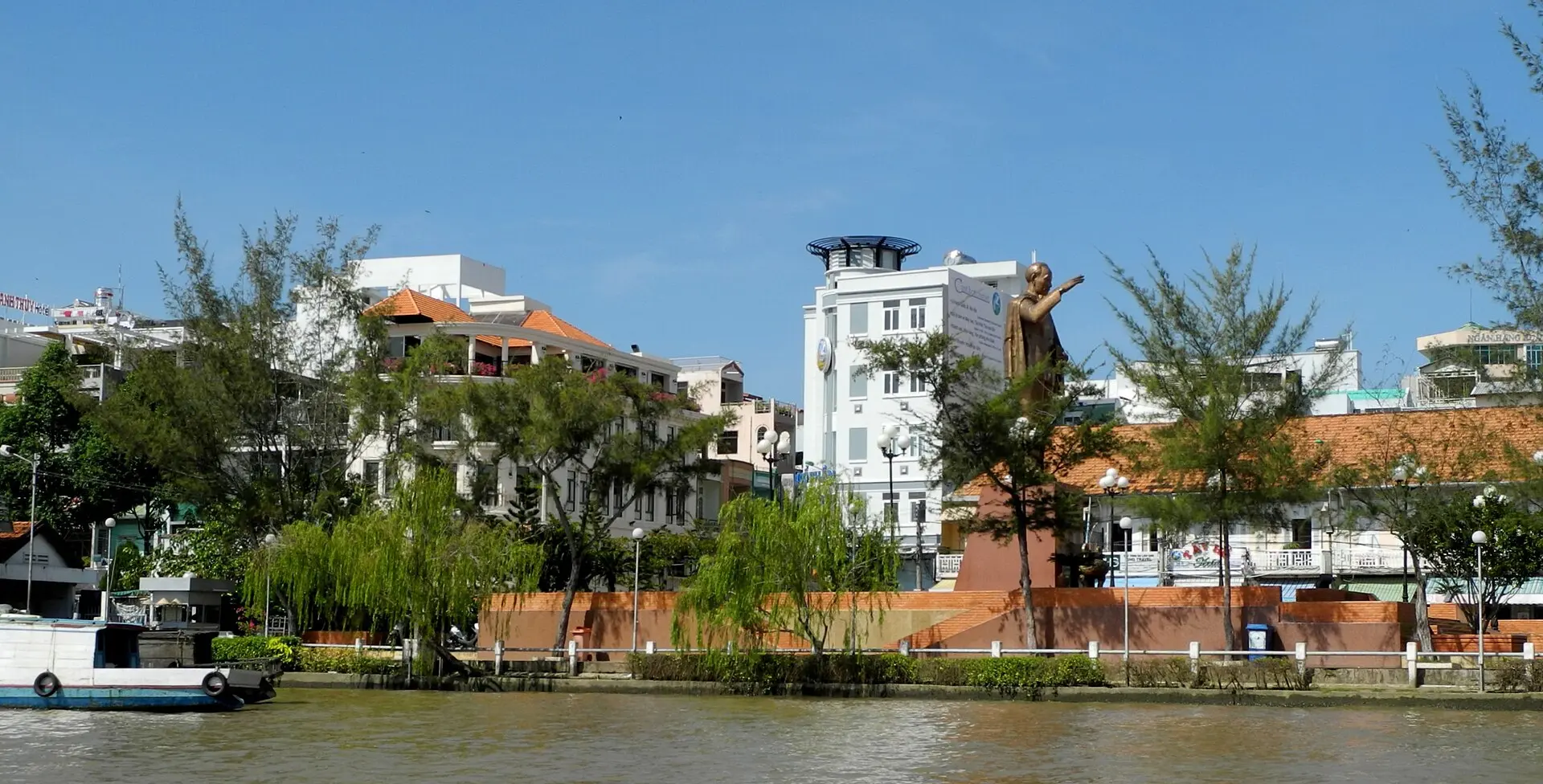
City life centers on the Ninh Kiều waterfront promenade, with a statue of Ho Chi Minh, parks, and an illuminated pedestrian bridge. Next to it stands the old market, a colonial-era building with stalls selling souvenirs and snacks. The Ông Pagoda, a Chinese assembly hall from the 19th century, is decorated with wood carvings and hanging incense coils. On the outskirts, in Bình Thủy, you'll find the Dương Family House, a villa that combines French architecture with Vietnamese woodwork. Numerous Khmer pagodas with pointed golden roofs bear witness to the ethnic group that has lived in the delta for centuries.
Cái Răng Floating Market
The highlight of any visit is the Cái Răng floating market, about six kilometers downstream. Between roughly 5 and 8 a.m., wholesale boats lie side by side here, with each boat's goods hanging from long poles as advertising. Small boats sell coffee, noodle soups, and baguettes to the traders. The market has become smaller since roads have taken over many transports, but it remains an impressive experience. Many tours combine it with the smaller Phong Điền market and a trip through narrow canals to orchards. Along the way, the boats often stop at small workshops where rice noodles are made by hand and dried in the sun on bamboo mats. If you get up early and hire a private boat at the Ninh Kiều pier, you can experience the market in the first light of day, before the tour groups arrive.
Eating in Cần Thơ
The delta is Vietnam's orchard: rambutan, mangosteen, durian, pomelo, and longan grow here in abundance. Typical of the local cuisine is Lẩu mắm, a hearty stew made with fermented fish and plenty of herbs, along with Bánh xèo, Cá lóc nướng trui (snakehead fish grilled over straw), and Bánh cống from nearby Sóc Trăng. At the evening stalls along the promenade, you can find grilled seafood and sugarcane juice. Restaurants in Cần Thơ are inexpensive and are often built on stilts over the water.
Getting There and Best Time to Visit
Cần Thơ Airport has connections to Hanoi, Đà Nẵng, and Phú Quốc. From Ho Chi Minh City, the bus takes about three and a half to four hours. In the city, you get around by taxi, Grab, or boat. The best time to visit is the dry season from December to April. From August to November, the Mekong's floodwaters rise and many fields are submerged. This can be fascinating as well, though excursions are sometimes limited then.