
Đà Nẵng: Beaches, Marble Mountains, and Ancient Hội An
Travel guide · editorialIn just a few years, Đà Nẵng has gone from a sober port city to the most popular beach resort in central Vietnam. Since the city was merged with Quảng Nam Province in 2025, it now also includes the old town of Hội An and the temple ruins of Mỹ Sơn. A vacation in Đà Nẵng therefore combines beach, World Heritage sites, and mountain country in a compact area.
Between the Cloud Pass and the Thu Bồn River
The region lies almost exactly in the middle of the long, narrow country. To the north, the Hải Vân Pass, the "Cloud Pass," seals off the coast from Huế; here the Trường Sơn Range meets the sea head-on and forms a climate divide. To the south, a wide bay opens up, with the Sơn Trà Peninsula, where rare red-shanked douc langurs climb through the forests. Farther south, the Thu Bồn River empties into the sea at Hội An, and beyond it stretches the lowland of the former Quảng Nam Province with Tam Kỳ, Điện Bàn, and Nam Phước, before the mountains rise in the west all the way to the Laotian border. Around three million people live here in total.
Đà Nẵng Itself: Beaches and Bridges
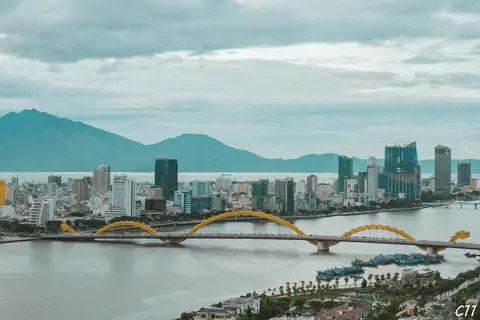
Mỹ Khê Beach stretches for miles along the east side of the city; early in the morning locals swim, and in the evening teenagers play soccer in the sand. Several striking bridges span the Hàn River; on weekend evenings the Dragon Bridge breathes fire and water. On the Sơn Trà Peninsula, a 67-meter-tall white statue of Guanyin at Linh Ứng Pagoda looks out over the bay. South of the city, the Marble Mountains rise from the plain, five limestone outcrops with caves, grottoes, and small shrines, at whose foot stonemasons sell figurines. The Bà Nà Hills resort, with its much-photographed "Golden Bridge" held up by two giant stone hands, is an amusement park in a French-style stage-set look – a matter of taste, but a crowd magnet. The Cham Museum houses the most important collection of sculptures from the ancient Champa Kingdom anywhere in the world.
Sights Around Hội An
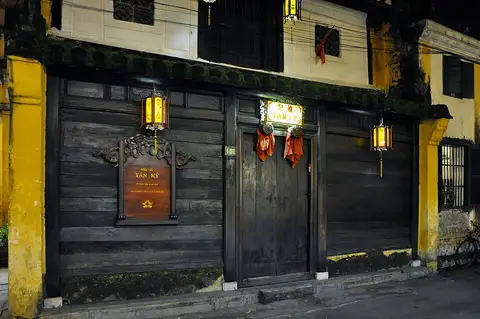
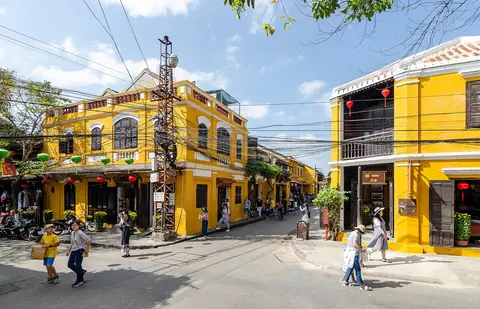
About 30 kilometers to the south lies Hội An, an important trading port from the 16th to the 18th century where Japanese, Chinese, and European merchants settled. Because the river later silted up and trade shifted to Đà Nẵng, the old town remained almost unchanged and became a UNESCO World Heritage Site in 1999. The Japanese Bridge from the early 17th century, assembly halls of Chinese community associations, and wooden merchants' houses such as the Tấn Ký House can all be visited with a combination ticket. In the evening silk lanterns glow, and paper lights drift on the river. The beaches of An Bàng and Cửa Đại as well as the Cù Lao Chàm Islands with their snorkeling spots are nearby. About 40 kilometers to the west, hidden in a jungle valley, lies the Mỹ Sơn sanctuary, where the Cham kings built brick temples to Shiva from the 4th to the 13th century; US bombs destroyed part of it in 1969, but the remaining towers are impressive.
Food and Drink
The cuisine of Quảng Nam is bold and spicy. Mì Quảng, wide yellow rice noodles with a small amount of intensely flavored broth, shrimp, pork, peanuts, and rice crackers, is the province's signature dish. In Hội An, people eat cao lầu, firm noodles whose dough, according to legend, only turns out right with water from one particular well, along with the famous bánh mì Phượng. In Đà Nẵng, the seafood restaurants along the beachfront promenade beckon, where you pick crabs, clams, and squid from the tank. Bánh tráng cuốn thịt heo, rice paper rolls with pork and herbs, are a typical snack.
Getting There and Getting Around
Đà Nẵng International Airport (DAD) is only a few minutes from the center and has direct flights from many Asian metropolises. The Reunification Express stops at Đà Nẵng Station; the stretch over the Hải Vân Pass to Huế is considered one of the most beautiful rail sections in the country, and by motorbike the pass road is a classic. To Hội An, it takes about 45 minutes by taxi, shuttle bus, or Grab. In the old town itself, you get around on foot or by rental bicycle.
Best Time to Visit
Unlike in the north and south, most of the rain here falls in the fall. From September through December, typhoons are a threat, and Hội An floods almost every year, at times so badly that boats are used to get around the old town. The best time to visit is between February and August; spring and early summer are sunny and pleasant, while June through August get hot, with temperatures above 95°F. The monthly lantern festival in Hội An takes place at every full moon.