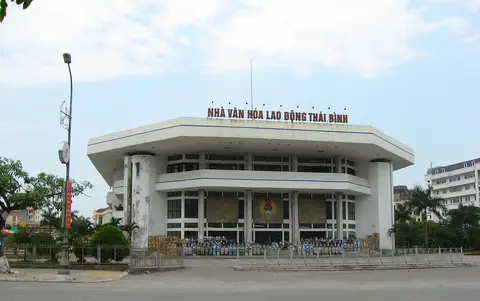
Hưng Yên: Phố Hiến, Longan Orchards, and the Thái Bình Coast
Travel guide · editorialHưng Yên is flat, green, and fertile – a landscape of rice paddies, longan orchards, and villages with ancestral temples in the Red River Delta. With its 2025 merger with Thái Bình, the province has also gained a coastline. A trip to Hưng Yên is worthwhile for anyone who wants to experience rural northern Vietnam away from the major destinations.
In the Heart of the Delta
The province begins just southeast of Hanoi and stretches all the way to the Gulf of Tonkin. The Red River forms its western border, and the Luộc and other river branches cut across land that lies just a few meters above sea level almost everywhere. In the north, around Văn Giang, Như Quỳnh, and Mỹ Hào, industrial parks and new residential towns for Hanoi commuters are growing. The south, with the former Thái Bình, is by contrast one of Vietnam's classic rice bowls, densely populated for centuries. Along the coast you'll find mangroves, shellfish beds, and fishing villages.
Sights in Hưng Yên
Phố Hiến, the historic core of the city of Hưng Yên, was an important trading center in the 16th and 17th centuries, frequented by Japanese, Chinese, Dutch, and Portuguese merchants. A saying goes: "First the capital, second Phố Hiến." Surviving sites include the Temple of Literature, Chùa Chuông (the Bell Pagoda, with its old wood carvings), Chinese assembly halls, and the Mẫu Temple on Bán Nguyệt Lake. Nearby is the Chử Đồng Tử Temple, dedicated to one of the "Four Immortals" of Vietnamese folk belief. In Văn Giang, nurseries grow flowers and bonsai for Hanoi's Tết market.
Thái Bình and the Coast
The Keo Pagoda in the former Thái Bình is among the most beautiful wooden pagodas in northern Vietnam; its three-tiered bell tower from the 17th century is a masterpiece of carpentry. In Hưng Hà, the Trần Dynasty Temple commemorates the origins of that royal family, and the village of Đồng Xâm is known for its silversmiths. The coast is home to the beach resort of Đồng Châu and the Tiền Hải protected area at the mouth of the Red River, part of the biosphere reserve where migratory birds rest. Water puppet theater is still performed in many villages in the area.
Food and Drink
Hưng Yên is the capital of longan, nhãn lồng, which were delivered to the imperial court for centuries. In July and August the fruit hangs heavy on the trees, and it is sold by the bunch along the roadsides. Lotus seed sweet soup, chè sen, is also famous. Typical dishes from Thái Bình include bánh cáy, a pastry made from sticky rice with ginger and gac fruit, and canh cá Quỳnh Côi, a fish noodle soup. On the coast, clams and small crabs end up on the table.
Getting There and Best Time to Visit
Hưng Yên can be reached from Hanoi in about an hour via the expressway toward Hải Phòng and Ninh Bình, and Thái Bình in around two hours. Buses connect the towns; for villages and pagodas, a rental car or moped is practical. The best time to visit is between October and April, when it is dry and mild. For the longan harvest, come in high summer, though it is hot and stormy then.