Discovering Huế: The Imperial City on the Perfume River
Travel guide · editorialFrom 1802 to 1945, the emperors of the Nguyễn dynasty ruled from Huế, and you can still feel the splendor of the old court among the citadel walls, lotus ponds, and imperial tombs. A trip to Huế is calmer than one to Hanoi or Saigon, and it offers some of the most exciting food in Vietnam.
Capital of the Last Dynasty
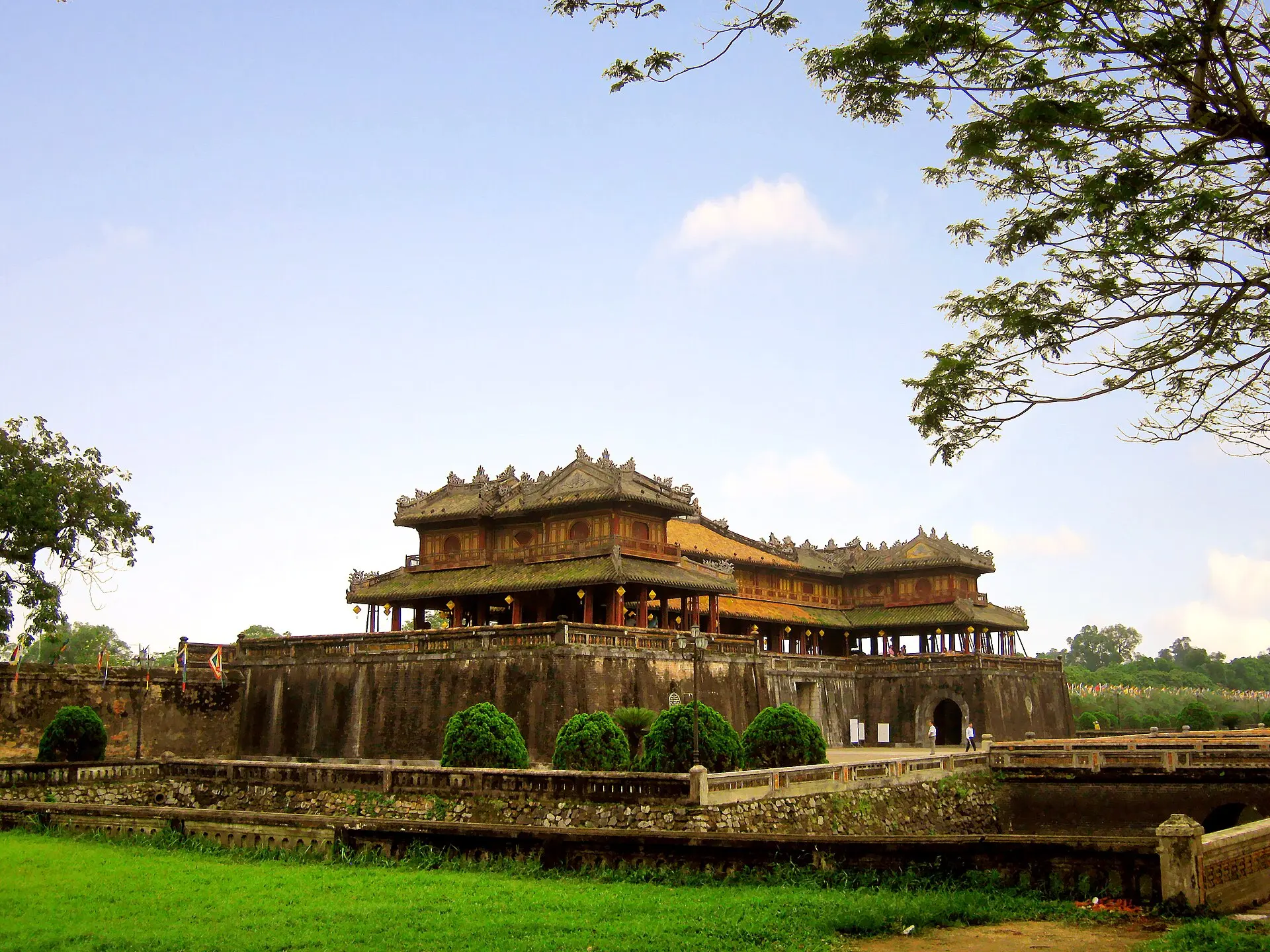
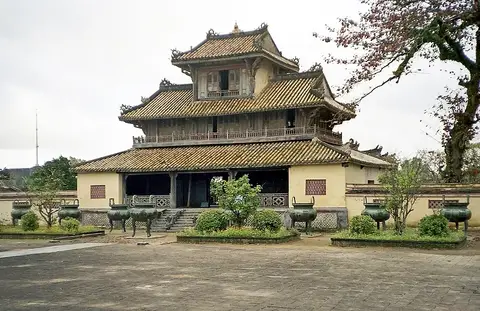
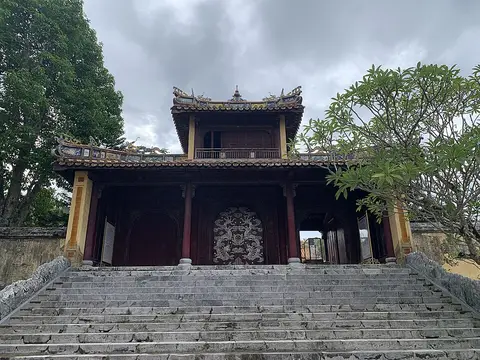
Gia Long, the first Nguyễn emperor, unified Vietnam and made Huế the capital in 1802. Modeled on the Forbidden City in Beijing but laid out along the Perfume River according to the rules of geomancy, he had a massive citadel built. Thirteen emperors reigned here, from 1885 under French control. In 1945, Bảo Đại abdicated at the Meridian Gate. During the Vietnam War, Huế saw heavy fighting in the Tết Offensive of 1968, and large parts of the citadel were destroyed. The monument complex has been a UNESCO World Heritage Site since 1993, and restoration continues steadily. Since 2025, Huế has been a centrally governed city, with the present-day wards of Phú Xuân and Thuận Hóa covering the old town on both sides of the river.
Sights in Huế: The Citadel and Imperial City
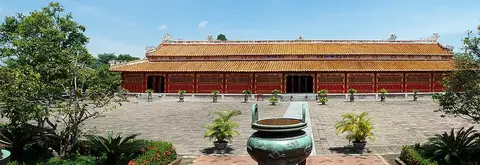
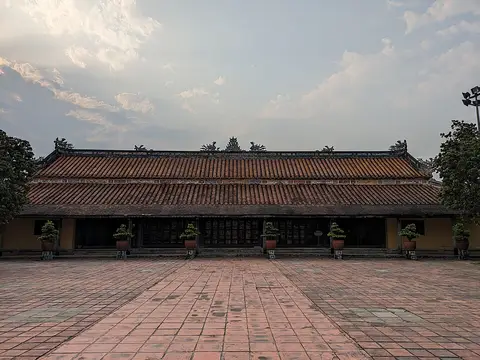
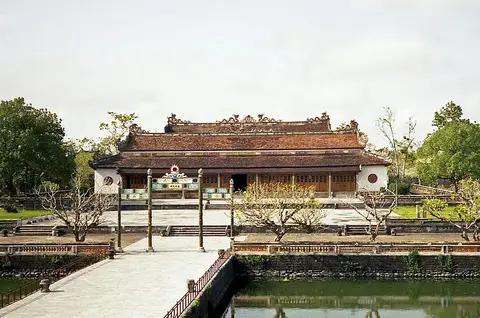
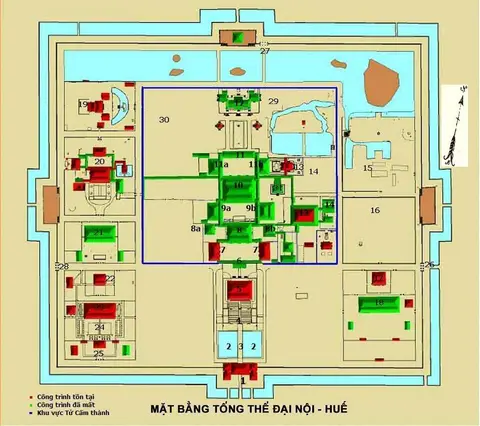
Behind moats and thick walls on the north side of the river lies the Citadel. Through the Meridian Gate with its Five Phoenix Pavilion, you enter the Imperial City, home to the Thái Hòa Throne Hall, restored palaces, galleries in lacquer red and gold, and the Duyệt Thị Đường Theater, where court music is performed. Inside the citadel lies the Purple Forbidden City, once reserved for the emperors and now mostly ruins and gardens. A walk around the grounds easily takes half a day. The Museum of Royal Antiquities displays court robes, porcelain, and furniture. On some evenings, the Imperial City is illuminated.
Tombs and Pagodas along the Perfume River
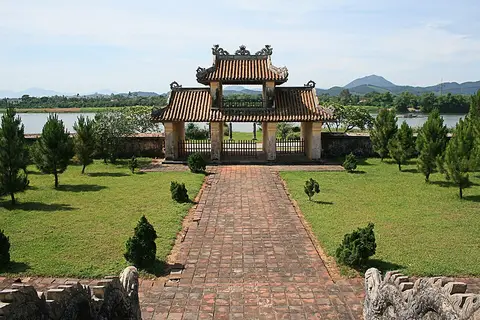
The emperors had themselves buried south of the city in sprawling tomb complexes that resemble landscape parks more than cemeteries. The tomb of Tự Đức, with its pond, pavilions, and frangipani trees, served the emperor as a retreat even during his lifetime. The tomb of Minh Mạng is laid out in strict symmetry, while that of Khải Định, built of concrete, blends European and Asian styles and sparkles inside with mosaics of glass and porcelain. On the riverbank stands the seven-story Thiên Mụ Pagoda, the city's landmark. The car in which the monk Thích Quảng Đức drove to Saigon in 1963, where he set himself on fire in protest, is also on display there. Boat trips on the Perfume River connect several sites, which are also easy to reach by bicycle.
Eating in Huế
Court cuisine has made Huế a foodie city. Bún bò Huế, a spicy beef noodle soup with lemongrass, is world famous. Add to that small rice dishes such as bánh bèo, steamed rice cakes served in little dishes, and bánh nậm and bánh bột lọc with shrimp wrapped in banana leaves. Cơm hến, rice with freshwater clams, is best eaten on Cồn Hến Island. Thanks to the Buddhist tradition, there are plenty of vegetarian restaurants. At the Đông Ba Market by the river, you can buy sesame cookies, conical hats, and mè xửng, a sesame candy.
Neighborhoods and City Life
South of the river, in the Thuận Hóa area, lies the French-influenced quarter with hotels, cafés, and Lê Lợi Street. The Trường Tiền Bridge, a steel structure from the colonial era, is lit in changing colors in the evening. Around Phạm Ngũ Lão Street, partly a pedestrian zone in the evenings, bars and street food stalls invite you to go out. Quieter is Kim Long to the west, with old garden houses known as nhà vườn, where families have lived for generations and welcome guests. Vỹ Dạ on the eastern bank is known for its cafés and gardens. Every two years, the Huế Festival turns the city into a stage with court ceremonies, theater, and music.
Getting There and Best Time to Visit
Phú Bài Airport lies about 15 kilometers to the south, with flights to Hanoi and Ho Chi Minh City. The train connects Huế with Hanoi and, over the spectacular Hải Vân Pass, with Đà Nẵng, which you can also reach by bus in just over two hours. The best time to visit is from February to May, when it is warm and mostly dry. Summers get very hot, from September to December it rains a lot, and floods are not uncommon.