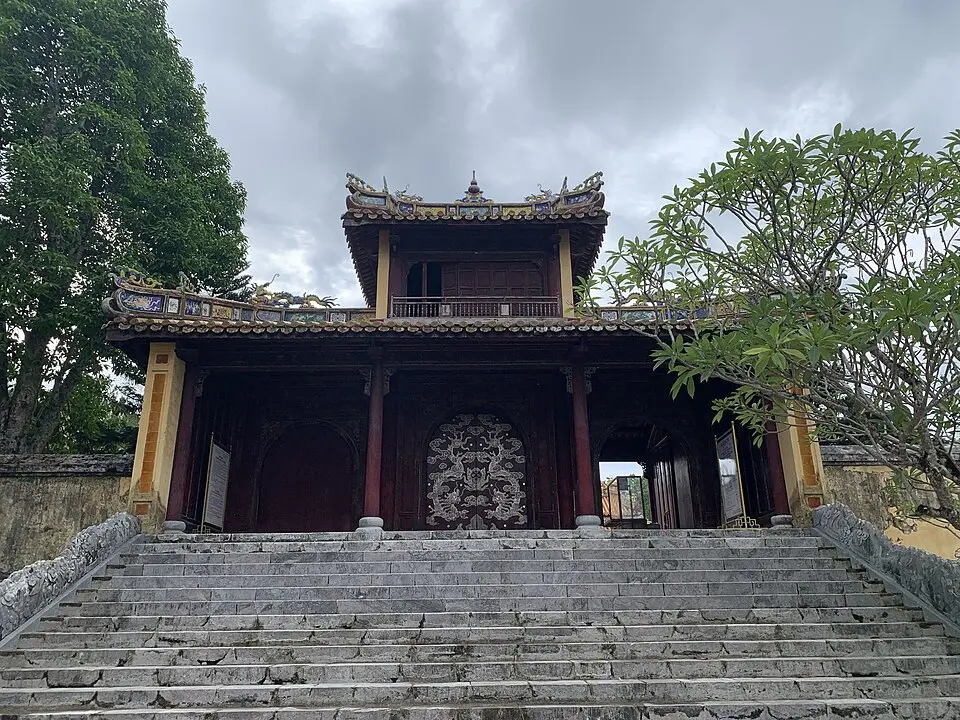
About Lăng Đồng Khánh
The Tomb of Emperor Dong Khanh, also known as Tu Lang, sits in the countryside of Thuong Hai village in the Thuy Xuan ward of Hue. It is part of the vast historic complex of the former imperial city and serves as the final resting place of the monarch, who reigned from 1886 to 1889. The site's history is marked by tragedy: the young emperor died unexpectedly at just twenty-five, before he could plan a tomb of his own. Originally, only a temple for his father stood on this spot; after the emperor's death, it was rededicated as his memorial. It was his son, Emperor Khai Dinh, who had the complete tomb complex, with its distinctive buildings and walls, finished between 1916 and 1923.
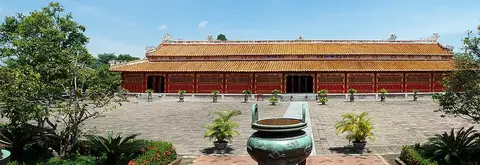
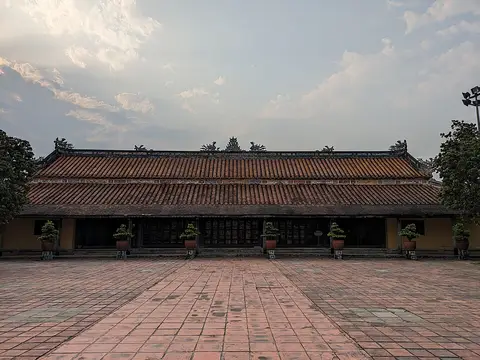
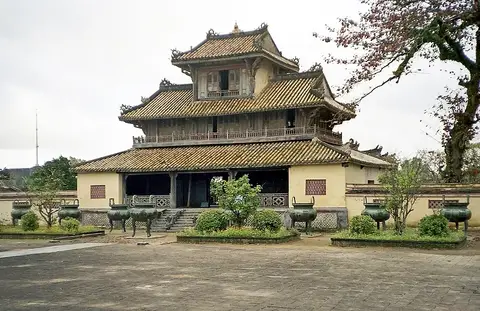
The complex is divided into two main areas: the temple area and the tomb itself. The temple area, which faces southeast, is enclosed by a rectangular brick wall and contains the central building, the Ngung Hy Temple. This structure is a masterpiece of traditional Vietnamese art, especially known for its elaborate gilding and lacquerwork. The interior walls and ceilings are decorated with hundreds of motifs showing scenes of rural life, animals, and plants. A particular highlight is the set of twenty-four tales of filial piety depicted in the main hall. Here, the architecture still strongly combines the classic palace style with traditional elements.
In contrast, the tomb area, which sits on a hill and faces east, already shows the influence of more modern building techniques such as cement and steel. The emperor's actual grave is surrounded by three concentric square rings of walls decorated with dragons, bats, and symbols of longevity. The guardian statues here are made of fired clay and look slimmer than the stone models of earlier imperial tombs. Overall, the tomb marks an interesting transition between old imperial architecture and the new stylistic elements of the early modern era, set within the peaceful landscape of the region.
At a glance
- Category
- Sight › Historic sites
- Rating
- no reviews yet · write a review
- Address
- Đoàn Nhữ Hải
Huế, Vietnam - District
- Thủy Xuân Ward
- Phone
- —
- Website
- —
- —
- Coordinates
- 16.42944° N · 107.56833° E
- Data quality
- confidence 0.86
- Identifier
- ID 3471ee20-d45…
Location & surroundings
Toggle layersRatings & comments
none yetNear Lăng Đồng Khánh
closest 5 per category · 2 kmSights
Restaurants
Hotels
Cocktail bars
More:Historic sites in Huế (183)All sights in Huế (196)
97 places within 2 km loaded.
You need a free account to leave reviews and photos – that keeps comments genuine and lets you edit them later.
Built in 1917. Beautiful interior murals. The tomb area is a colorful construction of marble and ceramics. The 100 or so stairs may be an issue for people with mobility difficulties.
Source: Wikivoyage, „Hue“ · authors per page history · CC BY-SA 4.0