Khánh Hòa: The Bays of Nha Trang and the Cham Land of Ninh Thuận
Travel guide · editorialKhánh Hòa Province has one of the most beautiful coastlines in Vietnam: deep bays, offshore islands, and long sandy beaches set between mountain slopes. If you vacation in Khánh Hòa, you'll most likely end up in Nha Trang, but since the merger with Ninh Thuận in 2025, the province also includes the dry vineyards and Cham villages around Phan Rang.
A Coast Between Mountains and Islands
The province lies on the southern central coast, about 450 kilometers (280 miles) northeast of Ho Chi Minh City. The foothills of the Trường Sơn Mountains reach almost to the sea here and divide the coast into bays: Vân Phong in the north, Nha Trang Bay with its nearly two dozen islands, the natural harbor of Cam Ranh Bay, and, farther south, the coast of Ninh Thuận. Vietnam also administers the Trường Sa archipelago, the Spratly Islands, as part of Khánh Hòa, but they are disputed internationally and closed to travelers. The southern part, formerly Ninh Thuận, is the driest region in the country, with cacti, salt flats, and dunes.
Nha Trang and Its Islands
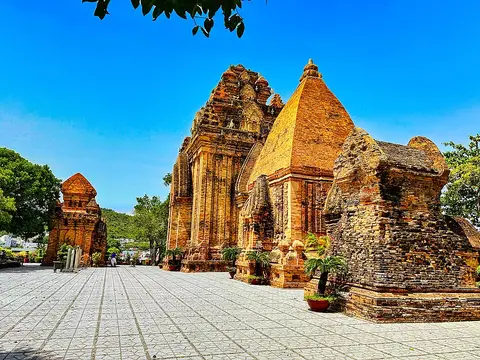
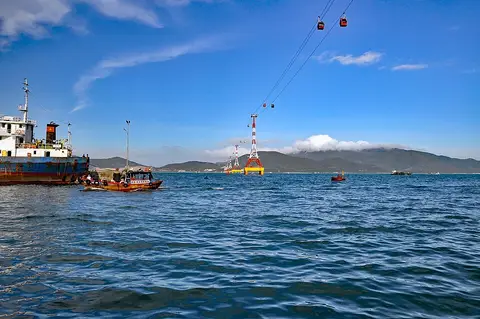
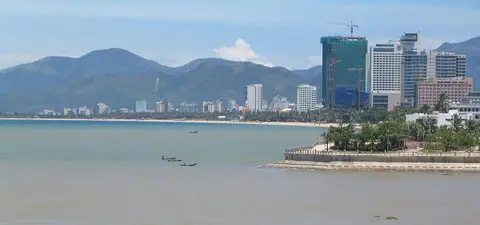
Nha Trang is a beach resort city with high-rise hotels lining a six-kilometer (3.7-mile) beachfront promenade. Many visitors come for the islands: boat tours go to Hòn Mun, whose protected marine area is considered Vietnam's best dive site, to Hòn Tằm, or to Hòn Tre Island with the VinWonders amusement park, which is linked to the mainland by a cable car across the sea. On the northern edge of the city stand the Po Nagar Towers, brick Cham temples dating from the 8th to 13th centuries, where a mother goddess is still worshipped today. The Long Sơn Pagoda with its large white Buddha sits on a hill above the city. If you want to relax, head to the mud baths of Tháp Bà. At the Oceanographic Institute, a colonial-era building from 1923, you can view marine life from the region.
Sights in Khánh Hòa Beyond Nha Trang
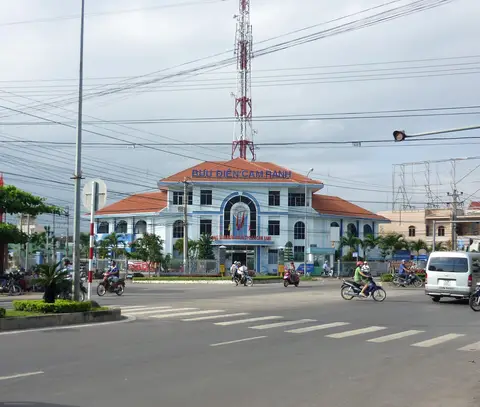
North of the city, near Ninh Hòa, the Hòn Gốm Peninsula stretches out with the quiet Dốc Lết Beach. Cam Ranh Bay was once a Soviet naval base, and before that an American one; today luxury resorts line its beaches, and the airport has become the region's most important gateway. In the south, around Phan Rang, many Cham live, descendants of the ancient Champa kingdom. The Po Klong Garai Towers from the 13th century are among the best-preserved Cham structures anywhere, and in the pottery village of Bàu Trúc, women shape vessels without a potter's wheel. Núi Chúa National Park protects dry forest and beaches where sea turtles lay their eggs. Near Vĩnh Hy, a coastal road winds past turquoise bays, and Ninh Chữ Bay is popular mainly with local families. In the fall, the Cham celebrate their Katé festival with processions to the temple towers.
Food and Drink
Seafood is the star here, often grilled on the beach: lobster from the farming cages of Cam Ranh, squid, and shellfish. Typical of Nha Trang are bún chả cá, rice noodle soup with fish cakes, and nem nướng Ninh Hòa, grilled pork rolls that you wrap yourself in rice paper. Bánh căn, small rice cakes cooked in clay molds, are a popular snack. In the dry south around Phan Rang, grapes are grown and made into simple red wine and raisins; garlic and onions grow here too. For souvenirs, many people take home swiftlet nests, which are harvested from the cliffs of the islands and considered a delicacy.
Getting There and Getting Around
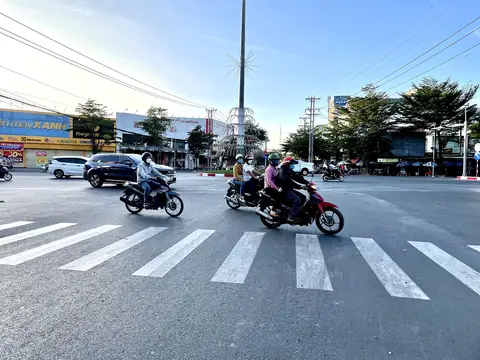
Cam Ranh International Airport (CXR) is about 35 kilometers (22 miles) south of Nha Trang and has direct flights from many Asian cities. Nha Trang and Tháp Chàm near Phan Rang are stops on the Reunification Express; the trip from Saigon takes about eight hours. Since the completion of the North-South Expressway, the coast is also easy to reach by bus. Locally, Grab taxis and rental scooters are common, and for the islands you take excursion boats from Cầu Đá Harbor.
Best Time to Visit
The best time to visit Khánh Hòa is between January and August, when the sea is calm and clear and the sun shines reliably. From October to December, the northeast monsoon brings rain and occasional typhoons, and boat trips are often limited. Ninh Thuận in the south stays comparatively dry even during this period.