











Canada: Vast Wilderness and Cosmopolitan Cities
Travel guide · editorialWhen most people think of a vacation in Canada, they picture lakes dotted with canoes, moose by the roadside, and mountains reflected in still water. That's all true, but it only tells half the story, because a trip to Canada also means French bistros in Montreal, Toronto's food halls, and fishing villages along the Atlantic coast.
Regions from British Columbia to Newfoundland
Canada is the second-largest country in the world, and most people live in a narrow strip close to the U.S. border. In the west lies British Columbia, with a rugged Pacific coastline, rain forests on Vancouver Island, and fjords where orcas and humpback whales roam. To the east, the Rocky Mountains rise up, followed by the Prairie Provinces of Alberta, Saskatchewan, and Manitoba, with wheat fields, cattle ranches, and a sky that seems to go on forever. Ontario and Quebec form the populous heartland, crossed by the St. Lawrence River and countless lakes. Farthest east are the Atlantic provinces of Nova Scotia, New Brunswick, Prince Edward Island, and Newfoundland, where lighthouses stand on granite cliffs and icebergs drift off the coast in early summer. The far north, with the Yukon, the Northwest Territories, and Nunavut, is sparsely populated, and in winter the northern lights become the main attraction.
Toronto, Montreal, and Vancouver
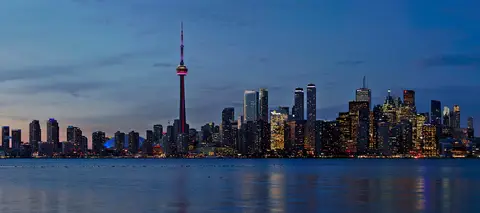
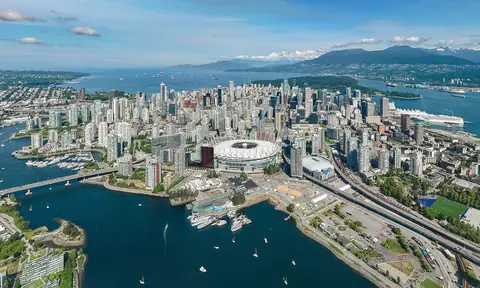
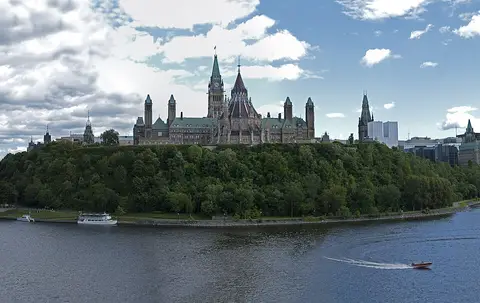
Toronto is the country's largest city and one of the most diverse in the world; around half of its residents were born abroad. From the CN Tower you look out over Lake Ontario, Kensington Market has Jamaican patties alongside Portuguese bakeries, and St. Lawrence Market serves the famous peameal bacon sandwich. Mississauga and Scarborough are part of the Greater Toronto Area and are known above all for their Asian cuisine. Montreal feels more European: spiral staircases on the facades of the Plateau, wood-fired bagels, one festival after another in summer, and Mount Royal as the city's green hill. Quebec City, with its city walls and the Château Frontenac high above the river, is a UNESCO World Heritage Site and is especially atmospheric in winter, when the Carnival takes place. Ottawa, the capital, scores with its national museums and the Rideau Canal, where you can skate for miles in January and February. In the west, Vancouver sits between the sea and the mountains; kayak on False Creek in the morning, stroll through Stanley Park in the afternoon, and have sushi in the evening, which is especially fresh and affordable here. Calgary and Edmonton are gateways to the Rockies, Calgary celebrates every July with the Stampede, a huge rodeo festival, and Winnipeg surprises with the Canadian Museum for Human Rights.
National Parks and Sights in Canada
Among the most-visited sights in Canada are Banff and Jasper National Parks. The Icefields Parkway links the two over roughly 143 miles (230 km), passing glaciers, turquoise lakes such as Lake Louise and Peyto Lake, and mountain goats on the slopes. In peak season parking is scarce, and Moraine Lake can now only be reached by shuttle bus. Less crowded is Pacific Rim National Park on Vancouver Island, with surf beaches near Tofino. On the border with New York, Niagara Falls plunges into the gorge, and it's best experienced from a boat. In Ontario, Algonquin Park invites you on canoe trips with overnight stays on islands, and in the Bay of Fundy the tides rise and fall by up to 16 meters, so at low tide you can walk among rock formations on the ocean floor. In northern Manitoba, in Churchill, you can watch polar bears in the fall and beluga whales in summer.
Culture, History, and Two Languages
Canada's history begins long before the arrival of Europeans. First Nations, Inuit, and Métis peoples shape the country to this day, and on the west coast you can see their totem poles at the Museum of Anthropology in Vancouver or in villages on Haida Gwaii. The French founded Quebec in 1608, the British later prevailed, and this dual heritage is part of everyday life: in Quebec, French is the official language, street signs and menus are in French, and many people speak a distinctive, melodic Québécois. New Brunswick is the only officially bilingual province. Hockey is more religion than sport, and on a Saturday night in a bar in Montreal or Toronto you quickly sense how seriously fans take it.
Food and Drink in Canada
The best-known dish is poutine: french fries topped with squeaky cheese curds and brown gravy, originally from rural Quebec and now found everywhere. In spring, Quebec's sugar shacks invite you to feast on maple syrup with pea soup, bacon, and pancakes, and if you're lucky you'll get maple taffy poured over snow. On the Atlantic coast you'll find lobster, Prince Edward Island oysters, and in Newfoundland cod in every variation. British Columbia is known for wild salmon and Dungeness crab, the Okanagan Valley produces wines that earn international attention, and on the Niagara Peninsula ice wine is made, following the German model. In Alberta, beef takes center stage. The many immigrant communities make Toronto and Vancouver some of the best cities in North America for Chinese, Indian, and Vietnamese food.
Getting There and Getting Around in Canada
Nonstop flights from Germany go mainly to Toronto, Montreal, Vancouver, and Calgary, with additional summer service to Halifax and Edmonton. The trip to Toronto takes about eight and a half hours, and to Vancouver roughly ten. German citizens entering by air need a valid passport and an electronic travel authorization (eTA), which is applied for online and usually granted within minutes; it's worth checking the current requirements before you go. Within Canada, domestic flights are often unavoidable because of the distances. The VIA Rail train line connects Quebec City, Montreal, Ottawa, and Toronto along the corridor fairly reliably, while the long-distance train "The Canadian" takes four nights from Toronto to Vancouver and is more of an experience than a means of transportation. For road trips through the Rockies or the Atlantic provinces, a rental car or camper is the best choice, and ferries connect the mainland with Vancouver Island, Prince Edward Island, and Newfoundland.
Best Time to Visit Canada
For most destinations, the best time to visit Canada is between June and September. In July and August, Toronto and Montreal often reach 77 to 86°F (25 to 30°C); in the Rockies it's pleasantly warm by day but chilly at night, and the mountain lakes are usually not ice-free until mid-June. September brings fewer visitors and, in Ontario and Quebec, fall foliage from late in the month, the "Indian summer," which lasts until mid-October. Vancouver has a mild but rainy climate, and summers there are mostly dry. Winter is long and cold: in Montreal and Ottawa, January temperatures are often between 14°F and −4°F (−10 to −20°C), and even lower on the Prairies. For skiers in Whistler, Banff, or Mont-Tremblant, December through March is ideal, and for northern lights in the Yukon, September through March is the best window.
Canada Destinations Off the Beaten Path
Beyond the Rockies, Niagara, and the big cities, there are lesser-known Canada destinations that still offer plenty: the Cabot Trail on Cape Breton Island, a scenic road with whale watching and Celtic fiddle music in the pubs; the Gaspé Peninsula in Quebec with the rock arch at Percé; Gros Morne National Park in Newfoundland with its fjords; or Dawson City in the Yukon, where the wooden buildings from the Gold Rush era still stand. If you have the time, you'll discover a country where you can drive for hours without hitting a single traffic light.