About Habitat 67
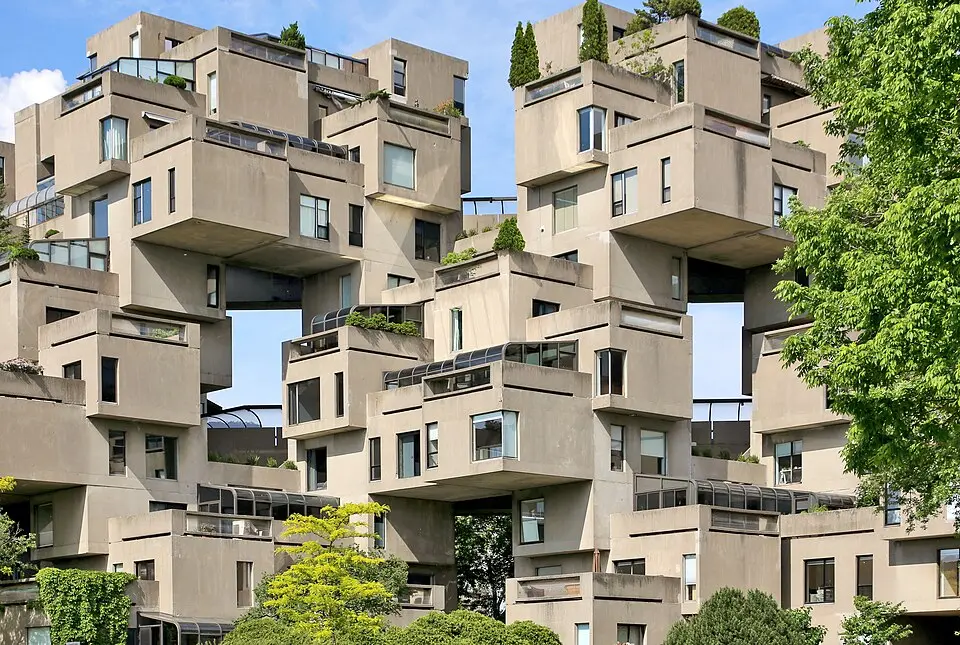
Habitat 67 is a striking residential complex in Montreal, designed by architect Moshe Safdie for the 1967 World's Fair, Expo 67. Located on the St. Lawrence River, the complex consists of 354 exposed-concrete modules stacked on top of one another in a stepped arrangement, forming a honeycomb-like structure. This approach to construction, which falls within the Brutalist and Structuralist styles, was meant to demonstrate a modern, cost-effective building method. Today, you can experience an architectural icon that began as an experiment and, after initial criticism, gained popularity thanks to its riverside setting. The 158 residential units offer a variety of floor plans with generous terraces, while the entire complex is defined by its deliberate contrast with the historic harbor.
At a glance
- Category
- Sight › Historic sites
- Rating
- no reviews yet · write a review
- Address
- 2600 Ave Pierre-Dupuy
H3C 3R6 Montreal, Canada - District
- Ville-Marie
- Phone
- +15148665971
- Website
- www.habitat67.com
- info@habitat67.com
- Coordinates
- 45.49984° N · -73.54372° E
- Data quality
- confidence 0.97
- Identifier
- ID ad96efc0-05e…
Location & surroundings
Toggle layersFAQ about Habitat 67
quick answersWhat is Habitat 67 in Montreal?
Habitat 67 is a striking residential complex in Montreal, Canada, now regarded as an architectural icon. The complex was originally built as an experiment for the Expo 67 World's Fair. After initial criticism, Habitat 67 gained popularity, above all thanks to its riverside location.
Who designed Habitat 67 and why was it built?
Habitat 67 in Montreal was designed by architect Moshe Safdie for the Expo 67 World's Fair. The building was meant to demonstrate a modern, cost-effective construction method. In terms of style, the complex is classified as Brutalist and Structuralist.
How is Habitat 67 structured?
Habitat 67 in Montreal consists of 354 exposed-concrete modules stacked in a stepped arrangement, forming a honeycomb-like structure. Inside are 158 residential units with a variety of floor plans and generous terraces. The entire complex deliberately contrasts with Montreal's historic port.
Where is Habitat 67 in Montreal?
Habitat 67 is located at 2600 Ave Pierre-Dupuy in the Ville-Marie borough of Montreal. The residential complex sits directly on the St. Lawrence River. According to our database, Montreal has around 1.9 million residents.
What can you see around Habitat 67?
In the area around Habitat 67 in Montreal, you'll find several historic sites along the port. travelguide195 lists, among others, Pointe du Moulin à Vent about 360 meters away, the Grand Quai du Port de Montréal about 700 meters away, Silo No. 5 about 710 meters away, and the Quai des Convoyeurs about 770 meters away. The Montreal Science Centre (Centre des sciences de Montréal) is about 760 meters away; travelguide195 also lists a restaurant within 500 meters.
Ratings & comments
none yetNear Habitat 67
closest 5 per category · 2 kmSights
Restaurants
Museums
Hotels
More:Historic sites in Montreal (712)Sights in Ville-Marie (293)All sights in Montreal (758)
244 places within 2 km loaded.
Don't miss in Montreal
All sights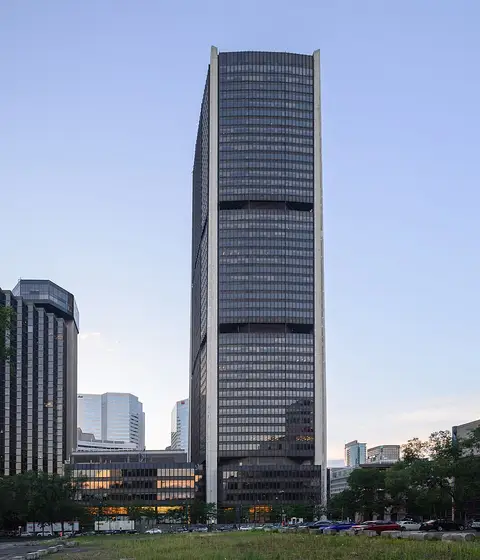 Monuments01
Tour de la Bourse
800 Rue du Square Victoria · Montreal● Website● Phone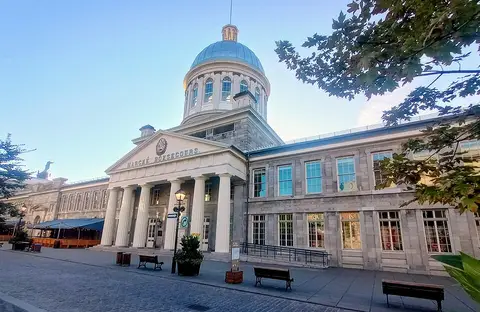 Historic sites02
Bonsecours Market
300 Rue St-Paul E · Montreal● Website● Phone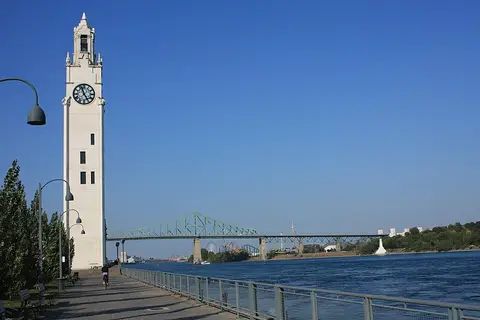 Monuments03
Montreal Clock Tower
333 Rue de la Commune Ouest · Montreal● Website● Phone Historic sites04
You need a free account to leave reviews and photos – that keeps comments genuine and lets you edit them later.
This visually striking residential building was created by architect Moshe Safdie for Expo 67. The result was an amazingly modern dwelling that challenged the way architects created urban homes. Compared alternately to a beehive, a Taos pueblo, and a crystalline growth, the complex's 154 units are composed of prefabricated concrete cubes assembled on site. The apartments here are highly prized and a number of prominent Montrealers make Habitat 67 their home.
Source: Wikivoyage, „Montreal/Downtown“ · authors per page history · CC BY-SA 4.0 · as of 7/22/2015