
Prince Edward Island: Red Cliffs and Anne
Travel guide · editorialRed cliffs, green fields and white lighthouses: Canada's smallest province looks like something out of a picture book. A vacation on Prince Edward Island takes you to Charlottetown, to sandy beaches with warm water and in the footsteps of Anne of Green Gables.
Landscape and Location
Prince Edward Island, or PEI for short, lies in the Gulf of St. Lawrence. Since 1997, the nearly 8-mile-long Confederation Bridge has connected it to New Brunswick, making it one of the longest bridges over ice-covered water. The island is flat to gently rolling, and its soil is colored red by iron. The north shore is home to sandy beaches and dunes in Prince Edward Island National Park, while the south shore is characterized by bays and cliffs. The water of the Northumberland Strait is among the warmest north of the Carolinas.
Charlottetown and Summerside
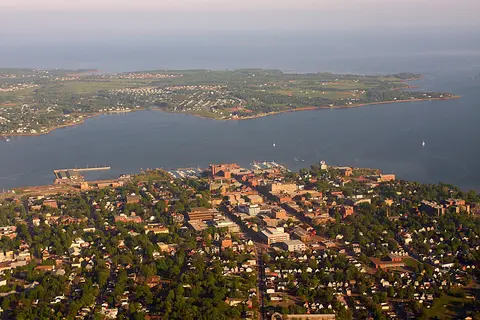
Charlottetown, the capital, is regarded as the birthplace of Canada, because in 1864 delegates met here for the conference that led to the founding of the federation in 1867. Province House, the Confederation Centre of the Arts with its long-running Anne musical, and the Victorian streets along the harbor are the main sights. Restaurants on the waterfront serve fresh-caught seafood. Summerside, the island's second city, lies on the western side and has a school for bagpipes and Highland dance, the College of Piping, as well as a waterfront boardwalk.
Sights on Prince Edward Island
In Cavendish, Green Gables Heritage Place commemorates Lucy Maud Montgomery's 1908 novel Anne of Green Gables, which found millions of readers worldwide, especially in Japan. The north shore, with beaches such as Brackley Beach and Cavendish Beach as well as the dunes of Greenwich, is ideal for swimming and cycling. The Confederation Trail, a former railroad bed, crosses the entire island and is part of the Trans Canada Trail. Lighthouses such as Point Prim and East Point, along with the Acadian region of Évangéline in the west, are other places worth visiting.
Nature and Active Vacations
The island is flat enough to explore by bike; the Confederation Trail runs roughly 250 miles from west to east. Golfers appreciate the courses along the coast, and anglers head out by boat to fish for tuna. On some beaches, such as Basin Head, the sand squeaks underfoot, which is why it is called singing sand. In the Greenwich section of the national park, a floating boardwalk leads through dunes and wetlands. In fall the forests change color, and quiet island life shows its coziest side.
Food, Getting There and Best Time to Visit
PEI is famous for potatoes grown in its red soil, for mussels exported worldwide as PEI Mussels, for oysters from Malpeque and for lobster. Lobster suppers in community halls are a summer tradition. In September, the Fall Flavours Festival celebrates the harvest. Charlottetown has a small airport; most visitors arrive via Halifax or Moncton and then continue by car over the bridge or by ferry from Nova Scotia. The best time to visit is from June to September; winter is quiet and snowy.