About Ottawa Parliment Hill
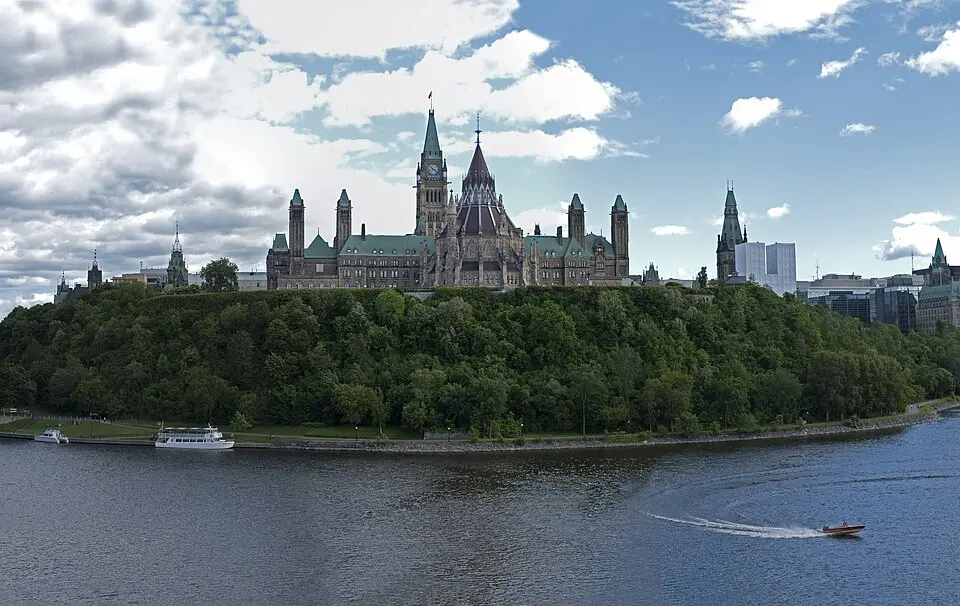
Parliament Hill is a prominent limestone hill on the south bank of the Ottawa River in Canada's capital. This historic landmark, once known as Barrack Hill and long used as a point of orientation by First Nations and European settlers, is now home to the heart of the Canadian government. The hill was transformed into a government district in the 19th century, after Queen Victoria designated Ottawa as the capital. The ensemble of Gothic Revival buildings, which spreads across a large area, attracts around three million visitors a year and forms the focal point of the country's political life.
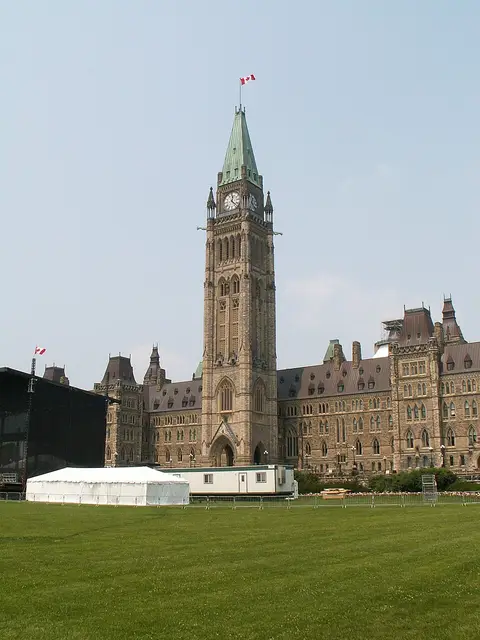
The architecture of the grounds reflects Canada's close historical ties to Great Britain. The most striking structure is the Centre Block, which houses the chambers of the House of Commons and the Senate. On its south facade, the 92-meter-high Peace Tower rises up, commemorating the victims of World War I. The flanking West and East Blocks serve primarily as offices for ministers, senators, and administrative staff. All three main buildings show a mix of British, French, Dutch, and Italian architectural influences. Between the buildings lies a square Baroque-style garden, the setting for important national ceremonies such as the Changing of the Guard and the Canada Day celebrations. The remaining gardens follow the style of the English landscape garden and are adorned with numerous statues and monuments.
The history of the site is closely tied to the founding of the Canadian nation. Construction began in 1859, with the architects deliberately taking their cue from London's Palace of Westminster to underscore British influence. The building process was beset by challenges, including unexpected rock formations and massive cost overruns. A severe fire in 1916 largely destroyed the interior of the Centre Block, with only the library saved thanks to the quick action of a librarian. Reconstruction was completed by 1920, and the Peace Tower was added in 1927. Since 1976, the terraces and the building complex have held the status of a National Historic Site.
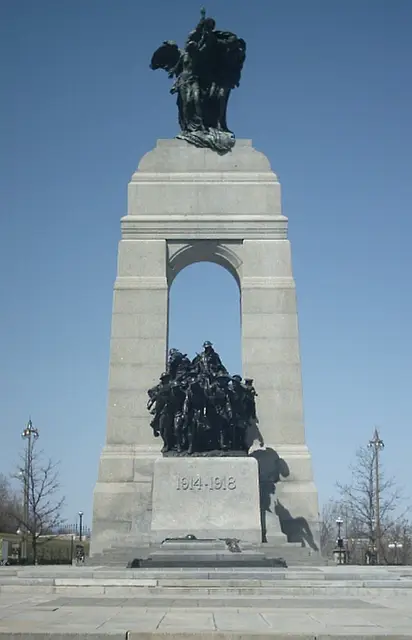
For visitors, Parliament Hill offers an impressive look into Canada's history and politics. The grounds are rich in memorials, including statues of important figures such as John Macdonald, Queen Victoria, and Lester Pearson. Of particular note are the Centennial Flame, lit in 1967 to mark the 100th anniversary of Confederation, and the memorial to fallen police officers. The formal main entrance is formed by the Queen's Gates in a Victorian cast-iron fence. A visit to Parliament Hill lets you experience the capital's historical development and the architectural splendor of the Gothic Revival government buildings in a picturesque river landscape.
At a glance
- Category
- Sight › Historic sites
- Rating
- no reviews yet · write a review
- Address
- 111 Wellington St
K1A 0A4 Ottawa, Canada - District
- Somerset
- Phone
- +18003634465
- Website
- www.ottawatourism.ca
- —
- Coordinates
- 45.42388° N · -75.69855° E
- Data quality
- confidence 0.89
- Identifier
- ID 99e7b272-e73…
Location & surroundings
Toggle layersFAQ about Ottawa Parliment Hill
quick answersWhat is Parliament Hill in Ottawa?
Parliament Hill is a limestone bluff on the south bank of the Ottawa River in Ottawa and the seat of the Canadian government. It was formerly known as Barrack Hill and served as a landmark for First Nations and European settlers alike. The ensemble of Gothic Revival government buildings at 111 Wellington St in the Somerset neighborhood draws around three million visitors a year.
Which buildings stand on Parliament Hill in Ottawa?
Three main buildings stand on Parliament Hill in Ottawa: the Centre Block, the West Block, and the East Block. The Centre Block houses the chambers of the House of Commons and the Senate, and the 92-meter Peace Tower rises from its south facade as a memorial to the victims of World War I. The West and East Blocks serve mainly as offices for ministers, senators, and administrative staff. All three buildings combine British, French, Dutch, and Italian architectural influences.
How old is Parliament Hill in Ottawa and what is its history?
Construction on Parliament Hill in Ottawa began in 1859, after Queen Victoria designated Ottawa as the capital. The architects deliberately took their cue from London's Palace of Westminster. A fire in 1916 largely destroyed the interior of the Centre Block; only the library was saved, thanks to a librarian. Reconstruction was completed in 1920, and the Peace Tower was added in 1927. Since 1976, the terraces and the building complex have been a National Historic Site.
What monuments are there on Parliament Hill in Ottawa?
On the grounds of Parliament Hill in Ottawa, you'll find numerous statues and memorials, including ones for John Macdonald, Queen Victoria, and Lester Pearson. Particularly well known is the Centennial Flame, lit in 1967 for the 100th anniversary of Confederation, and there is also a memorial to fallen police officers. Between the buildings lies a square Baroque-style garden where the Changing of the Guard and the Canada Day celebrations take place. The formal main entrance is formed by the Queen's Gates in a Victorian cast-iron fence.
What can you see around Parliament Hill in Ottawa?
Several monuments and a museum lie in the immediate vicinity of Parliament Hill in Ottawa. travelguide195 lists, among others, the Terry Fox Statue at about 74 meters, the Queen Elizabeth II Equestrian Statue and the Women's Emancipation Memorial at about 89 meters, the Portrait Gallery of Canada at about 109 meters, and the Famous Five Statue "Women Are Persons!" at about 189 meters away. Within a 500-meter radius, travelguide195 also lists 68 restaurants, and the site is part of the tour "Ottawa in One Day: Parliament Hill, Canal, and Elgin Street."
Ratings & comments
none yetNear Ottawa Parliment Hill
closest 5 per category · 2 kmSights
Restaurants
Museums
Hotels
More:Historic sites in Ottawa (250)Sights in Somerset (79)All sights in Ottawa (278)
241 places within 2 km loaded.
You need a free account to leave reviews and photos – that keeps comments genuine and lets you edit them later.
A changing of the guard ceremony takes place on the main lawn every day at 9:45AM during the summer, featuring soldiers from Canada's Ceremonial Guard dressed in British-style ceremonial uniforms, complete with bearskin hats.
Source: Wikivoyage, „Military and police ceremonies“ · authors per page history · CC BY-SA 4.0