
Ukraine: Portrait of a Country at War
Travel guide · editorialBecause of Russia's war of aggression, the German Federal Foreign Office has issued a travel warning for the whole of Ukraine, and missile and drone attacks hit civilian targets across the country. This text is therefore not an invitation to travel to Ukraine, but a portrait of the country, its cities and its culture, for a time when vacationing in Ukraine is possible again.
The Situation in the Country
Since February 24, 2022, Russia has been waging a full-scale war against Ukraine, after already annexing the Crimean Peninsula in violation of international law in 2014 and bringing parts of the Donbas under its control. Civilian airspace is closed, curfews apply in many regions, and air raid alerts are part of everyday life. Millions of people have fled or been displaced within the country. Anyone who must nevertheless enter for professional or humanitarian reasons should follow the latest guidance from the authorities closely. At the same time, life goes on in many cities: theaters stage performances, cafés open their doors, and concerts take place in shelters. This resilience has itself become part of the country's self-image.
Kyiv: Domes above the Dnipro
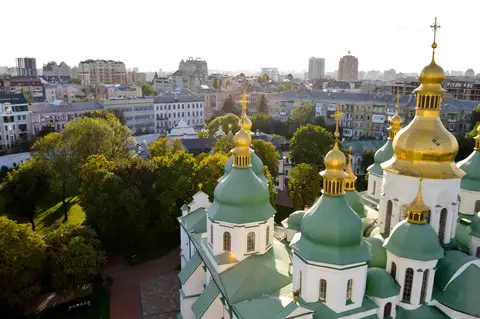
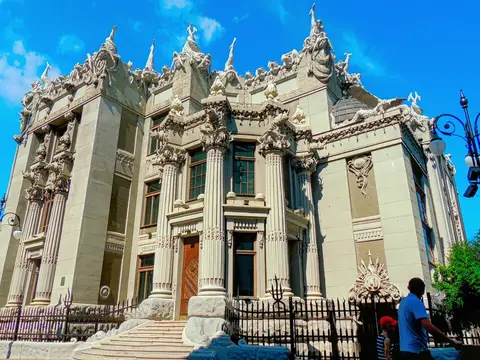
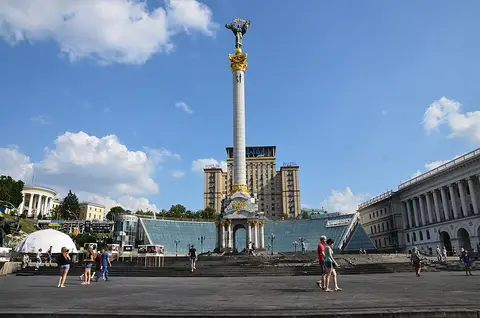
The capital sits on high hills on the west bank of the Dnipro. Its oldest landmark is St. Sophia's Cathedral from the 11th century, with golden domes and Byzantine mosaics; together with the Kyiv Pechersk Lavra, whose underground passages hold monks' tombs, it is a UNESCO World Heritage Site. Andriyivskyy Descent, a steep cobblestone lane lined with galleries and stalls, leads down into Podil, the old merchants' quarter. Khreshchatyk, the broad grand boulevard, and Maidan Nezalezhnosti are places where the country's recent history has been concentrated, from the Orange Revolution in 2004 to the Revolution of Dignity in 2014. In peacetime, Kyiv's coffeehouses, clubs and markets such as the Bessarabska Market drew young travelers from all over Europe.
Lviv, Chernivtsi and the West
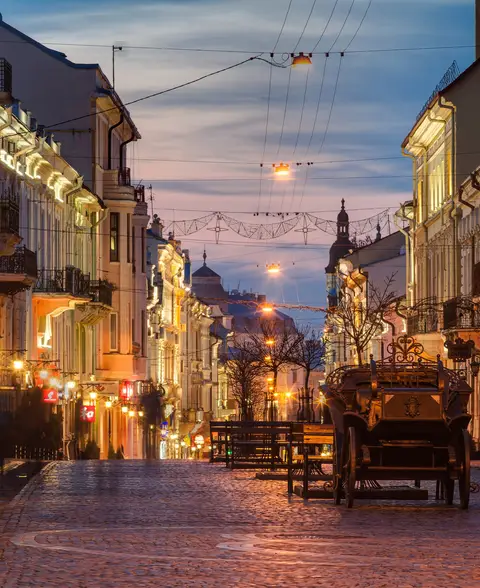
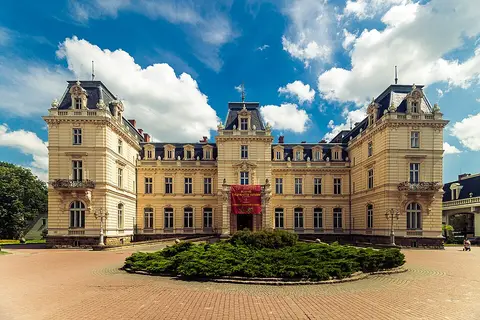
Lviv, known in German as Lemberg, was long part of the Polish-Lithuanian Commonwealth and later the Habsburg Monarchy, and it shows: Renaissance and Baroque buildings surround Rynok Square, churches of three denominations stand just a few steps apart, and the coffeehouse culture recalls Vienna. The Old Town is a UNESCO World Heritage Site. Farther south is Chernivtsi, the former capital of Bukovina, a city with a German-Jewish literary history where Paul Celan and Rose Ausländer grew up. The red-brick residence of the Bukovinian metropolitans now houses the university. In the Carpathians, the Hutsuls preserve their wooden churches, carvings and the playing of the trembita, an alphorn up to three meters long. Before the war, Vinnytsia in central Ukraine was known for its large light fountain on the Southern Buh.
Odesa and the South
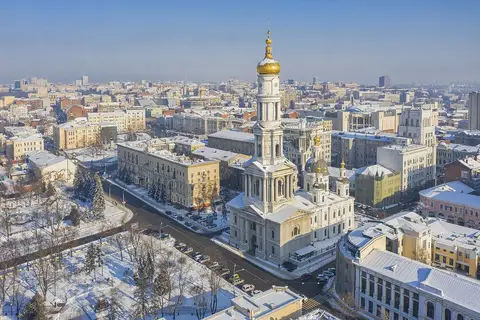
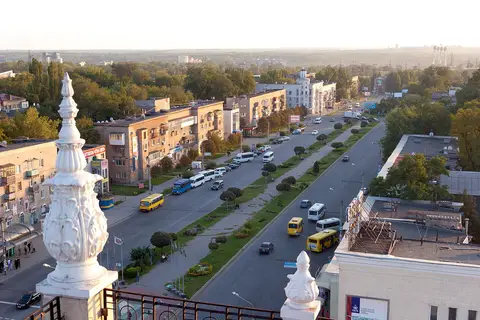
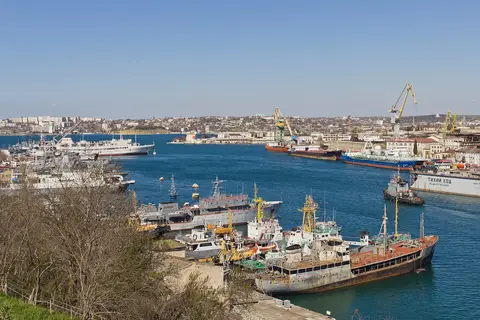
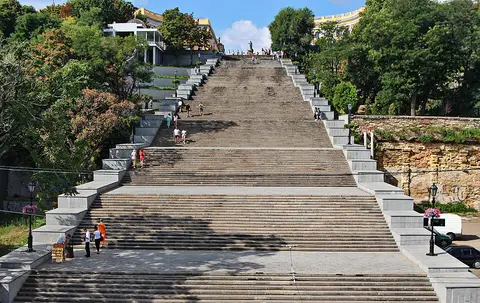
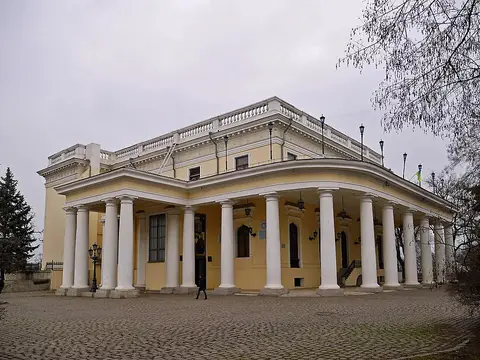
Odesa was founded in the late 18th century as a port city on the Black Sea and shaped by merchants from half of Europe. The Potemkin Stairs lead from the boulevard down to the harbor, the opera house is considered one of the most beautiful in Europe, and the historic center was declared a UNESCO World Heritage Site in 2023 and at the same time listed as endangered; attacks have since damaged architectural monuments such as the Transfiguration Cathedral. Odesa's humor, its courtyards with grapevines and the beaches of Arkadia were once as much a part of the picture as fish markets and summer concerts. In the east and south lie industrial cities such as Dnipro, Kharkiv and Zaporizhzhia, with their universities, Constructivist architecture and lively art scenes; Kharkiv in particular, however, has come under heavy attack again and again since the war began. Crimea, with Sevastopol and the palaces on the southern coast, has been occupied by Russia since 2014.
Culture, History and Customs
Ukrainian identity has deep roots, from Kyivan Rus in the Middle Ages through the Cossack Hetmanate on the Dnipro to independence in 1991. Embroidered shirts, the vyshyvanka, are worn on holidays, and every region has its own patterns. At Easter, people paint eggs in elaborate pysanky designs, and at Christmas they sing koliadky from house to house. The memory of the Holodomor, the famine caused by Stalin in 1932 and 1933, is a central part of the country's historical consciousness, as is Chernobyl, where the reactor disaster occurred in 1986.
Food and Drink
Ukrainian cuisine is rustic and hearty. Borscht made from beets, cabbage and meat, served with sour cream and garlic rolls called pampushky, was recognized by UNESCO in 2022 as intangible cultural heritage in urgent need of safeguarding. Varenyky, filled dumplings with potatoes, farmer's cheese or cherries, holubtsi, stuffed cabbage rolls, and salo, cured pork fat, belong on every festive table. Add horilka, Ukrainian vodka, often infused with honey and chili, and kvass made from bread. In Lviv, chocolate and coffee are prepared with almost ceremonial seriousness.
Best Time to Visit Ukraine, Once the Situation Allows
Once travel is possible again, May, June and September are best, with temperatures of 64 to 77 degrees Fahrenheit. Summer is warm, often above 86 degrees in Odesa and along the Black Sea coast, ideal for beach days. Winters are long and cold, with plenty of snow in the Carpathians. Until then, the following applies: the Federal Foreign Office's travel warning is unambiguous, and tourist travel to Ukraine is strongly discouraged.