
Dnipropetrovsk Oblast: Industrial Heart on the Dnieper
Travel guide · editorialDnipropetrovsk Oblast is one of Ukraine's industrial centers, shaped by steel mills, ore mines, and the broad Dnieper River. Because of Russia's war of aggression, a travel warning is in effect; parts of the oblast lie near the front line and are under fire. A trip to Dnipro is therefore described here as a portrait, for the time when conditions allow it again.
Landscape and Location
The oblast lies in the steppe of eastern Ukraine, cut through by the Dnieper, which is several hundred meters wide here. Rapids once formed an obstacle to shipping; beyond them, on the islands downstream, lay the legendary Zaporozhian Sich of the Cossacks. Today grain fields, mining areas, and large industrial cities dominate. In the south, on the former Kakhovka Reservoir, lies the city of Nikopol, which has been shelled regularly since 2022 from the occupied bank on the opposite side; after the destruction of the dam in 2023, the reservoir dried up.
Dnipro and the Industrial Cities
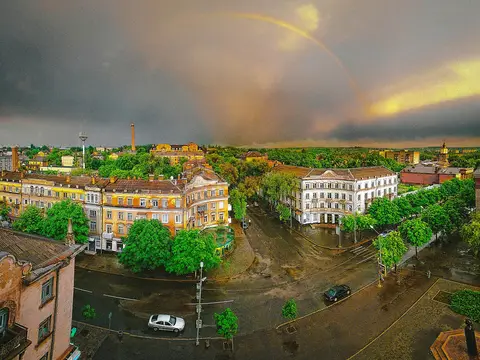
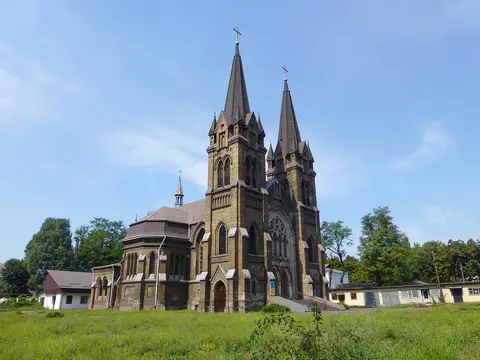
Dnipro, known as Dnipropetrovsk until 2016, is a city of more than a million people with one of the longest riverfront promenades in Europe. In Soviet times it was closed to foreigners because of its missile industry. The Menorah Center, one of the largest Jewish community centers in the world, houses a museum on Jewish history and the Holocaust in Ukraine. Shevchenko Park on a hill above the river, the Transfiguration Cathedral, and Monastyrskyi Island Park are among the sights in Dnipro. Kryvyi Rih stretches more than 120 kilometers, making it one of the longest cities in Europe; it grew up along an iron ore basin, and open-pit mines and slag heaps shape the landscape. Kamianske is a steel town on the Dnieper.
Nikopol on the Dnieper is one of the oldest Cossack settlements; nearby lay the Chortomlyk Sich, one of the main strongholds of the Zaporozhian Cossacks.
Culture and History
The area was the heartland of the Zaporozhian Cossacks, whose legacy lives on in songs, museums, and monuments. In Petrykivka, a folk painting style featuring floral and bird motifs developed; Petrykivka painting is on UNESCO's list of Intangible Cultural Heritage. Industrialization in the 19th century brought workers from many parts of the empire, which explains the predominantly Russian-speaking urban culture, one that has been orienting itself more strongly toward Ukrainian since 2014.
Nature on the Dnieper
Away from the industrial cities, there is surprisingly much nature. The Samara, a tributary of the Dnieper, flows through floodplain forests where beavers and rare birds live; the Samara Forest is considered one of the few surviving steppe forests in Ukraine. In the south, the banks have rocks and islands that once served as Cossack hideouts, and in Kryvyi Rih the Inhulets River runs through granite gorges. Dacha settlements with vegetable gardens surround Dnipro, and in summer anglers and swimmers gather on sandy beaches along the river that, in peaceful times, rank among the most popular in the region.
Food, Getting There, and the Situation Today
The cuisine is hearty: borscht, cutlets, varenyky with potatoes, and fish from the Dnieper. Dnipro Airport was heavily damaged in attacks in 2022; the city can be reached by train from Kyiv. Dnipro is a hub for the care of internally displaced people and the wounded, and it is attacked regularly. If you travel, you should be aware of the current safety advisories; areas near the front line in the east and south should be avoided.