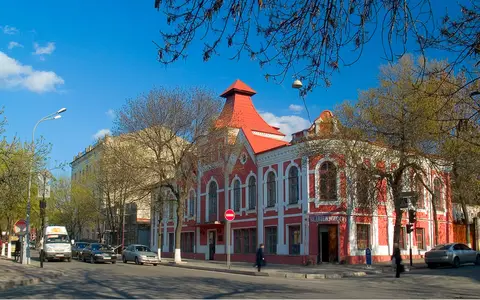
Luhansk Oblast: Steppe on the Siverskyi Donets
Travel guide · editorialLuhansk Oblast in the far east of Ukraine is Ukrainian territory under international law, but it has been partly occupied by Russia since 2014 and almost entirely since 2022. Travel to Luhansk is not possible, and a travel warning is in effect. This profile describes the landscape and history of a region shaped by mining, steppe and war.
Mining and Industry
Luhansk began in 1795 around a foundry that supplied cannons for the Black Sea Fleet, and it later became a center of locomotive manufacturing. As across the Donbas, coal mines, slag heaps and steelworks shaped the south of the oblast, in towns such as Alchevsk, Krasnyi Luch and Rovenky. In the north, Sievierodonetsk and Lysychansk lie on the Siverskyi Donets; both are chemical-industry centers that were occupied and largely destroyed after heavy fighting in 2022. The writer Volodymyr Dahl, born in Luhansk, compiled a famous dictionary in the 19th century.
Industry drew workers from many parts of the Russian Empire and later the Soviet Union, so Russian dominated everyday life, while Ukrainian was spoken in the villages of the north. After the collapse of the Soviet Union, many mines became unprofitable, and unemployment and emigration marked the 1990s.
Landscape
Away from industry, the oblast is a steppe landscape of limestone hills and chalk cliffs. The Striltsi Steppe Reserve in the north protects feather grass, marmots and wild tulips, and the floodplains of the Siverskyi Donets with their pine forests were popular destinations for day trips. Horses were bred around Starobilsk. Many of these landscapes are now mined or part of the combat zone.
Starobilsk and Bilovodsk in the north were centers of agriculture and horse breeding, and the Derkul stud farm was known for its horses. Near Stanytsia Luhanska, the line of contact ran from 2014 onward, and the bridge over the Siverskyi Donets was for years the only pedestrian crossing between the two areas.
The Situation Today
Since 2014, a large share of the population has left the region, and many live as internally displaced people in other parts of Ukraine. Human rights organizations report repression in the occupied territories. Fighting, mines and attacks make any stay dangerous; travel is not possible, and the travel warning applies without exception.