Sumy Oblast: Noble Estates on the Border
Travel guide · editorialSumy Oblast in northeastern Ukraine shares a long border with Russia and has been the repeated target of heavy attacks since 2022. A travel warning is in effect and border areas should be avoided; a trip to Sumy is therefore described here as a portrait, for a time when the situation allows travel again.
The City of Sumy
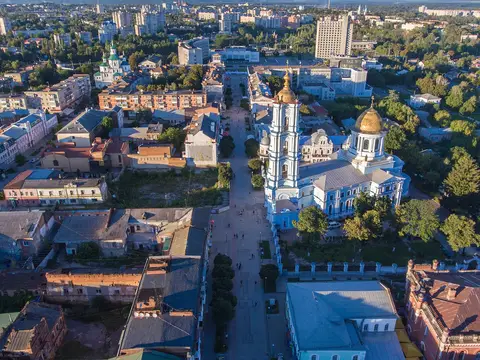
Sumy was founded by Cossacks on the Psel River in the 17th century. In the 19th century, sugar manufacturers such as the Kharitonenko family made the city wealthy; their donations paid for churches, schools, and the Transfiguration Cathedral in the center. The art museum, the theater, and the parks along the riverbanks shape the cityscape. Anton Chekhov spent several summers at the Lintvaryov estate on the edge of the city, where a museum now commemorates him. In April 2025, a missile strike on the city center caused numerous civilian casualties.
Landscape and Towns
The oblast lies in the transition zone between Polesia and the forest-steppe, with forests in the north and fields in the south. Near Trostianets stands a palace of the Golitsyn family with a landscape park and the "Round Yard," a circular stable complex; the town was occupied for a month in 2022. Okhtyrka has a Baroque cathedral, Konotop is a railway hub with a Cossack history, and near Romny and Hlukhiv you will find more churches and residences from the Hetmanate era. Desnianskyi-Starohutskyi National Park in the north protects forests along the Desna River.
Hlukhiv was the residence of the hetmans in the 18th century and has several churches and a museum, while Lebedyn and Okhtyrka preserve architectural monuments from the Cossack era. The area around Sumy is dotted with manor houses and parks that once belonged to the sugar barons.
Food and the Situation Today
The cuisine is rustic: borscht, potato dishes, mushrooms, honey, and baked goods. Sumy can be reached by train from Kyiv, but the city, and especially the border districts, are regularly attacked with drones and missiles. Travel is not advised; current safety advisories take precedence.
Also typical of the region are honey from the linden forests and buckwheat, which are sold at the markets. Many families own dachas on the Psel, where people used to fish and swim in summer.