
Odesa Oblast: Black Sea Coast and Danube Delta
Travel guide · editorialOdesa Oblast is the largest in Ukraine, stretching from the Black Sea to the Danube Delta. Because of Russia's war of aggression, a travel warning is in effect, and the port city is repeatedly targeted by attacks; a trip to Odesa is therefore described here as a portrait, for the time when conditions allow it again.
Odesa, the City by the Sea
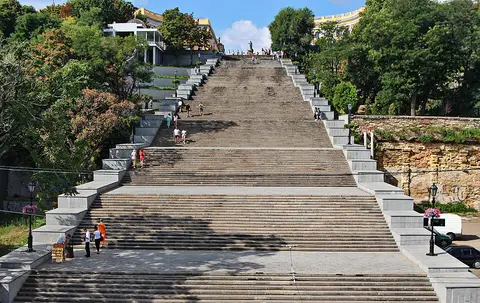
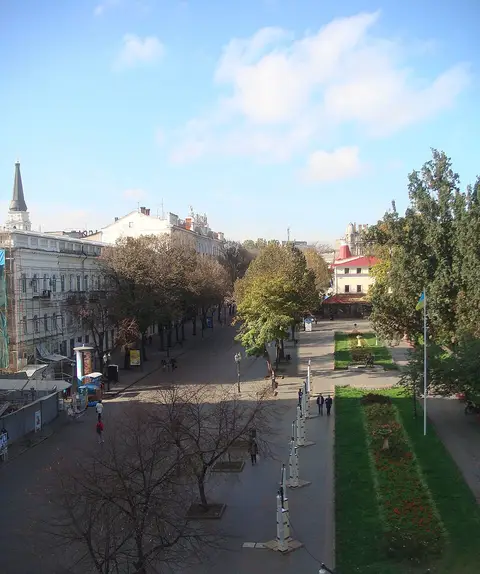
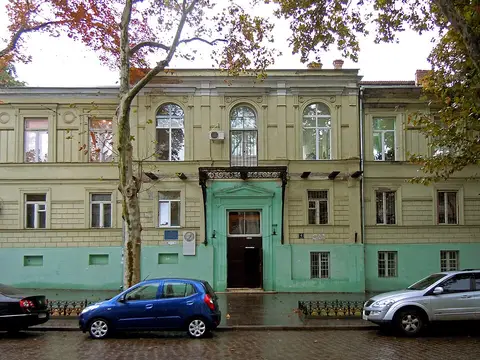
Odesa was founded in 1794 under Catherine the Great and grew as a free port into a multicultural trading city where Greeks, Jews, Italians, Ukrainians, and Russians lived side by side. The historic center, with its neoclassical streets, has been on the UNESCO World Heritage List since 2023. The Potemkin Stairs, made famous by Eisenstein's film, lead from Primorsky Boulevard down to the harbor. The neo-baroque opera house is considered one of the most beautiful in Europe, and Deribasivska Street and the Passage are popular promenades. Beneath the city run catacombs several thousand kilometers long, once quarries and later smugglers' routes and partisan hideouts.
Coast and Beaches
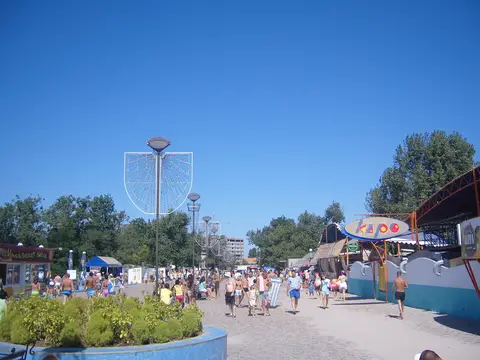
Before the war, Odesa was Ukraine's most important beach destination. The beaches of Arkadia and Langeron lie within the city; farther south, Zatoka is a summer resort on a spit between the sea and the Dniester Estuary, while Lymanka and Chornomorsk are suburbs with beaches and a port. Many beaches are currently closed or only partly accessible for safety reasons.
Northeast of Odesa lie the Kuyalnyk and Hadzhibey Estuaries, salty lagoons whose healing mud was already drawing spa guests in the 19th century. In summer half of Odesa used to bathe here, and Soviet-era sanatoriums line the shores.
Bessarabia and the Danube Delta
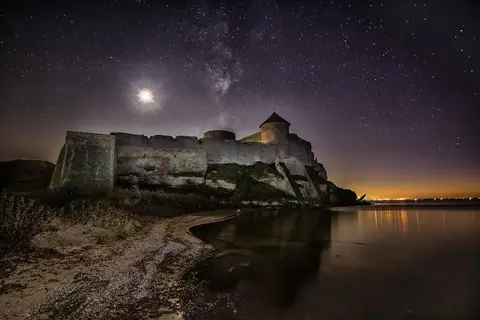
Southwest of the Dniester lies the historic part of Bessarabia. Bilhorod-Dnistrovskyi, the ancient Tyras, has one of the largest fortresses in Ukraine. Izmail on the Danube is a port city and the gateway to the Danube Delta, where pelicans and cormorants nest in the reed beds; Vylkove, with its canals, is known as the "Ukrainian Venice." Bulgarians, Gagauz, Moldovans, and descendants of German colonists live in the region. Winegrowing has a long tradition here, for example around Shabo.
Culture and History
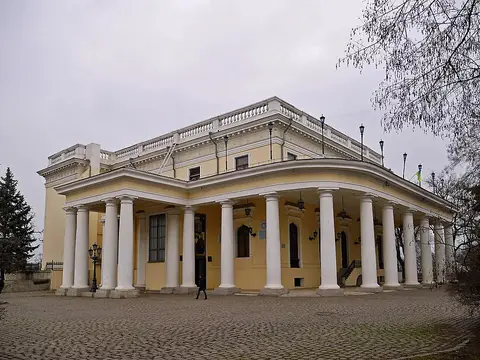
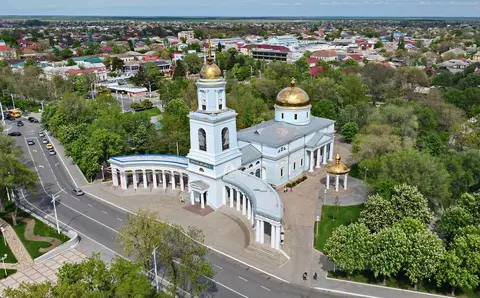
Odesa has produced its own blend of humor, port life, and literature. In his "Odessa Tales," Isaac Babel described the Jewish quarter of Moldavanka, Alexander Pushkin spent a year here in exile, and the Literary Museum in a palace near the harbor tells the story. Every year on April 1, the city celebrates Humorina with parades and cabaret. Since 2022, Russian attacks have damaged buildings in the center, including the Transfiguration Cathedral, which had been destroyed in the Soviet era and was not rebuilt until the 2000s. The city nevertheless remains culturally vibrant, with its opera, philharmonic, and exhibitions.
Food and Getting There
Odesa's cuisine is shaped by Jewish, Greek, and Ukrainian influences: forshmak, a herring spread, stuffed fish, eggplant caviar, and fresh gobies from the Black Sea. The Privoz Market is an experience in itself. The airport has been closed since 2022; Odesa can be reached by train from Kyiv or across the border from Moldova. Be sure to follow current safety advisories. In peacetime, the best time to visit is from June to September.