Zaporizhzhia Oblast: Cossack Island and the Sea of Azov
Travel guide · editorialUnder international law, Zaporizhzhia Oblast is Ukrainian territory, but its southern part, including Melitopol, Berdyansk, and the Enerhodar nuclear power plant, has been occupied by Russia since 2022. A travel warning is in effect for the region, and traveling to Zaporizhzhia is not recommended. This portrait describes the history and landscape of an area shaped by both Cossack legend and heavy industry.
Zaporizhzhia and Khortytsia Island
The city of Zaporizhzhia lies on the Dnipro River and remains under Ukrainian control, though it is frequently attacked. Its name means "beyond the rapids." In the middle of the river lies Khortytsia Island, about twelve kilometers long, with cliffs, oak forests, and steppe meadows. In the 16th century, the Zaporozhian Sich, the Cossacks' fortress, stood here and in the surrounding area. A national reserve with an open-air museum commemorates this era. The DniproHES hydroelectric plant, built in the 1930s as a prestige project of the Soviet Union, dams the river; it has been badly damaged several times during the war.
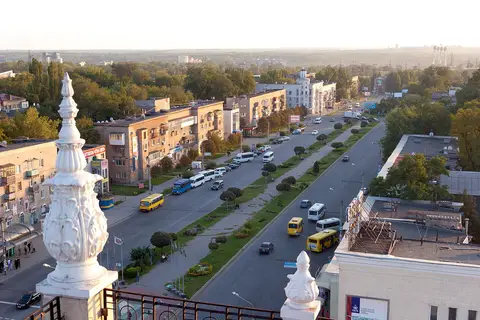
In the city of Zaporizhzhia itself, wide Soviet-era avenues, industrial plants, and parks along the river define the cityscape. Sobornyi Avenue, one of the longest streets in Europe, runs through the entire city.
The Sea of Azov Coast
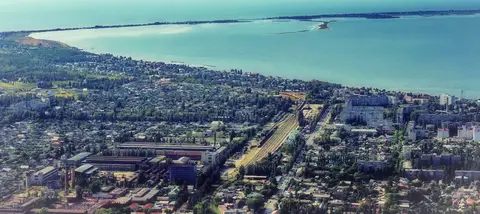
In the south of the oblast lies the coast of the Sea of Azov, a shallow, warm body of water that was a destination for many Ukrainian families before the war. Berdyansk, with its long spit, and Kyrylivka, on a narrow strip of land between the sea and the Molochnyi Estuary, were popular seaside resorts with sanatoriums and mud baths. Both towns have been occupied since 2022. Melitopol was known for its cherries and sweet cherries and as the center of the Tavria region.
History
The steppe was a transit zone for Scythians, Sarmatians, and nomadic peoples; burial mounds (kurgans) and stone figures known as kamiani baby can be found in many places. From the late 18th century, Mennonites, Bulgarians, and Greeks settled here. In the 20th century, Zaporizhzhia became a steel and machine-building city. The Zaporizhzhia Nuclear Power Plant in Enerhodar, the largest in Europe, has been occupied since March 2022 and is monitored by the International Atomic Energy Agency.
Nature and Landscape
The oblast is predominantly steppe, crossed by rivers such as the Molochna and the Berda. Along the coast lie spits such as the Fedotova Spit and the Berdyansk Spit, which serve as resting places for birds and are part of a national park. Near Melitopol is Kamiana Mohyla, a sandstone hill with grottoes and rock engravings said to be among the oldest examples of human art in the region. Oak forests grow along the Dnipro's banks in the north, and Khortytsia Island is also home to steppe vegetation and rare plants. Many of these areas are currently inaccessible, mined, or occupied.
In peacetime, visitors to Zaporizhzhia find riverside parks, the Cossack theater on Khortytsia Island with its horse-riding shows, and a market with melons, fish, and vegetables from the steppe.
The Situation Today
The front line runs through the oblast, and several cities in the south have been severely destroyed. The city of Zaporizhzhia is a gathering point for refugees from the occupied territories. Travel to the region is strongly discouraged; the latest advisories from the German Federal Foreign Office are authoritative.