
Crimea: A Peninsula Between Sea Cliffs and Steppe
Travel guide · editorialUnder international law, the Autonomous Republic of Crimea is part of Ukraine, but it has been occupied by Russia since 2014 and was annexed by Moscow in violation of international law. Travel to Crimea is currently not possible and is not recommended; this profile describes the landscape, history, and culture of a peninsula that drew many peoples over the centuries.
Landscape
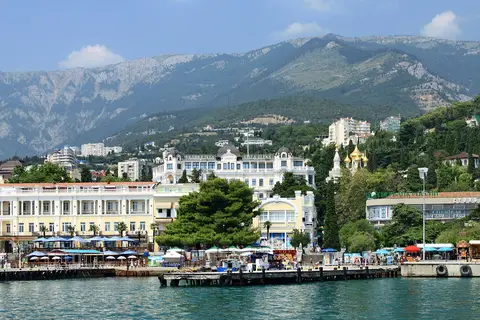
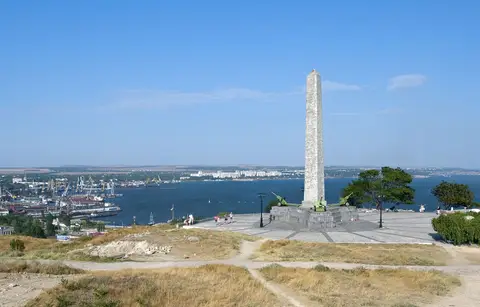
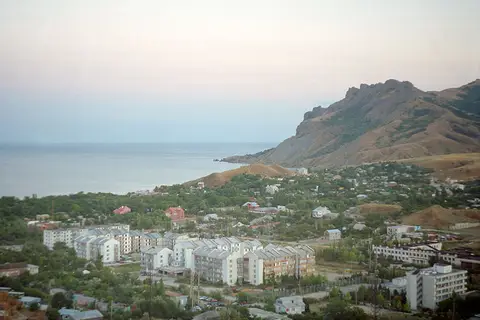
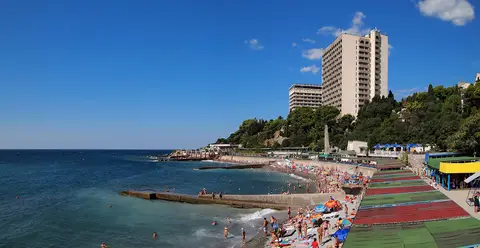
Most of Crimea is flat steppe, crossed in the north by salt lakes and the Sivash, a shallow lagoon landscape. In the south, the Crimean Mountains rise to more than 1,500 meters (about 4,900 feet) and shelter a narrow strip of coast with an almost Mediterranean climate: cypresses, vineyards, and sea cliffs shape the southern coast between Alushta and Foros. In the east, the peninsula ends in the Kerch Peninsula, which is separated from the Russian mainland by the Kerch Strait.
Cities and Towns
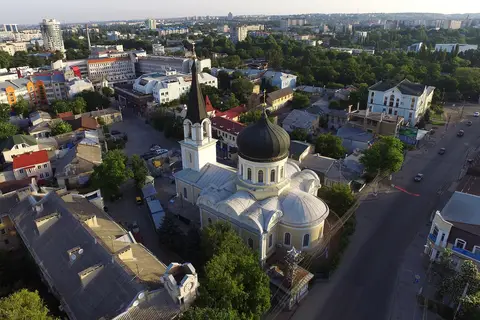
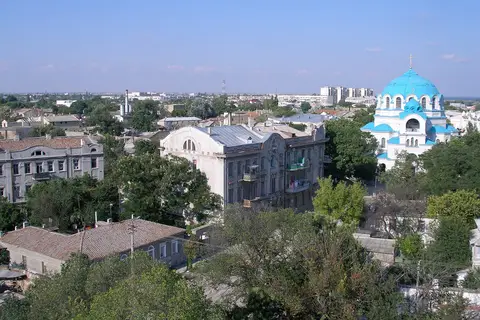
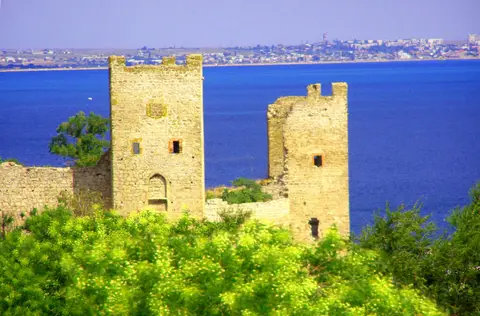
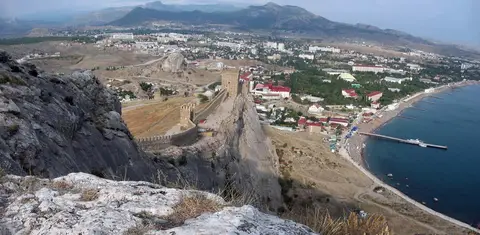
Simferopol is the administrative center and a transportation hub in the interior. Yalta became the tsarist court's spa resort in the 19th century; nearby are the Livadia Palace, site of the 1945 conference, the Vorontsov Palace in Alupka, and the Swallow's Nest, a small castle perched on a cliff. Alushta and Sudak, with its Genoese fortress, also lie on the southern coast. On the west coast, Yevpatoria is a spa town with sandy beaches and a 16th-century mosque. In the east you will find Feodosia, home of the marine painter Aivazovsky, and Koktebel, once an artists' gathering place, as well as Kerch, one of the oldest cities in Europe, the ancient Panticapaeum.
Inland lies Bakhchysarai with the Khan's Palace, whose fountains, gardens, and mosques recall the residence of the Crimean khans and which Pushkin immortalized in his poem "The Fountain of Bakhchisarai." Nearby, the Cave Monastery of the Dormition and the cave city of Chufut-Kale cling to the limestone cliffs. Sheep graze on the Ai-Petri plateau above Yalta, and the cable car from Miskhor once led up to one of the peninsula's best-known viewpoints.
History and Culture
Greeks founded colonies along the coasts, followed later by Byzantines, Genoese, and the Crimean Khanate of the Crimean Tatars, with its residence in Bakhchysarai. At the end of the 18th century, the Russian Empire annexed the peninsula. In 1944, under Stalin, the Crimean Tatars were deported en masse, and many lost their lives; they were not able to return until the late 1980s. In 1954, Crimea was transferred to the Ukrainian Soviet Republic. Since the occupation in 2014, human rights organizations have reported repression, particularly against Crimean Tatars.
Culturally, Crimea has always been diverse: alongside Crimean Tatars, Ukrainians, and Russians, it was home to Karaites, Krymchaks, Armenians, Greeks, and Germans. The Nikita Botanical Garden near Yalta, founded in 1812, testified to the peninsula's importance for science and horticulture, and writers such as Anton Chekhov, who lived in a house in Yalta, Lesya Ukrainka, and Maximilian Voloshin in Koktebel tied their biographies to the coast.
Cuisine and the Situation Today
Crimean Tatar cuisine features chebureki, fried turnovers filled with meat, yantyk flatbreads, and plov; the Massandra wineries were famous. Since 2014, entry from Ukraine is no longer regularly possible, and entering via Russia violates Ukrainian law. A travel warning applies to Crimea; the peninsula is also part of the theater of war.