Discover Hungary: Budapest, Lake Balaton, and Wine Country
Travel guide · editorialA vacation in Hungary often revolves around two destinations: Budapest with its thermal baths and Lake Balaton, the largest lake in Central Europe. In between and beyond lie the vineyards of Tokaj and Eger, the wide Puszta plains in the east, and cities such as Pécs and Szeged, all of which combine well on a road trip.
Budapest: The Danube, Thermal Baths, and Ruin Bars
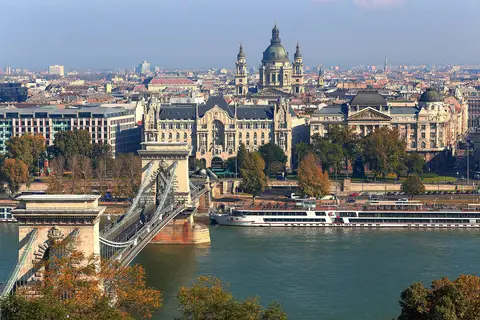
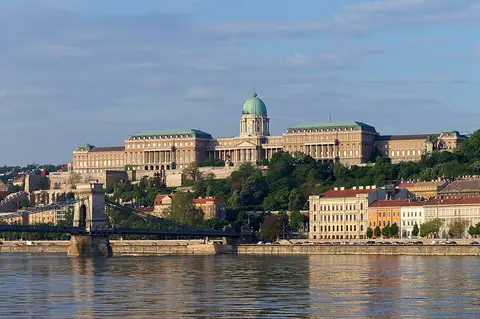
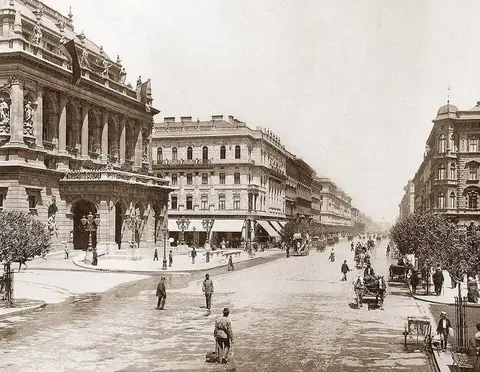
Budapest was formed in 1873 from the union of Buda, Óbuda, and Pest, and the Danube still divides the city into two distinct characters. The Buda side is home to Buda Castle, Matthias Church with its colorful tiled roof, and Fisherman's Bastion, whose turrets offer the best view of the Parliament. Pest is flat, urban, and livelier: Andrássy út, beneath which runs the oldest subway on the European continent, leads to Heroes' Square, and St. Stephen's Basilica houses the mummified right hand of the country's founder. The Chain Bridge was the city's first permanent crossing over the Danube. More than a hundred thermal springs bubble up beneath Budapest. At the Széchenyi Baths, older gentlemen play chess in the steaming outdoor pool, at the Gellért Baths guests soak beneath Art Nouveau mosaics, and the Turkish baths Rudas and Király date from the 16th century. In the former Jewish Quarter around the Great Synagogue on Dohány utca, the largest in Europe, ruin bars have set up shop in crumbling courtyards, led by Szimpla Kert, with its salvaged furniture, Trabant cars as seating nooks, and a farmers' market on Sundays.
Lake Balaton and Western Hungary
Lake Balaton is just under 50 miles (80 km) long but only about 10 feet (3 m) deep on average, which is why it quickly warms to 77°F (25°C) or more in summer. The southern shore with Siófok is flat, family-friendly, and packed with beach resorts and parties in July and August. The northern shore feels calmer: On the Tihany Peninsula, a Benedictine abbey stands above the water, lavender blooms there in June, and white wines such as Olaszrizling and Kéknyelű grow on the extinct volcanic cones near Badacsony. Keszthely at the western end has the Baroque Festetics Palace, and nearby lies Hévíz with a thermal lake where you can swim even in winter at water temperatures above 68°F (20°C). In the northwest, Győr with its Baroque old town is worth a visit, and on the way there you'll find Pannonhalma Archabbey, which has stood since 996 and is a World Heritage Site.
Sights in Hungary: Eger, Tokaj, Pécs
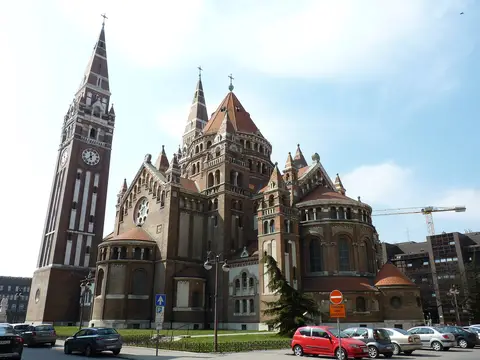
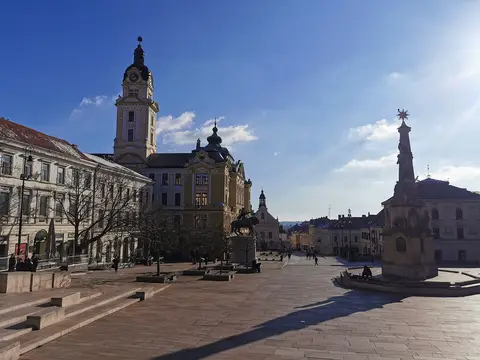
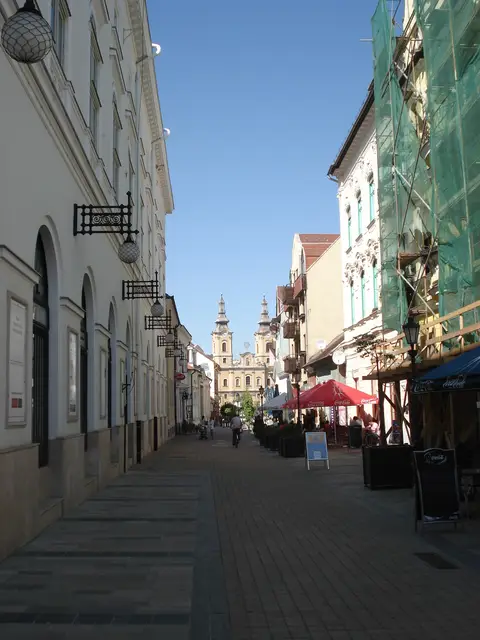
Among the most beautiful destinations in Hungary outside the capital is Eger in the northeast. Its castle commemorates the defense against the Ottomans in 1552, the northernmost minaret from the Turkish era stands at the edge of the old town, and in the Valley of the Beautiful Woman, wine cellars line up where you can taste Egri Bikavér (Bull's Blood of Eger) straight from the barrel. Farther east lies Tokaj, whose noble sweet Aszú, made from grapes affected by noble rot, was already being drunk at European royal courts; the wine region is a UNESCO World Heritage Site. Pécs, in the south, has an early Christian burial chamber complex from the 4th century, a former mosque in the middle of the main square, and the Zsolnay Manufactory, whose shimmering ceramics adorn many roofs across Hungary. Szeged on the Tisza River is known for its Dóm Square, open-air festival performances in summer, salami, and paprika.
The Puszta and the East
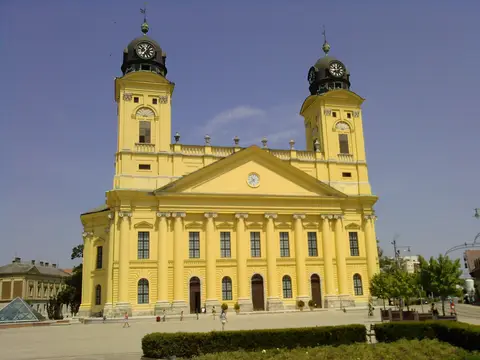
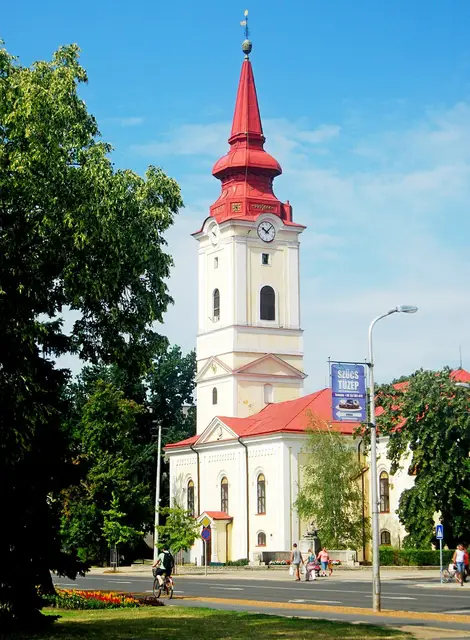
East of the Tisza, the Great Hungarian Plain begins. Hortobágy National Park near Debrecen is the largest continuous steppe in Central Europe, with gray steppe cattle, racka sheep, well sweeps, and the Nine-Arch Bridge. Herdsmen in blue garments demonstrate riding skills there, galloping while standing on two horses at once. Debrecen itself is the country's second-largest city and the center of Hungarian Calvinism, with its yellow Great Reformed Church. Right next door lies Hajdúszoboszló, one of the most visited spa towns in the country, with a huge thermal and adventure bath. To the south, near Kecskemét, the Bugac Puszta with its horse shows is a popular excursion.
Hungarian Cuisine and Wine
The dish known as goulash abroad is called pörkölt here, while gulyás is a hearty soup with beef, potatoes, and paprika. Halászlé, a spicy fish soup made from carp and catfish, is prepared differently in Szeged and Baja, which locals love to debate. Chicken paprikash with dumplings, stuffed cabbage, and lángos, a deep-fried yeast flatbread with garlic, sour cream, and cheese, are part of everyday life. Sweet treats include Somlói galuska, a sponge cake dessert with chocolate sauce, Dobos torte, and kürtőskalács, the chimney cake rolled over charcoal. To aid digestion, there is pálinka made from apricots or plums, or the bitter herbal liqueur Unicum. Hungary has 22 wine regions, including Villány in the south with its full-bodied red wines, in addition to Tokaj and Eger.
Getting There and Getting Around in Hungary
Budapest Airport (BUD) has direct flights from almost all major German airports, and Debrecen (DEB) has a few connections. By train, you can travel from Munich to Budapest via Vienna on the Railjet. Within Hungary, the rail network radiates out from the capital like a star; cross-country connections often take longer, but tickets are inexpensive. For motorways, you need an electronic vignette, the e-matrica. Payment is made in forints; euros are sometimes accepted, but at unfavorable rates.
Best Time to Visit Hungary
The best time to visit Hungary is from May to September. Summers are warm and continental, with temperatures in July and August often reaching 82 to 90°F (28 to 32°C), and higher in Budapest. This is the time for Lake Balaton and the Sziget Festival on a Danube island in August. For city trips and wineries, May, June, and September are more pleasant; September and October bring the grape harvest, with festivals in Eger and Tokaj. Winters are frosty, but that is when the steaming outdoor pools of the thermal baths are especially appealing, and in Budapest Christmas markets open on Vörösmarty Square and in front of the Basilica.