Veszprém County: Northern Shore of Lake Balaton and the Bakony
Travel guide · editorialA vacation in Veszprém County takes you to the hilly northern shore of Lake Balaton, where vineyards grow on extinct volcanoes and small resort towns line the water. Behind it stretches the Bakony, one of Hungary's largest forested areas, with the episcopal city of Veszprém at its center.
A Landscape of Forest and Lake
Veszprém County reaches from Lake Balaton in the south to the edge of the Little Hungarian Plain in the north. The middle is taken up by the Bakony, a low mountain range of limestone and dolomite with beech forests, caves, and old charcoal-burners' villages. On the lakeshore, the buttes of the Balaton Uplands dominate the view, flat-topped basalt cones such as Mount Badacsony, which formed through volcanic activity millions of years ago. In the Kál Basin you'll find scattered stone seas, rounded boulders strewn among fields and lavender.
Sights in Veszprém County
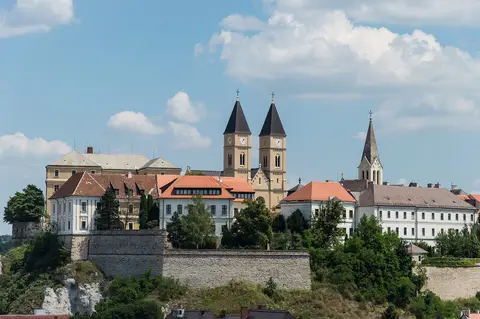
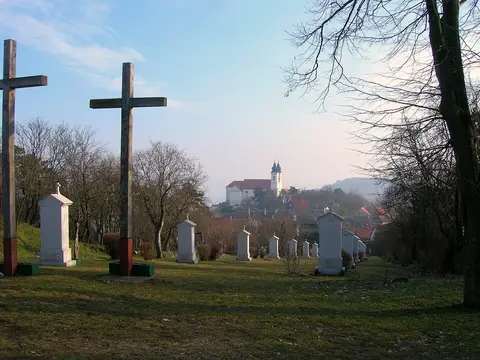
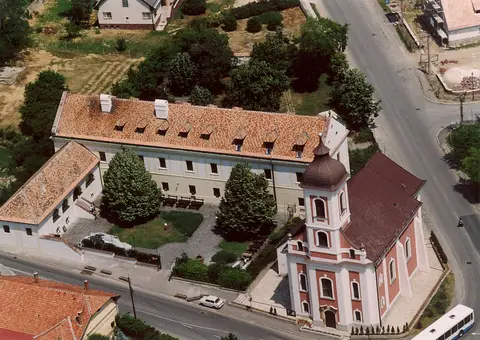
The Tihany Peninsula juts far out into Lake Balaton. On its ridge stands the Benedictine abbey, whose foundation charter of 1055 is considered the oldest surviving document containing Hungarian words. Below lie two crater lakes, lavender fields, and the fishing village with its thatched-roof houses. Balatonfüred is the oldest spa town on the lake, known for its cardiology hospital, its lakeside promenade lined with plane trees, and the Anna Balls held in July. Farther east come Csopak and Balatonalmádi, where the region's red sandstone was used to build many of the houses. Veszprém itself, built on several hills, is known as the City of Queens, because the bishops here traditionally crowned the Hungarian queens. On Castle Hill you'll find the Bishop's Palace, the cathedral, and the Gisela Chapel. In 2023, Veszprém was a European Capital of Culture.
Towns in the Hinterland
Pápa has a Baroque palace built by the Esterházy family and the Blue Dyeing Museum, which recalls the traditional craft of kékfestő. Ajka was once a center of mining and glassmaking. Herend, near Veszprém, is known worldwide for its hand-painted porcelain, produced since 1826, and Zirc is home to a Cistercian abbey with a remarkable library. There are several castles as well: Sümeg Castle perches on a limestone crag above the small town and hosts knightly tournaments in summer, while Nagyvázsony Castle once belonged to the legendary military commander Pál Kinizsi. In the Bakony itself, marked trails lead to karst springs, gorges, and caves, for example around Bakonybél, where a Benedictine monastery founded in the 11th century is once again home to monks.
Wine, Fish, and Festivals
Mount Badacsony produces mineral-rich white wines from Olaszrizling, Szürkebarát, and the rare Kéknyelű grape. Csopak and Balatonfüred also have their own wine regions, and in summer wine tents line the promenade. By the lake, you can enjoy pan-fried pike-perch, known here as fogas, or fried whitefish with lángos. In mid-August, the Művészetek Völgye arts festival, the Valley of the Arts, takes place in Kapolcs and neighboring villages and has done so since the 1980s.
Best Time to Visit and Getting There
The best time to visit is summer for a beach vacation, and May and September for hiking and wine tastings. From Budapest, it's about two hours via the M7 motorway to Balatonfüred; regional trains run along the northern shore, and in summer ferries connect Tihany with Szántód on the southern shore.