Bács-Kiskun County: Paprika, Puszta and the Danube
Travel guide · editorialBetween the Danube and the Tisza lies Hungary's largest county by area. A vacation in Bács-Kiskun County takes you through sandy puszta and orchards, to the paprika fields of Kalocsa and to the Art Nouveau city of Kecskemét.
Land Between Two Rivers
The landscape is flat, but not monotonous. Between juniper heaths, salt lakes and shifting dunes lie isolated farmsteads known as tanyas, often scattered widely across the plain. Large parts of the county belong to Kiskunság National Park, which protects steppe, lakes and sandy terrain. In the west, the Danube runs alongside the county with floodplain forests and side channels, and in the south the county reaches all the way to the Serbian border. The dry, sunny climate is ideal for fruit, vegetables and wine grown in the sandy soils.
Sights in Bács-Kiskun County
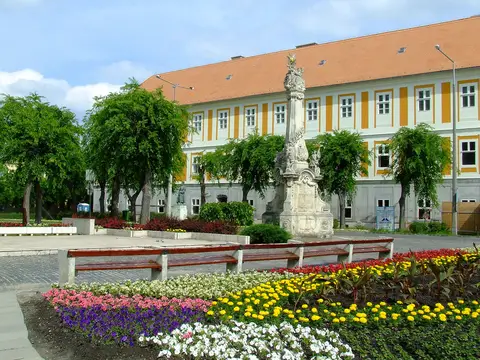
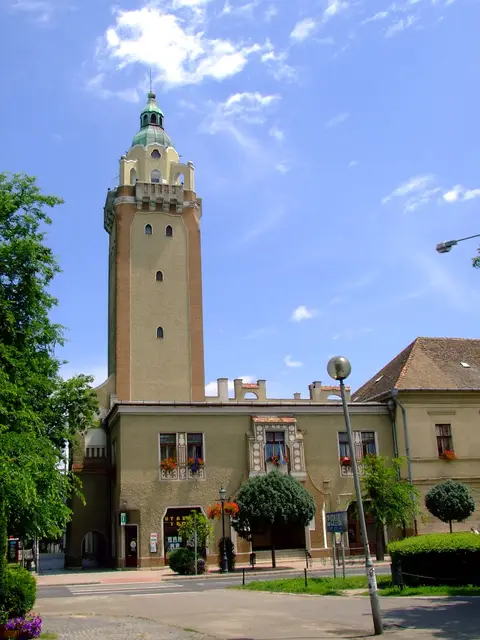
Kecskemét, the largest city, has a broad main square lined with colorfully glazed Art Nouveau buildings. The town hall by Ödön Lechner and the Cifrapalota, the "Ornamental Palace" with its majolica decorations, are the highlights. The composer Zoltán Kodály was born here, and an institute for music education bears his name. Today the city is also an industrial center, mainly thanks to a large Mercedes plant. In Bugac, in the heart of the national park, csikós horsemen show off their riding skills in front of a herd of Hungarian Grey cattle. Kalocsa is one of Hungary's oldest episcopal cities, founded under King Stephen, and the center of paprika growing. The Paprika Museum and the colorful floral motifs of Kalocsa folk art, painted on walls, furniture and porcelain, are typical of the town.
Baja and the Danube
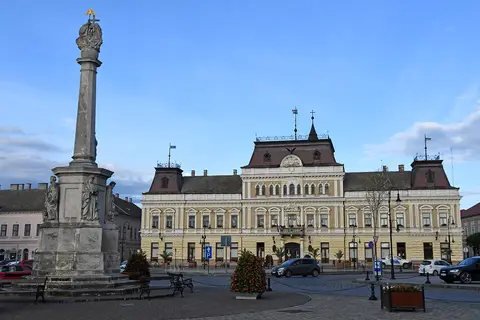
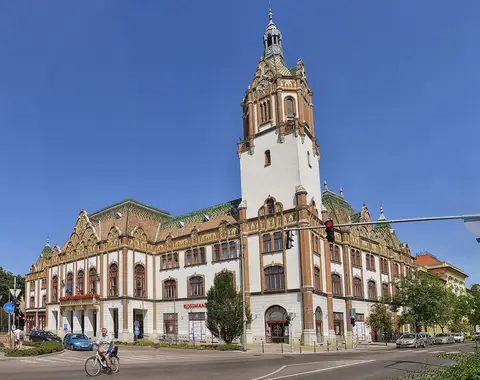
Baja on the Danube has one of Hungary's most spacious squares, opening out toward the river. Every July, at the fish soup festival, thousands of people cook Baja halászlé in cauldrons on the square, a spicy soup of carp and catfish with thick noodles. Kiskunhalas is known for its lace, the delicate Halas needle lace, and Kiskunfélegyháza for its town hall with colorful Art Nouveau ornamentation. Lajosmizse, northwest of Kecskemét, offers horse farms and puszta programs. Literary fans head to Kiskőrös, birthplace of the national poet Sándor Petőfi, whose thatched-roof birth house is preserved as a museum. In the south, around Hajós, hundreds of wine-press houses line up to form a cellar lane of their own, laid out by Hungarian Germans.
Food and Drink
Kecskemét is famous for its apricots and the barack pálinka distilled from them. Kunság is one of Hungary's largest wine-growing regions, where light white and red wines grow on sandy soil. Around Kalocsa, paprika is processed in every form: as powder, paste or in sausage. If you want to experience the plain at its most authentic, stop at one of the tanya farms, where goulash is cooked in a cauldron over an open fire and served with bread from a wood-fired oven. In summer, folk dance festivals with groups from all over Central Europe draw visitors to Kecskemét and Kalocsa, and on the Danube bank near Baja, fishermen's taverns offer views of the river.
Getting There and Best Time to Visit
Kecskemét lies on the M5 motorway, about an hour southeast of Budapest, and is easy to reach by train. The best time to visit is May through September; in fall, when paprika pods dry on the house walls, Kalocsa shows its most colorful side.