Tolna County: Red Wine, the Danube, and Gemenc
Travel guide · editorialBetween the Danube and the hills of Transdanubia lies Tolna County, one of Hungary's smaller counties. A trip to Tolna County combines wine cellars in Szekszárd with rides through the unspoiled floodplain forests of Gemenc.
Szekszárd and Its Wine
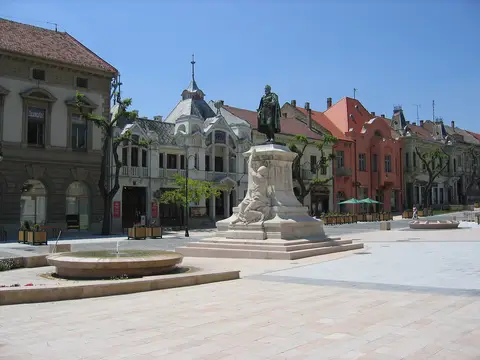
Szekszárd, the county seat, sits at the edge of a loess hill country, where wine cellars have been dug into the soft earth along sunken lanes. The wine region is best known for its reds, including its own Bikavér and Kadarka, an old, spicy grape variety. In town, a museum commemorates the poet Mihály Babits, who was born here, and the cultural center in the former synagogue hosts exhibitions. In autumn, the town celebrates a big grape harvest festival with a parade, music, and stalls on the main square.
Gemenc and the Danube
East of Szekszárd stretches Gemenc, one of the largest continuous floodplain forests along the Danube and part of the Danube-Drava National Park. Oxbow lakes, willow woods, and marshes provide habitat for red deer, white-tailed eagles, and black storks. A narrow-gauge railway runs through the forest, and boat trips are offered on the oxbow lakes. Farther north lies Paks, known for Hungary's only nuclear power plant, but also for its fish soup and the wine cellars on the Danube slope.
Culture and Best Time to Visit
Many villages are still home to Danube Swabians (ethnic Germans), whose costumes and customs are preserved in local heritage museums, for example in the area of the Swabian Turkey region. In the south, near Bátaszék and Mőcsény, you'll find wine cellars and farmsteads in this tradition, and in the west lies Dombóvár with the Gunaras thermal bath. Simontornya on the Sió River has a restored 13th-century castle, and the Baroque palace in Hőgyész bears witness to the wealth of the rural nobility. In Paks, a visitor center provides information about the nuclear power plant, an unusual contrast to the fishermen's taverns on the Danube bank. The county seat, Szekszárd, can be reached from Budapest in about two hours via the M6 motorway. The best time to visit is April to October, and for wine tastings especially autumn, when the doors stand open in the cellar lanes of Szekszárd and winemakers pour their new vintages.