
Pest County: The Danube Bend and the Capital's Surroundings
Travel guide · editorialPest County encircles Budapest like a ring, yet a trip to Pest County is more than an excursion to the suburbs. Here you'll find the Danube Bend with its castles, the artists' town of Szentendre, and Empress Elisabeth's favorite palace.
Location and Landscape
The county is the most populous in Hungary and also one of the most varied. In the north, the Danube squeezes between the Börzsöny and Pilis mountains and makes an almost right-angled turn, the Danube Bend. Forested volcanic hills drop steeply to the river there. South and east of Budapest, by contrast, the Great Hungarian Plain begins, with orchards, sandy soils, and small market towns such as Cegléd and Nagykőrös. Although Budapest itself is not part of the county, the county administration is based in the capital.
Sights in Pest County
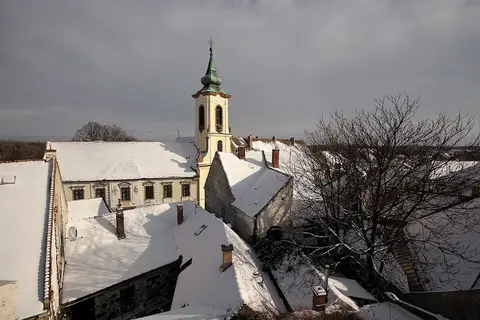
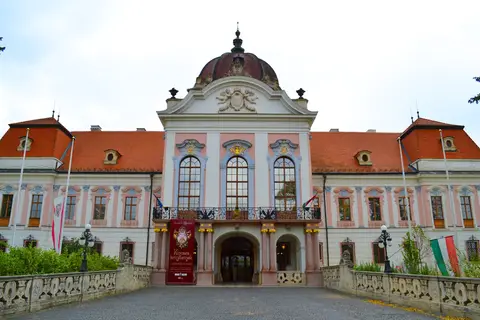
Szentendre, about 12 miles north of Budapest, was shaped by Serbian refugees in the 17th and 18th centuries; several Orthodox churches in its narrow lanes bear witness to this. The town later attracted painters, and the museum of ceramic artist Margit Kovács remains one of its most visited. On the edge of town, the Skanzen open-air museum shows farmhouses from all parts of the country. Farther upriver lies Visegrád, where Hungary's kings resided in the 14th century. From the upper castle you look out over the most beautiful stretch of the Danube Bend. Across the river on the east bank lies Vác, with its Baroque main square, a Neoclassical cathedral, and Hungary's only triumphal arch, built in 1764 for Maria Theresa. To the east stands Gödöllő Palace, one of the country's largest Baroque residences and once the summer seat of Franz Joseph and Elisabeth, who is still revered here as Sisi.
Towns in the Commuter Belt
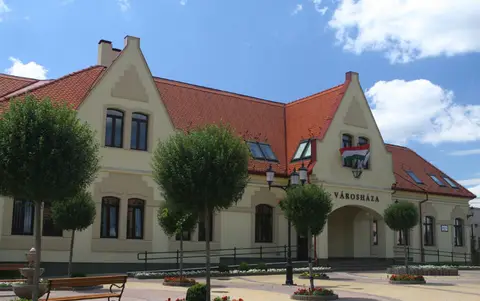
Many towns around Budapest have grown strongly in recent decades. Érd in the southwest is now the county's largest town, while Dunakeszi in the north and Gödöllő in the east are popular residential towns for commuters. Budaörs, formerly Wudersch, and Vecsés, formerly Wetschesch, were largely inhabited by ethnic Germans until 1946. In Vecsés, the annual Cabbage Festival recalls this tradition, as the town's pickled sauerkraut is known throughout the country. An unusual destination is Ócsa, with its Romanesque church and old farmhouses.
Food and Drink
Around Budapest, the cooking tends to be simple and hearty. In Szentendre, cafés with a marzipan museum and almond tortes beckon, while along the Danube near Visegrád and Nagymaros, fried catfish and fish soup are served. In the south of the county, on the sandy soils around Cegléd and Nagykőrös, apricots, cherries, and cucumbers grow; neighboring Kecskemét is home to apricot brandy, but here too it is distilled in many families. Many Budapesters spend their weekends in the vineyards around Etyek, west of the capital, which already belong to neighboring Fejér County. A typical snack on a day trip is lángos with garlic, sour cream, and cheese, fresh out of the fryer.
Getting Around and Best Time to Visit
The HÉV suburban railway connects Budapest with Szentendre and Gödöllő, and in summer boats run from Vigadó Square upriver to Visegrád and Esztergom. Hikers will find marked trails in the Pilis and Börzsöny, and cyclists can follow the Danube Cycle Path. The best time to visit is between May and October, when the boats are running and knightly tournaments take place at Visegrád Castle.