Heves County: Eger, the Mátra, and Bull's Blood Wine
Travel guide · editorialA vacation in Heves County means castles, wine cellars, and mountain forests in northern Hungary. The Baroque town of Eger, with its famous fortress, is the hub, the Mátra and Bükk ranges rise behind it, and Lake Tisza glitters in the south.
Between Mountains and Plains
The county stretches from the North Hungarian Mountains down to the Tisza plain. The Mátra is home to Kékes, Hungary's highest peak, at just over 1,000 meters, with a TV tower and ski runs that open in winter when there is snow. Mátraszentimre and the surrounding villages are popular destinations for hikers and mountain bikers. To the east lies the Bükk, whose southern edge is covered in vineyards. In the far southeast, part of Lake Tisza, including the town of Poroszló, belongs to the county; there the Eco Center has a large freshwater aquarium, and educational trails lead along boardwalks through the reeds.
Sights in Heves County
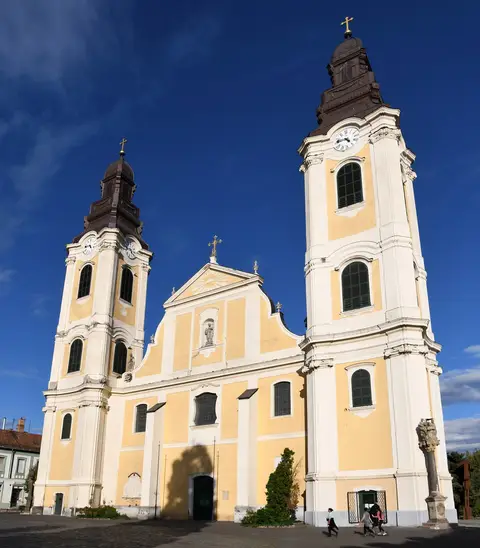
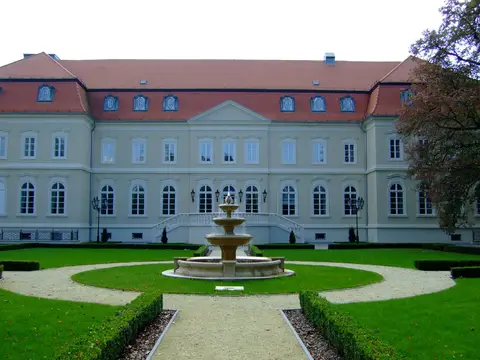
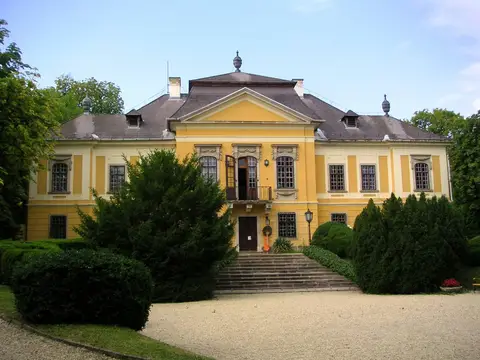
Eger is inseparably linked with the year 1552, when a small garrison under István Dobó held the castle against a far superior Ottoman army. Géza Gárdonyi's novel Eclipse of the Crescent Moon (known in Hungarian as Egri csillagok, "Stars of Eger") turned this siege into a national legend. The town did fall to the Ottomans later, and the northernmost surviving minaret in Europe dates from that period, slender and around 40 meters tall. The Baroque townscape with its basilica, lyceum, and Minorite church took shape in the 18th century. In the lyceum, a camera obscura in the tower shows views of the town. Not far from Eger lies Egerszalók, with a salt hill of calcareous tufa over which hot thermal water flows down in white terraces. Noszvaj has a Baroque palace and cave dwellings carved into tuff stone.
Szilvásvárad and Gyöngyös
Szilvásvárad on the edge of the Bükk is the center of Hungarian Lipizzaner breeding; carriage-driving competitions take place at the stud farm. From here the Szalajka Valley, with its stream cascades and the Fátyol Waterfall, leads into the national park, and a small forest railway makes the ascent easier. Gyöngyös at the foot of the Mátra is the starting point for the Mátra wine region, one of Hungary's largest. Hatvan to the west has a palace of the Grassalkovich family with a hunting museum. A narrow-gauge railway runs between Gyöngyös and Mátrafüred up into the forests, and from Parád, with its spa and the carriage museum in the Károlyi counts' magnificent stables, you can set out on hikes to Kékes. In the small village of Sirok, a castle ruin rises on a volcanic rock, and in clear weather you can see far out across the plains.
Wine and Cuisine
Egri Bikavér, or Bull's Blood of Eger, is a cuvée of Kékfrankos and other red varieties. According to legend, the defenders of 1552 drank red wine, which the Ottomans took for bull's blood. In the Valley of the Beautiful Woman, Szépasszony-völgy, on the edge of town, dozens of wine cellars stand in a row, where you can taste straight from the barrel. Goulash, Jókai bean soup, and trout from the Bükk are served alongside. Besides red wine, the white Egri Csillag is gaining in importance.
Getting There and Best Time to Visit
Eger lies about 140 kilometers northeast of Budapest and can be reached by car via the M3 or by train in roughly two hours. The best time to visit is between May and October; fall is especially beautiful, when the forests of the Mátra change color and the grape harvest begins.