Discover the Czech Republic: Prague, Bohemia and Moravia
Travel guide · editorialFor many travelers, a vacation in the Czech Republic begins with Prague, but the country between the Ore Mountains and the White Carpathians has far more to offer: spa towns in West Bohemia, sandstone cliffs along the Elbe, wine cellars in South Moravia and small Renaissance towns. Much of it lies just two or three hours from the German border.
Prague: Castle, Bridge and Lesser Town
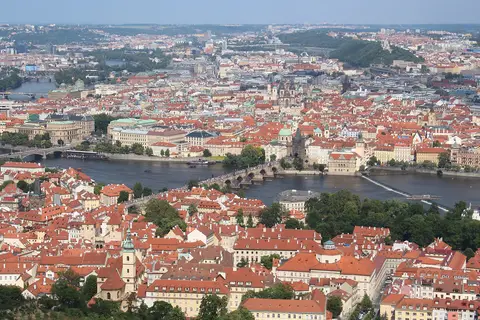
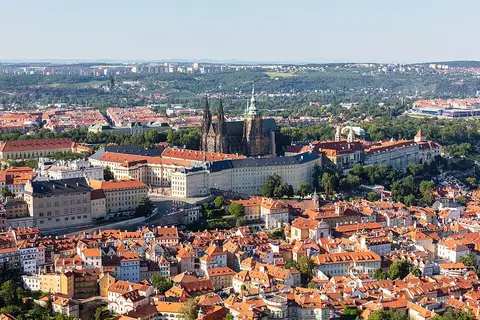
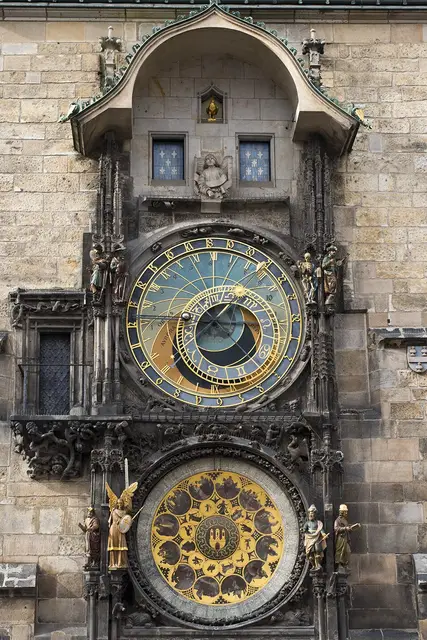
Prague's Old Town came through the wars largely unscathed and shows buildings from almost a thousand years. Prague Castle with St. Vitus Cathedral sits enthroned on Hradčany Hill, and below it lies the Lesser Town (Malá Strana) with its Baroque palaces and gardens. Charles Bridge crosses the Vltava, lined with 30 statues of saints; if you want to see it without the crowds, come early in the morning. On Old Town Square, the astronomical clock on the Town Hall shows the procession of the Apostles every hour on the hour. Josefov, the former Jewish Quarter, preserves several synagogues and the Old Jewish Cemetery with its densely packed gravestones. Off the main routes, worthwhile stops include Vyšehrad with the cemetery where Dvořák and Smetana are buried, the Vinohrady neighborhood with its wine bars, and Letná Park with its beer garden and view over the rooftops.
Brno, Olomouc and Moravia
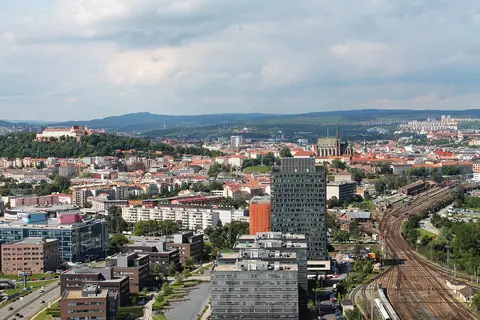
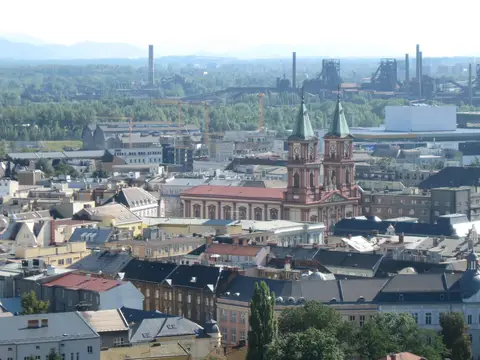
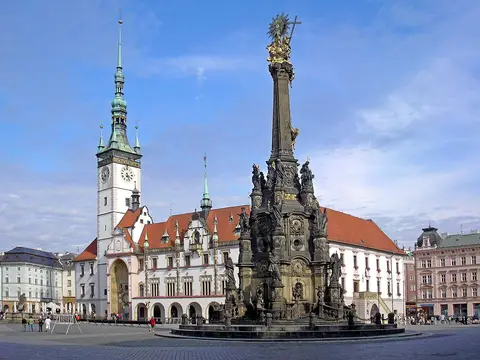
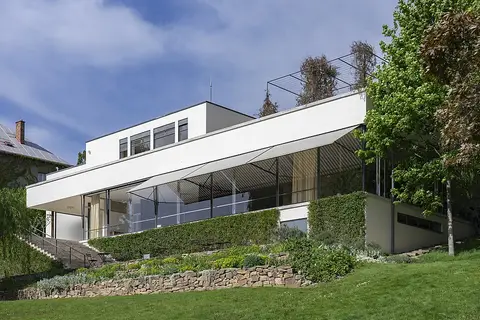
Brno, the second-largest city, is more relaxed than Prague and a student town. Villa Tugendhat by Ludwig Mies van der Rohe is a key work of modernism and a UNESCO World Heritage Site; you should reserve tickets weeks in advance. Beneath the Church of St. James lies an ossuary, and on Špilberk Hill stands a fortress where the Habsburgs once held prisoners. Olomouc has a broad market square with the Holy Trinity Column, also a World Heritage Site, and is known for Olomouc cheese (Olomoucké tvarůžky), a strong-smelling sour-milk cheese. South Moravia is the Czech Republic's wine country: in Mikulov, Valtice and around the Lednice-Valtice Cultural Landscape, rows of wine cellar lanes line up, where winemakers pour Grüner Veltliner, Welschriesling and Pálava. Ostrava in the northeast was a center of coal and steel; the decommissioned ironworks at Dolní Vítkovice is now a cultural and events venue.
Czech Republic Sights Beyond the Cities
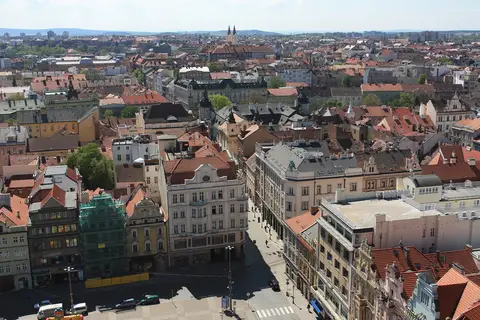
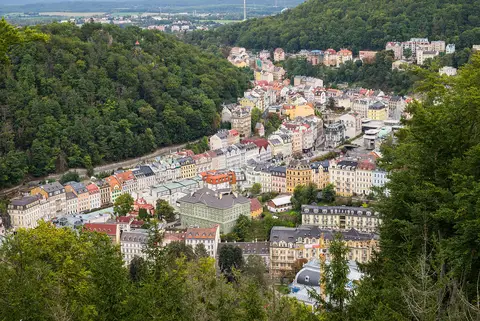
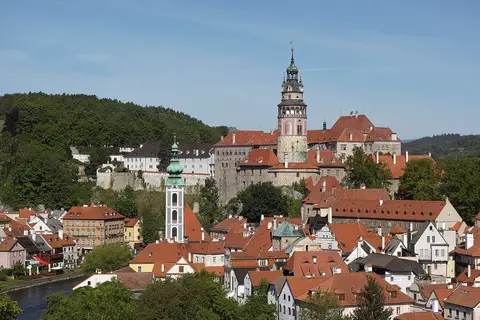
Among the most beautiful destinations in the Czech Republic is Český Krumlov on the Vltava, a small town that winds around the river in several loops, overlooked by a castle with a Baroque theater. Nearby České Budějovice has a square market square with arcades and the Budvar brewery. In West Bohemia you'll find the spa towns of Karlovy Vary, Mariánské Lázně and Františkovy Lázně, which since 2021 have been World Heritage Sites together with other European spa towns. In Karlovy Vary, people drink the warm mineral water from porcelain cups with spouts and eat wafers with it. Plzeň is the home of pilsner; at the Pilsner Urquell brewery you can taste unfiltered beer from oak barrels in the old cellars. In the north, sandstone towers rise from the forest in Bohemian Switzerland and the Bohemian Paradise; Pravčice Gate is the largest natural rock bridge in Europe. Kutná Hora with the Cathedral of St. Barbara and the Sedlec Ossuary is an easy day trip from Prague, as is Karlštejn Castle.
Culture and History
For centuries the Czech Republic was part of the Habsburg Empire, and under Charles IV Prague was the residence of the Holy Roman Empire. Czechoslovakia was founded in 1918; in 1938 and 1939 the country was dismembered and occupied by Nazi Germany. After the war came the expulsion of the Germans, communism, the Prague Spring of 1968 and, in 1989, the Velvet Revolution. In 1993 the Czech Republic and Slovakia separated peacefully. Literature holds a high place: Kafka, Hašek with his "Good Soldier Švejk" and Václav Havel shape the country's image. Puppet theater, marionettes and animated film have a long tradition, and the Czech Philharmonic and the Prague Spring festival in May draw classical music fans.
Food and Beer
The Czech Republic has the highest beer consumption per capita in the world, and the beer is poured with care, for example as a "mlíko" (milk), almost entirely foam. Czech cuisine includes svíčková, beef sirloin in cream sauce with dumplings, cranberries and a dollop of whipped cream, as well as roast pork with sauerkraut and dumplings, goulash and fried cheese. Beer snacks include pickled sausages, called "drowned men" (utopenec), and Liptauer cheese spread. Sweet options include fruit dumplings with quark and melted butter, as well as kolaches. In South Moravia, people drink burčák, young fermenting wine, in the fall.
Getting Around the Czech Republic
Prague Airport (PRG) is served from many German cities, while Brno (BRQ) has few connections. The train is often the better choice: EuroCity trains run from Berlin via Dresden through the Elbe Valley to Prague, and there are direct connections from Munich and Nuremberg. Within the country the rail network is dense, and long-distance buses supplement it inexpensively. For highways you need an electronic vignette, which you buy online. You pay in koruna; card payment is widespread, but in wine cellar lanes and small inns a little cash is useful.
Best Time to Visit the Czech Republic
The best time to visit the Czech Republic is between April and October. In May and June the gardens below Prague Castle are in bloom, with temperatures of 64 to 75°F. July and August are the warmest months, with highs of up to 86°F, and Prague is at its busiest then. September and October are ideal for hiking in Bohemian Switzerland and for the grape harvest in Moravia. Winter gets cold, you can ski in the Giant Mountains, and during Advent there are Christmas markets on Old Town Square and Wenceslas Square.