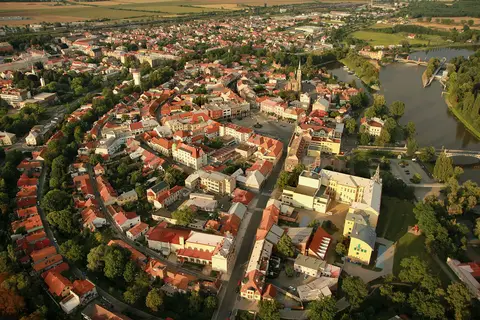
Central Bohemian Region: Castles Around Prague
Travel guide · editorialThe Czech Republic's largest region wraps around Prague like a ring and offers castles, silver-mining towns, spa resorts, and river valleys within easy reach. A trip to the Central Bohemian Region takes you to Karlštejn Castle, to the UNESCO World Heritage town of Kutná Hora, to the confluence of the Vltava and the Elbe near Mělník, and to the car factories of Mladá Boleslav.
Landscape and Location
The Central Bohemian Region, Středočeský kraj, is the largest in the Czech Republic by area and one of the largest by population. Unusually, its administrative seat is in Prague, which itself forms a separate region. The landscape is varied: in the north, the Elbe flows through fertile plains, while in the southwest the Vltava and the Berounka have cut deep into forests and limestone cliffs. The Bohemian Karst Protected Landscape Area around Karlštejn is riddled with caves and quarries, and the Brdy Mountains are a forested area that long served as a military training ground. In the northeast, the region extends into the Bohemian Paradise.
Sights in the Central Bohemian Region
Emperor Charles IV had Karlštejn Castle built in the 14th century to house the imperial regalia; the Chapel of the Holy Cross, with more than a hundred panel paintings, is unique. Near Beroun, a beer town with a bear enclosure, you'll find the Koněprusy Caves. In the Middle Ages, Kutná Hora was the richest town in Bohemia after Prague thanks to its silver mines; the Gothic Church of St. Barbara and the cathedral in Sedlec are World Heritage sites, and the ossuary with its decorations made of bones is world-famous. Other castles include Křivoklát in deep forests, Konopiště, the seat of Archduke Franz Ferdinand, and Český Šternberk above the Sázava River. The château in Mělník sits high above the confluence of the Vltava and the Elbe, surrounded by vineyards.
Towns and Villages
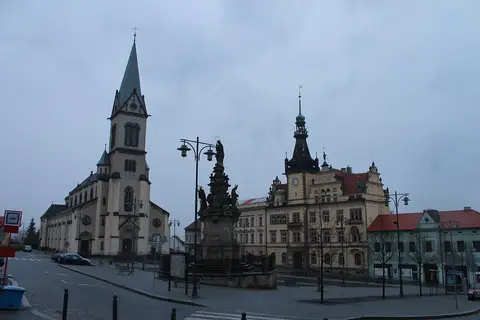
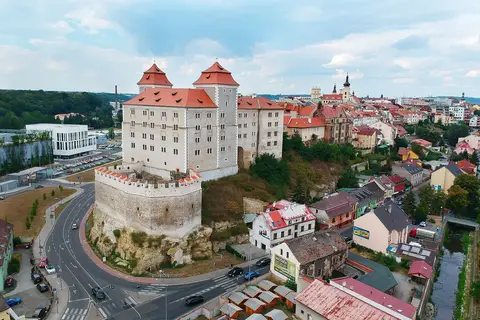
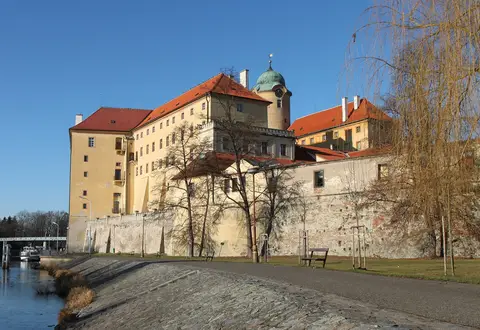
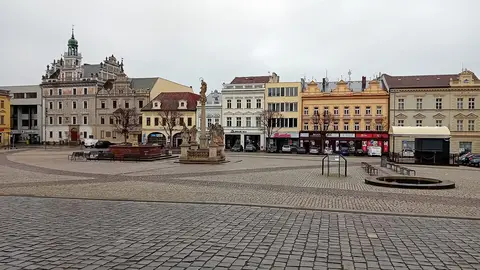
Kladno is the largest city in the region, a mining and steel town with an ice hockey tradition. Mladá Boleslav is the home of Škoda Auto, and the Škoda Museum traces the company's history from Laurin and Klement to the present day. Poděbrady is a spa town on the Elbe with mineral springs for people with heart conditions and the castle of the Hussite king George of Poděbrady. Kolín has a Gothic Church of St. Bartholomew and a Jewish cemetery. Brandýs nad Labem-Stará Boleslav is a pilgrimage site, since this is where St. Wenceslas was murdered in 935. Lidice near Kladno commemorates the village destroyed by the Nazis in 1942. Příbram has a mining museum and the pilgrimage site of Svatá Hora.
Nature and Excursions
To the south, the Vltava Valley stretches out with reservoirs such as Slapy, where Prague residents have weekend cottages and go swimming. The Sázava is a popular river for canoe trips, and the Bohemian Karst invites you to hike among quarries, caves, and castles. Antonín Dvořák was born in Nelahozeves, and his birthplace is now a museum.
Food, Getting There, and Best Time to Visit
The cuisine is typically Bohemian: roast pork with dumplings and sauerkraut, svíčková and goulash, washed down with beer from Velké Popovice, where Kozel is brewed, or from Beroun. Wine is grown in Mělník, mainly Riesling and Müller-Thurgau. Since almost all destinations are less than an hour from Prague, they make good day trips; trains run to Karlštejn, Kutná Hora, and Beroun. The best time to visit is from May to September, and many castles are open only during the season from April to October.