South Bohemian Region: Český Krumlov, Ponds, and the Bohemian Forest
Travel guide · editorialSouth Bohemia is a land of ponds, Renaissance castles, and forests along the border with Bavaria and Austria. A vacation in the South Bohemian Region takes you to the World Heritage town of Český Krumlov, to České Budějovice, to Lake Lipno, and on canoe trips down the upper Vltava.
Landscape and Location
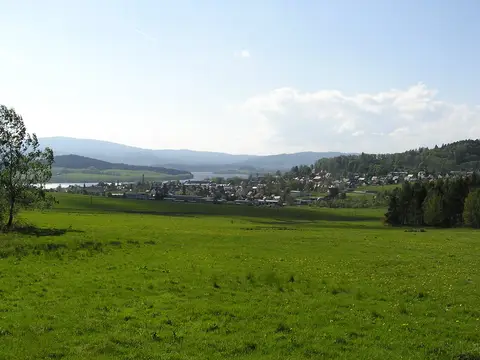
The region lies in the south of the Czech Republic and borders Bavaria and Upper Austria. Its southwest is occupied by the Bohemian Forest, or Šumava, a national park of moors, mountain lakes, and spruce forests that, together with the Bavarian Forest, forms one of the largest forest areas in Central Europe. The Vltava rises here and is dammed to form Lake Lipno, the largest body of water in the country. To the east lies the Třeboň Basin, with hundreds of fish ponds that have been created since the 16th century. In between stretch hills, pine forests, and fields.
Český Krumlov and České Budějovice
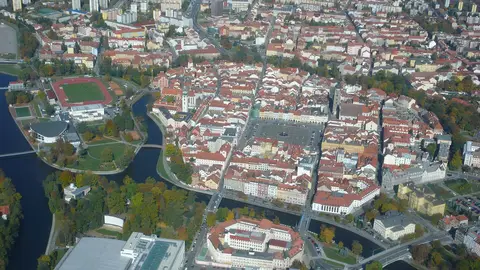
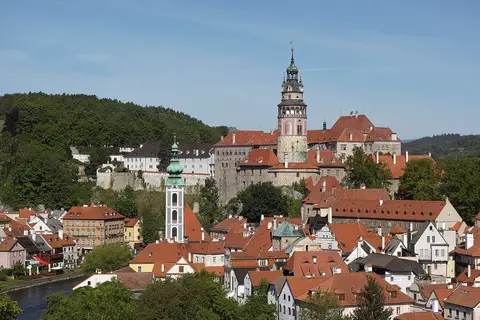
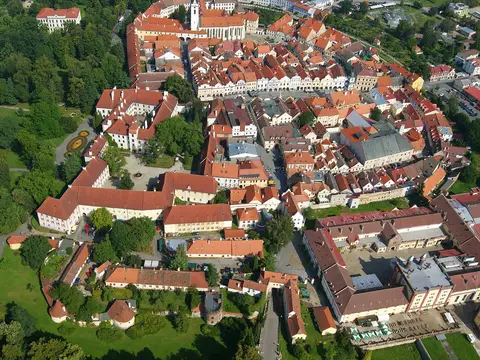
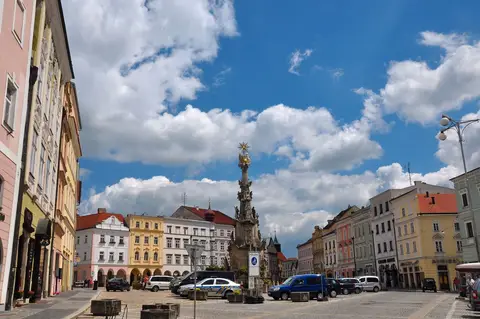
Český Krumlov sits in a tight bend of the Vltava beneath an immense castle, the second largest in the country after Prague Castle. The Old Town, with its Renaissance and Baroque houses, is a World Heritage site, and the Baroque theater in the castle has its original stage machinery, preserved intact. The painter Egon Schiele lived here, and an art center is dedicated to him. České Budějovice, known in German as Budweis, was founded in 1265 and has one of the largest square plazas in Central Europe, with the Samson Fountain and the Black Tower. The Budějovický Budvar brewery makes the original Budweiser here, which has nothing to do with the American brand. Near the city stands Hluboká Castle, a Neo-Gothic palace reminiscent of Windsor.
Sights in the South Bohemian Region
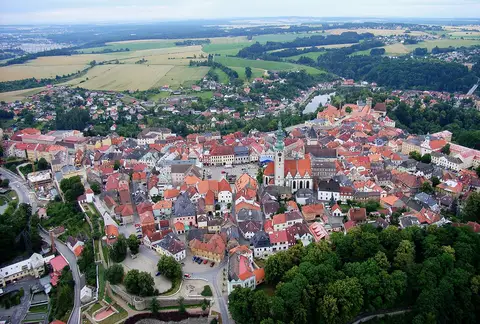
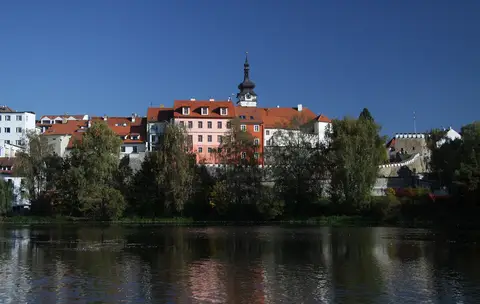
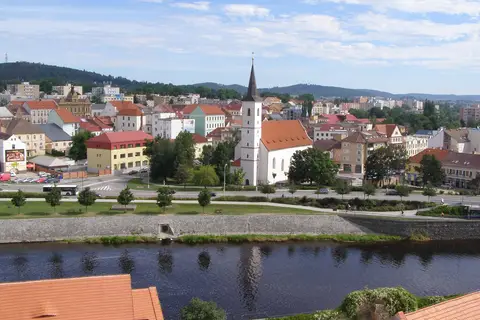
Třeboň is a spa town set among ponds, with a castle, a brewery, and peat baths; the Rožmberk Pond is the largest fish pond in Bohemia. Tábor was founded by the Hussites as a fortress, and you can tour its underground passages. Jindřichův Hradec has a huge castle with Renaissance buildings. Písek has the oldest surviving stone bridge in Bohemia, older than the Charles Bridge in Prague. In Strakonice, bagpipes and the manufacture of ČZ motorcycles are long-standing traditions, and a bagpipe festival is held regularly. The village of Holašovice, with farmhouses in the South Bohemian peasant Baroque style, is a World Heritage site. In the Bohemian Forest, the salt-trade town of Prachatice and the lookout tower on Kleť are worth a visit.
Nature and Active Vacations
The upper Vltava between Vyšší Brod and Český Krumlov is one of the most popular canoeing routes in the Czech Republic; in summer, thousands paddle here, often stopping at campgrounds and inns. In the Bohemian Forest, bike paths run along the Schwarzenberg Canal, and the treetop walkway near Lipno offers views as far as the Alps on a clear day. Around Třeboň, you can cycle on flat terrain between the ponds.
Food, Getting There, and Best Time to Visit
Carp from the ponds is the traditional Christmas dinner in the Czech Republic, and in the fall you can watch the ponds being drained and harvested. Other local fare includes potato pancakes, dumplings, game from the Bohemian Forest, and of course beer from České Budějovice, Český Krumlov, or Třeboň. The region has no commercial airport of its own; you travel in via Prague, Linz, or Vienna. Trains connect České Budějovice with Prague and Linz, and a branch line runs to Český Krumlov. Canoe routes and bike paths open up the Vltava Valley. The best time to visit is from May to September; in winter, Lipno offers downhill and cross-country skiing.