Vysočina Region: Telč, Jihlava and the Pilgrimage Church
Travel guide · editorialBetween Bohemia and Moravia lies a quiet plateau of forests, ponds and no fewer than three UNESCO World Heritage sites. A trip to the Vysočina Region takes you to the Renaissance square of Telč, the Jewish Quarter of Třebíč and the star-shaped pilgrimage church near Žďár.
Landscape and Location
The Vysočina Region, or Kraj Vysočina (literally "Highlands Region"), sits on the Bohemian-Moravian Highlands in the middle of the Czech Republic. The plateau is gently rolling, with spruce forests, fields, granite outcrops and fishponds. In the north, the Žďárské vrchy (Žďár Hills) protect moors and forests where the Sázava and Svratka rivers rise. The climate is harsher than in the lowlands, and winters bring plenty of snow. The D1 motorway between Prague and Brno runs through the region, with Jihlava roughly halfway along.
Jihlava and the Towns
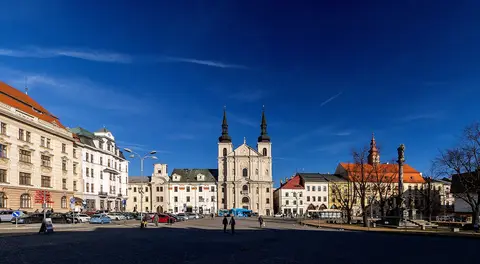
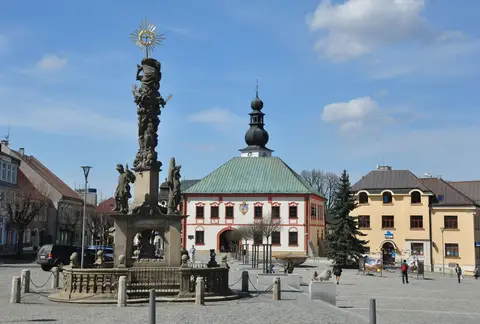
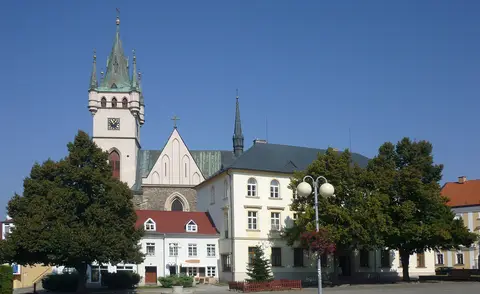
Jihlava was a wealthy town in the Middle Ages thanks to silver mining and the seat of an important body of mining law. Its large main square and a labyrinth of underground passages recall that era. The composer Gustav Mahler spent his youth here, and his childhood home is now a museum. Every fall, the town hosts a well-known documentary film festival. Havlíčkův Brod, formerly Deutschbrod, is named after the journalist Karel Havlíček. Humpolec is known for its Bernard beer and lies at the foot of the Orlík castle ruins, which offer wide views across the highlands. Pelhřimov calls itself the City of Records and has a museum of curiosities.
Sights in the Vysočina Region
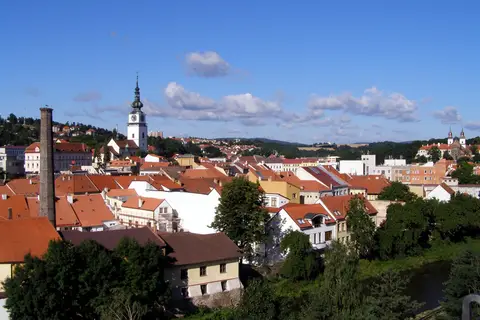
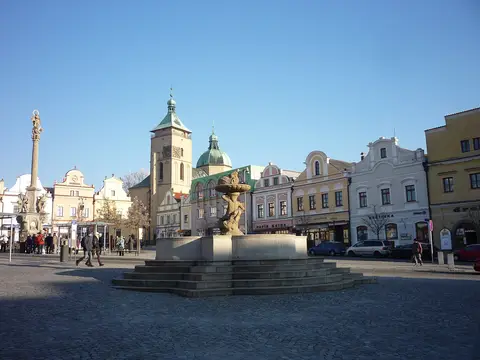
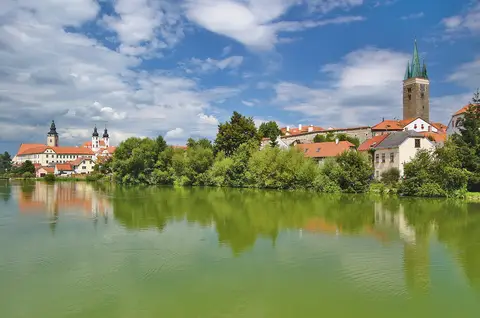
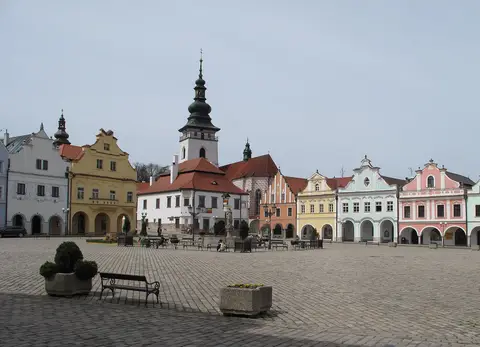
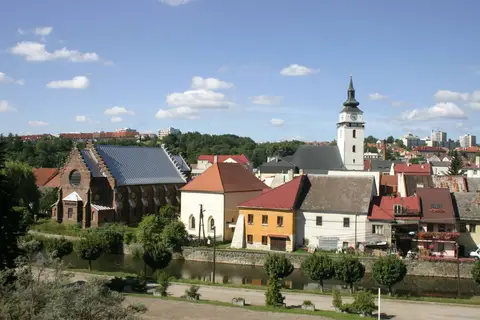
Telč has one of the most beautiful town squares in Central Europe: Renaissance and Baroque houses with arcades and colorful gables surround it, along with a Renaissance chateau. The town is a World Heritage site. In Třebíč, the Jewish Quarter with more than a hundred houses, the Jewish cemetery and the Basilica of St. Procopius, a building that spans the Romanesque and Gothic styles, together form a World Heritage site. The Pilgrimage Church of St. John of Nepomuk on Zelená Hora (Green Mountain) near Žďár nad Sázavou was designed by Jan Blažej Santini in the 18th century in the shape of a five-pointed star, and it is also a World Heritage site. Velké Meziříčí has a chateau and a tall D1 motorway bridge spanning the valley. The Lipnice nad Sázavou castle ruins recall the writer Jaroslav Hašek, who worked on The Good Soldier Švejk here and died in 1923.
Nature and Active Vacations
The highlands are a destination for relaxed active vacations. Cycling routes lead through forests and past ponds, and in winter the area around Nové Město na Moravě becomes a cross-country skiing hub that also hosts biathlon World Cup races. In the Žďárské vrchy, rock formations such as Devět skal invite short hikes, and the ponds offer simple swimming spots in summer.
Food, Getting There and Best Time to Visit
The cuisine is rustic: potatoes, cabbage, mushrooms, carp and trout from the ponds, potato pancakes and sauerkraut. Beer comes from Humpolec, Jihlava and Polná. The highlands are ideal for cycling on quiet roads and paths, and for cross-country skiing in winter. There are no airports of its own; by car, Jihlava is about an hour and a half from Prague. Buses and regional trains connect the towns. The best time to visit is from May to October.