Prague: The Golden City on the Vltava
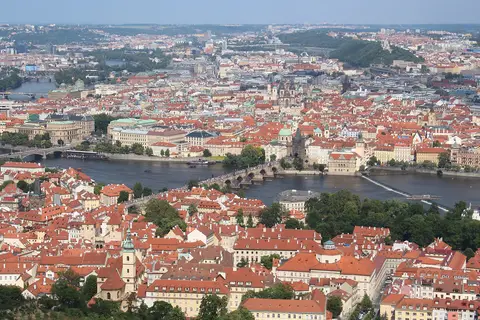
Travel guide · editorialHundreds of spires, a stone bridge across the Vltava, and the largest ancient castle complex in the world make Prague one of the most beautiful cities in Europe. A vacation in Prague takes you through the lanes of the Old Town, across Charles Bridge to the Lesser Town, and out into neighborhoods where Praguers drink their beer.
City and Region
Prague is the capital of the Czech Republic and also its own administrative region. The city lies in a basin of the Vltava River, surrounded by hills such as Petřín Hill and the castle on Hradčany. For centuries Prague was the residence of the kings of Bohemia, and under Charles IV and Rudolf II it was the imperial city of the Holy Roman Empire. Czechs, Germans, and Jews lived side by side here, which shaped the city culturally: Franz Kafka, Rainer Maria Rilke, and Franz Werfel all came from Prague. Because the city was barely damaged in World War II, its historic core is fully preserved and a UNESCO World Heritage Site. In 1968 the Prague Spring was crushed by tanks; in 1989 communist rule ended with the Velvet Revolution.
Sights in Prague
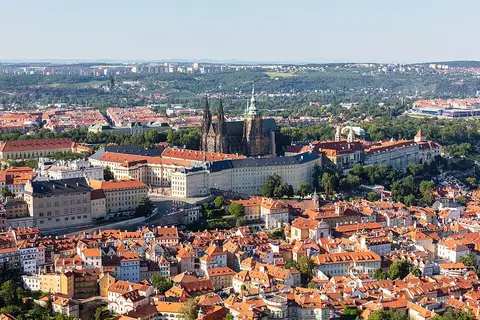
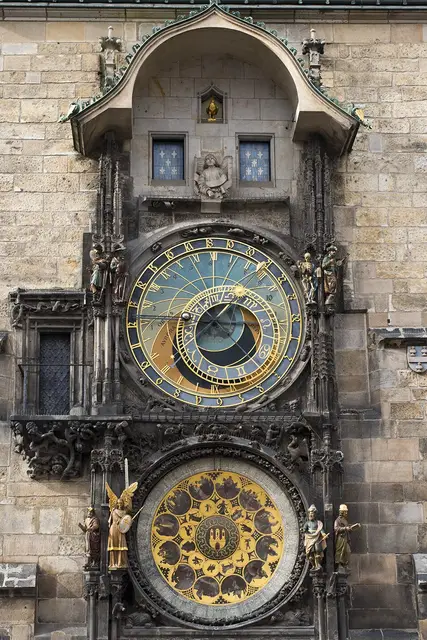
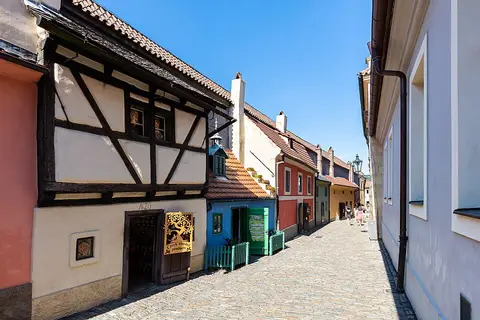
Prague Castle sits enthroned on Hradčany, with St. Vitus Cathedral, whose Gothic spires rise above the city, the Old Royal Palace, and Golden Lane, where Kafka wrote for a time. Below lies the Lesser Town, Malá Strana, with Baroque palaces, St. Nicholas Church, and quiet gardens. Charles Bridge, built in the 14th century and lined with 30 statues of saints, connects it with the Old Town. On Old Town Square stand the Church of Our Lady before Týn and the Town Hall with its astronomical clock from 1410, where crowds gather for the hourly procession of the apostles. Josefov, the former Jewish Quarter, preserves synagogues and the Old Jewish Cemetery with thousands of gravestones piled on top of one another. In the New Town, Wenceslas Square leads to the National Museum, and Frank Gehry's Dancing House stands on the riverbank.
Neighborhoods Beyond the Center
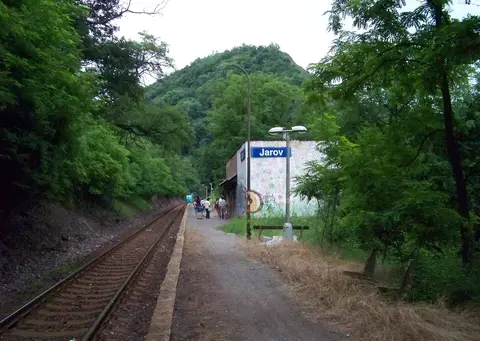
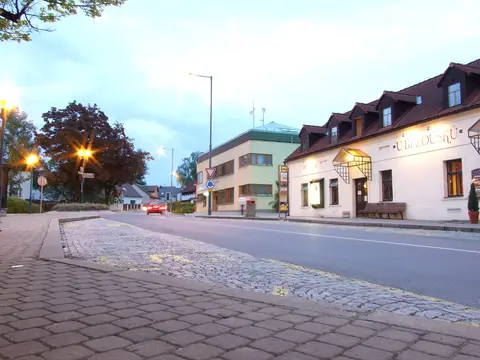
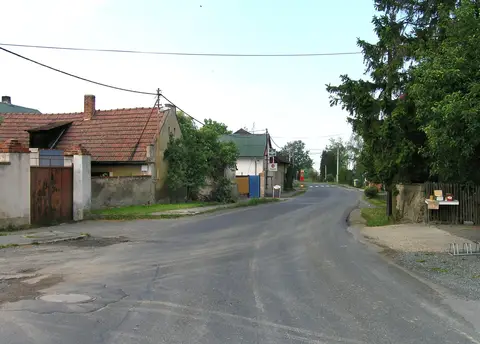
If you want to escape the crowds, head to Vinohrady and Žižkov, neighborhoods with Art Nouveau buildings, pubs, and the TV tower, which is climbed by sculptures of crawling babies by David Černý. Vyšehrad, a fortress on a rock above the Vltava, holds a cemetery with the graves of Dvořák and Smetana. Holešovice, with the DOX Centre for Contemporary Art and the National Gallery in the Trade Fair Palace, is the destination for modern art. Prague also has rural edges. On the outskirts and in the immediate surroundings lie villages and districts that appeared on old German maps under names such as Radonitz, Pschesletitz, Hodkowitz, Jarau, Roskosch, or Gängerhof; today they are quiet residential areas with single-family homes, gardens, and dirt tracks. To the northwest opens the Divoká Šárka valley, a nature reserve with rocks, a stream, and an outdoor pool, where Praguers hike on weekends, and to the south villas and boat clubs line the riverbank near Hodkovičky.
Culture and Music
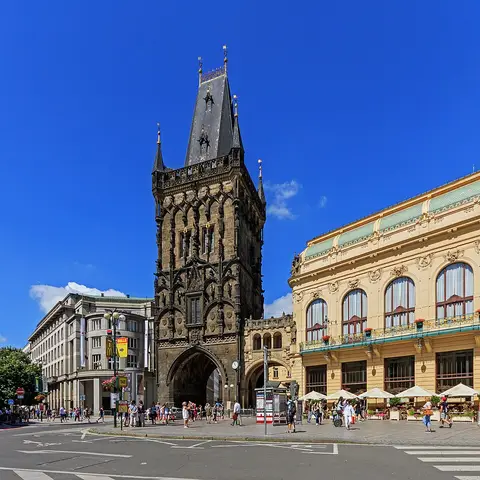
In 1787 Mozart conducted the premiere of Don Giovanni at the Estates Theatre. The National Theatre, the Rudolfinum, and the Municipal House, an Art Nouveau building, are venues of the first rank. Every May the Prague Spring festival opens with Smetana's Má vlast. Add to that black-light theater, marionettes, and jazz clubs. Alfons Mucha, the master of Art Nouveau, designed a window in St. Vitus Cathedral, and his museum displays his posters.
Food and Drink
The Czech Republic has the highest beer consumption per capita in the world, and in Prague the Pilsner, Kozel, or beer from small breweries flows freely. Classic dishes include svíčková, sirloin in cream sauce with dumplings and cranberries, roast pork with sauerkraut, goulash, and smažený sýr, breaded fried cheese. In pubs you can eat utopenci, pickled sausages. Trdelník, a yeast pastry baked on a spit, is sold to tourists but is a fairly recent invention. For coffee, head to Café Slavia or the Grand Café Orient in the Cubist House of the Black Madonna.
Getting There and Best Time to Visit
Václav Havel Airport is connected by bus to the metro and the main train station. Direct trains arrive from Berlin, Dresden, Munich, and Vienna, and long-distance buses from many cities. In the city you use the metro, trams, and the funicular up Petřín. The best time to visit Prague is spring and fall; in summer it is crowded, and in Advent the Christmas markets on Old Town Square and Wenceslas Square are a draw.