Karlovy Vary Region: West Bohemia's Spa Triangle
Travel guide · editorialOn the border with Bavaria and Saxony, dozens of healing springs bubble up, and in the 19th century magnificent spa towns grew up around them. A trip to the Karlovy Vary Region takes you through the colonnades of Karlovy Vary, Mariánské Lázně, and Františkovy Lázně, which together are a World Heritage Site, to the old town of Cheb and onto the ridges of the Ore Mountains.
Landscape and Location
The region, Karlovarský kraj, is one of the smallest in the Czech Republic and lies in the far west. To the north, the Ore Mountains stretch along the border, topped by Klínovec (Keilberg); to the south lies the Slavkov Forest, Slavkovský les, with its moors and mineral springs. Between them lies the Cheb Basin, through which the Ohře River flows. The ground beneath is volcanically active: in the Soos nature reserve near Františkovy Lázně, carbon dioxide springs bubble out of the bog. Until 1945 the region was predominantly German-speaking, and the Egerland had its own dialects and traditional costumes.
Karlovy Vary, Mariánské Lázně, and Františkovy Lázně
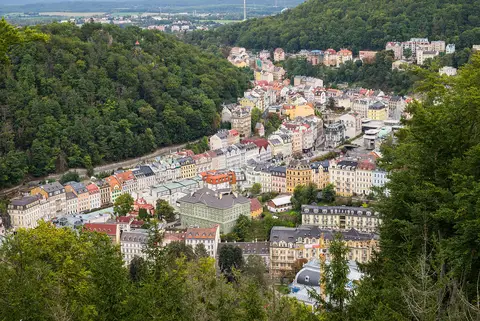
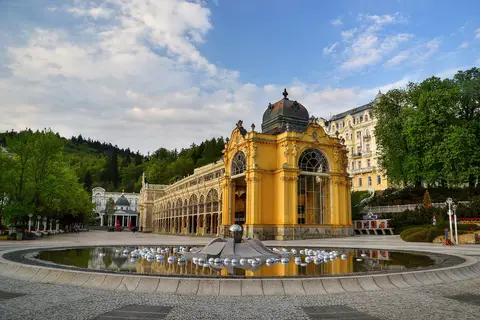
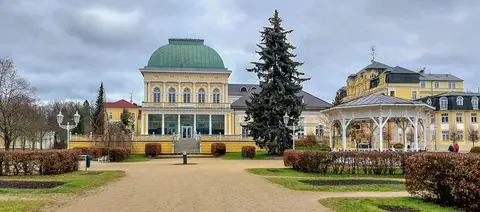
Karlovy Vary (Carlsbad) is said to have been founded by Emperor Charles IV. The thermal springs, including the Vřídlo geyser with water over 70 degrees Celsius (158°F), are sipped from spouted cups in colonnades such as the Mill Colonnade. Goethe, Beethoven, and tsars took the cure here. The Grandhotel Pupp and the International Film Festival in July are highlights. Mariánské Lázně (Marienbad) only came into being around 1800, is surrounded by parks, and has a cast-iron colonnade with a singing fountain. Edward VII visited regularly. Františkovy Lázně (Franzensbad) is a small, neoclassical spa town in yellow and white. Together with other European spa towns, the three have been part of the Great Spa Towns of Europe World Heritage Site since 2021.
Sights in the Karlovy Vary Region
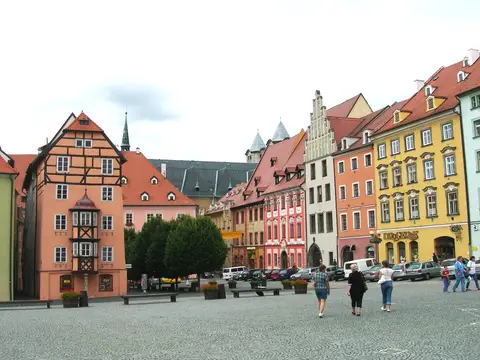
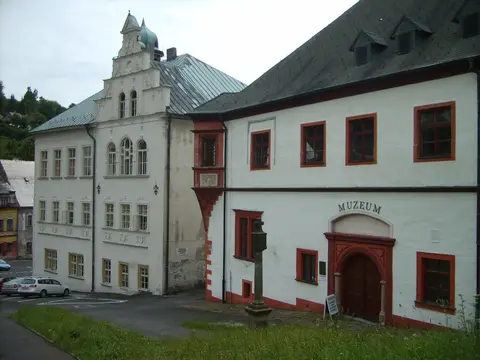
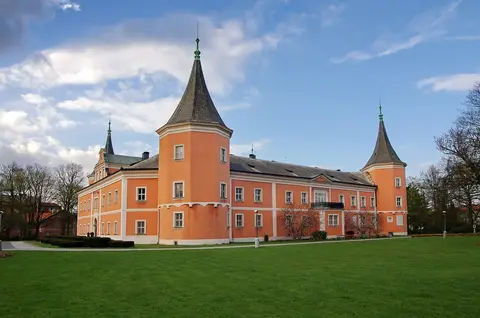
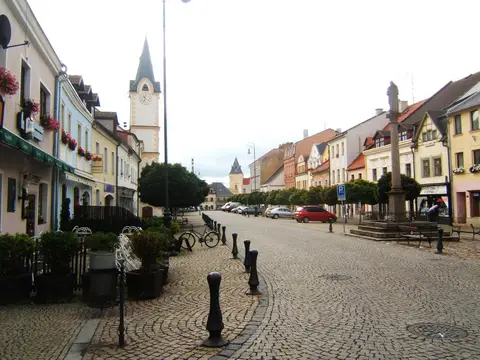
Cheb (Eger) has a Barbarossa-era imperial palace, half-timbered houses on the market square, the ensemble of houses known as the Špalíček, and the house where Wallenstein was murdered in 1634. Loket Castle (Elbogen) sits atop a bend in the Ohře River. Jáchymov (Sankt Joachimsthal) was a silver-mining town; the word thaler, and with it dollar, comes from here. Uranium was mined here later, under the Communists using forced labor camps. Today it is a radon spa. Boží Dar (Gottesgab) is the highest-lying town in Central Europe and a destination for cross-country skiers. Sokolov was a coal and industrial town. Ostrov (Schlackenwerth) has a palace garden and a palace of the dukes of Saxe-Lauenburg.
Nature and Outdoor Activities
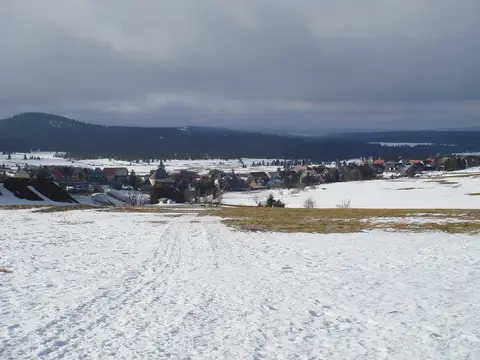
The Ore Mountains around Boží Dar and Klínovec are a ski area in winter and a destination for cyclists and hikers in summer, who cross high moors along the ridges. In the Slavkov Forest, trails lead to springs and viewpoints, and the Ohře valley between Loket and Karlovy Vary can be paddled by canoe. Near Loket stand the rocks of the Hans Heiling Rocks, around which legends abound.
Food, Getting There, and Best Time to Visit
Becherovka, an herbal liqueur from Karlovy Vary, is called the thirteenth spring. Karlovy Vary wafers, thin waffles, and mineral water such as Mattoni are part of the experience. The spa hotels serve light cuisine, and in inns you'll find Karlovy Vary dumplings. Karlovy Vary's small airport has only a few connections; buses run from Prague in about two hours. From Nuremberg and Regensburg, the region is easily reached by car. The best time to visit is May through September, when the spa parks are in bloom.