South Moravian Region: Brno, Wine, and Castles
Travel guide · editorialIn southern Moravia, on the border with Austria and Slovakia, 90 percent of Czech wine is grown. A vacation in the South Moravian Region combines the lively university city of Brno with lanes of wine cellars, the castles of Lednice and Valtice, and the stalactite caves of the Moravian Karst.
Landscape and Location
The region, known in Czech as Jihomoravský kraj, stretches from the Bohemian-Moravian Highlands in the west to the White Carpathians in the east. In between lie gently rolling hills with vineyards and the floodplain forests along the Thaya (Dyje) and Morava rivers. The limestone Pálava Hills rise from the plain in a striking silhouette and are a biosphere reserve. North of Brno lies the Moravian Karst with more than a thousand caves, including the Macocha Abyss, a collapsed sinkhole 138 meters deep. In the west, Podyjí National Park, called Thayatal on the Austrian side, protects one of the most pristine river landscapes in Central Europe.
Brno: Moravia's Metropolis
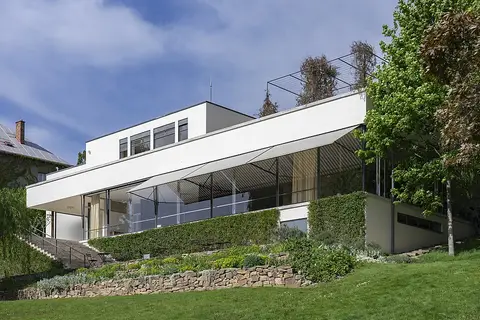
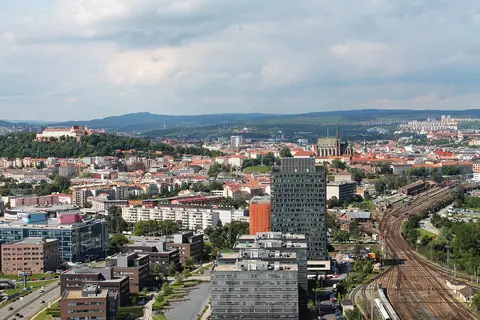
Brno, the second-largest city in the Czech Republic, is a center for universities, trade fairs, and technology. Špilberk Castle, a feared prison under the Habsburgs, towers over the city, and next to it stands the Cathedral of St. Peter and Paul. Villa Tugendhat by Ludwig Mies van der Rohe, completed in 1930, is a World Heritage site and one of the most important works of modern architecture. At the Augustinian Abbey, Gregor Johann Mendel carried out his heredity experiments, and the Mendelianum commemorates his work. Beneath the Cabbage Market lies a labyrinth of cellars, and the city's bar and coffee scene is considered one of the best in the country.
Sights in the South Moravian Region
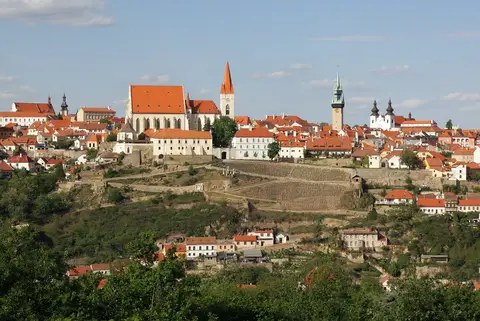
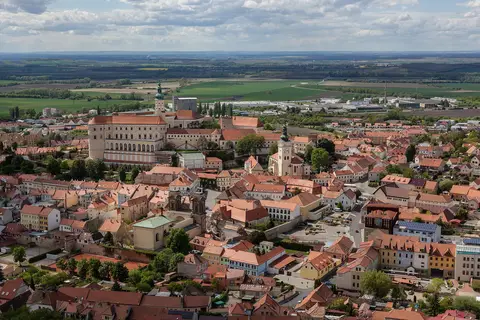
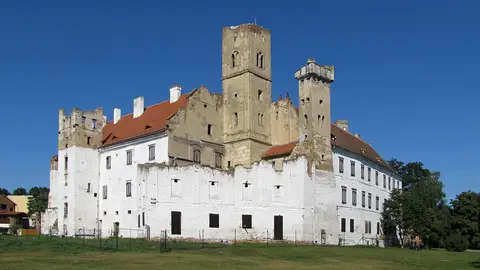
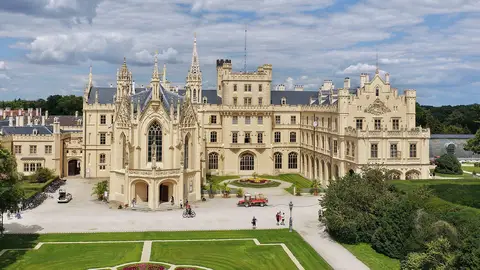
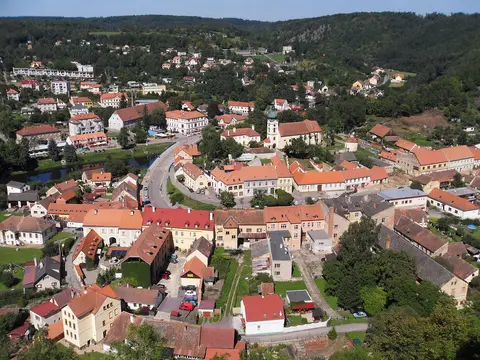
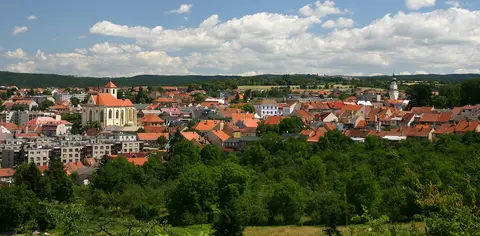
The Lednice-Valtice Cultural Landscape, a World Heritage site, is one of the largest designed landscapes in Europe. The Princes of Liechtenstein had castles, a minaret, colonnades, and hunting lodges built here amid parks and forests. The Neo-Gothic Lednice Castle with its palm house and the Baroque Valtice Castle, home to the National Wine Salon, are the highlights. Nearby is Břeclav, a railway junction. Mikulov, with its castle, Jewish quarter, and Holy Hill, is the center of the Pálava wine region. Znojmo has a rotunda with 12th-century frescoes, underground passages, and is known for its pickles. To the east lie Hodonín, birthplace of the nation's founder Masaryk, and Moravian Slovakia with its folk costumes and folk music. In the north, Blansko beckons as the gateway to the Moravian Karst; the Punkva Caves can be explored partly by boat.
Food and Drink
South Moravia is wine country. Grüner Veltliner, Welschriesling, Pálava, and red wines such as Blaufränkisch (Frankovka) are poured in cellar lanes, for example in Petrov with its painted wine cellars, the plže. Festivals include Burčák, young, fermenting wine served in September, and harvest festivals in Znojmo and Mikulov. Traditional dishes to go with the wine include Moravian sparrows (braised pork), roast pork with sauerkraut and dumplings, pickles from Znojmo, and koláče, round yeast pastries.
Getting There and Best Time to Visit
Brno lies on the Prague–Vienna rail line, and Vienna is about an hour and a half away. Brno Airport has few connections, while Vienna-Schwechat is nearby. Cycling and wine hiking trails provide good access to the region. The best time to visit is from May to October, especially in the fall during the grape harvest. At the end of June, Strážnice hosts one of the oldest folklore festivals in Europe, and in August wine festivals and open-air concerts draw visitors to Lednice.