
Vacation in the Netherlands: Canals, Coast, Polders
Travel guide · editorialA vacation in the Netherlands often starts with Amsterdam, but the country is much more than canals and coffeeshops. Between North Sea beaches, tulip fields, windmills, and world-class architecture, you'll find a country that was largely wrested from the sea and is best explored by bike.
A Land Below Sea Level
Roughly a quarter of the Netherlands lies below sea level. Dikes, dunes, pumping stations, and an ingenious system of canals keep the water out, and in many places the canal sits higher than the meadow next to it. The 19 windmills of Kinderdijk near Rotterdam, which once drained the polder, are a UNESCO World Heritage Site, as is the Beemster, a 17th-century polder with ruler-straight roads and ditches. If you want to see the modern side of hydraulic engineering, head to the Delta Works in Zeeland, whose storm surge barriers were built after the flood disaster of 1953.
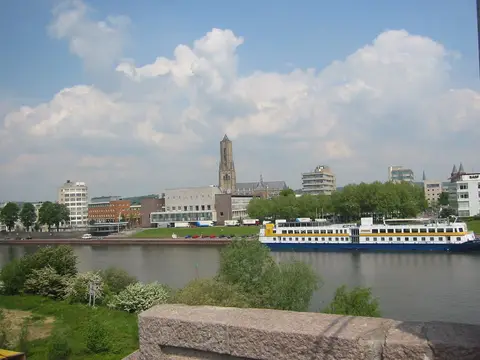
In the north, the Wadden Sea stretches out alongside the West Frisian Islands of Texel, Vlieland, Terschelling, Ameland, and Schiermonnikoog, where cars are partly banned altogether and seals lie on the sandbanks. Along the North Sea coast between Zandvoort and Zeeland, broad sandy beaches and dune landscapes follow one after another. In the east, the land becomes surprisingly hilly: the Veluwe near Arnhem is a vast landscape of heath and forest with De Hoge Veluwe National Park and the Kröller-Müller Museum, which holds one of the largest Van Gogh collections. Far in the south, in Limburg, there are even vineyards and hills that will have cyclists breaking a sweat.
Cities and Sights in the Netherlands
Amsterdam is the capital, and its 17th-century canal ring is a UNESCO World Heritage Site. The Rijksmuseum shows Rembrandt's "Night Watch," the Van Gogh Museum is right next door, and at the Anne Frank House you can visit the secret annex where she hid. Away from the city center, neighborhoods such as De Pijp with its Albert Cuyp Market or Amsterdam-Noord with its converted shipyards are worth a visit. Because of the heavy crowds, tickets to the major museums can usually only be booked online for a specific time slot.
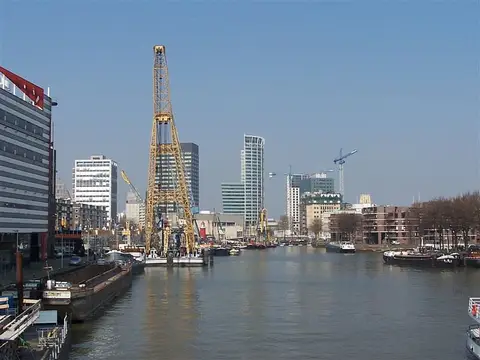
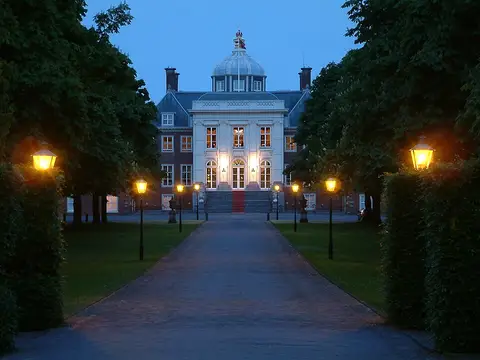
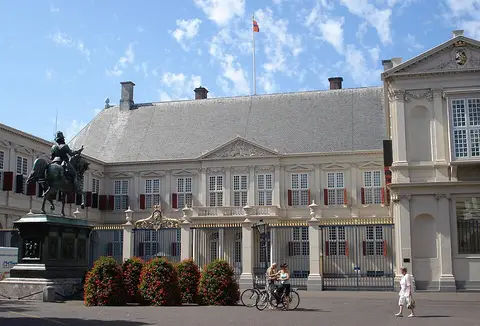
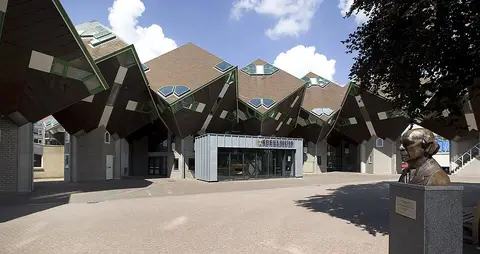
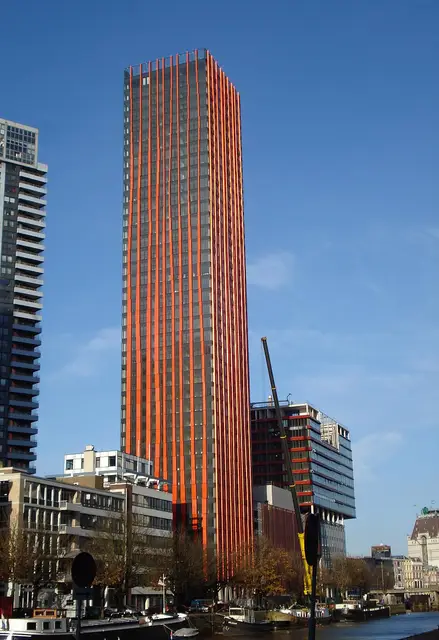
Rotterdam is the counterpart: after its destruction in World War II, the city was rebuilt in a modern style and is now an open-air architecture museum, with the Cube Houses, the Market Hall with its painted vaulted ceiling, and the Erasmus Bridge. The Hague is the seat of government and home to the International Court of Justice; the Mauritshuis houses Vermeer's "Girl with a Pearl Earring," and the seaside resort of Scheveningen is part of the city. Utrecht scores with the wharf cellars along the Oudegracht, which now house cafés, and with the Dom Tower.
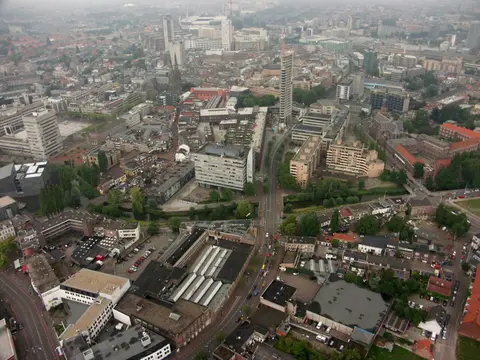
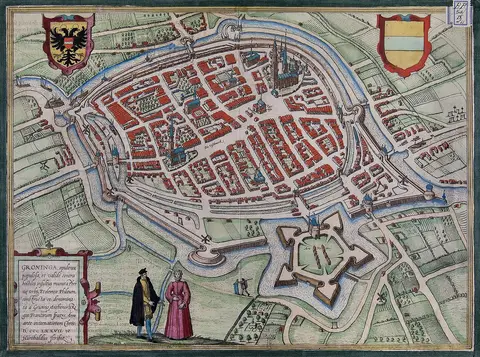
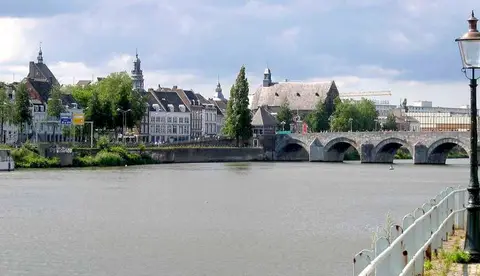
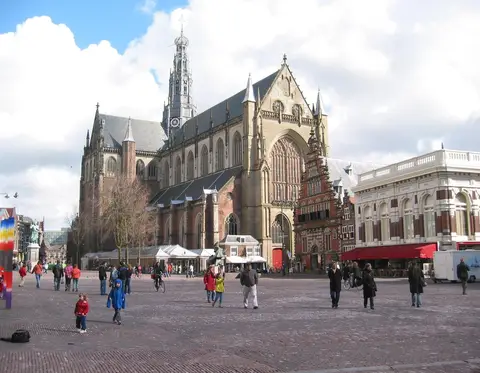
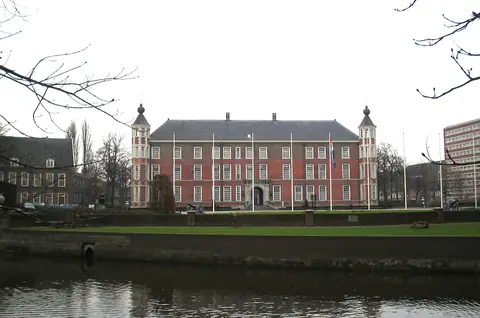
Other Netherlands destinations include Haarlem with the Frans Hals Museum and its hofjes, Delft with its blue-and-white porcelain, Leiden as the country's oldest university town, Groningen in the north with an especially lively student scene, Eindhoven as a design city, and Maastricht, whose squares and sidewalk cafés give it an almost southern European feel. Breda and Arnhem commemorate the history of World War II, and in spring the Keukenhof near Lisse, with millions of tulips, daffodils, and hyacinths, is one of the most visited attractions in the country.
Culture and History
In the 17th century, the Golden Age, the Netherlands was a global trading power. The East India Company brought spices, porcelain, and wealth, which is reflected in the merchant houses along the canals and in the paintings of Rembrandt, Vermeer, and Frans Hals. Later, Van Gogh, Mondrian, and the De Stijl movement shaped art history. To this day, the country is known for being liberal, pragmatic, and direct in how people deal with one another.
The most important holiday is King's Day on April 27, when the whole country dresses in orange, flea markets fill the streets, and party boats cruise the canals in Amsterdam. In winter, on the rare occasions when the canals freeze over, the Dutch get out their ice skates, and St. Nicholas Day on December 5 with Sinterklaas is celebrated more than Christmas.
Food and Drink
Dutch cuisine is down-to-earth. At fish stands, you eat raw herring with onions, kibbeling (fried chunks of fish), or lekkerbekje. At snack bars, croquettes and frikandel come straight out of the wall, and fries are often ordered "speciaal" with mayonnaise, curry ketchup, and onions. In winter, stamppot warms you up, a mash of potatoes with kale or sauerkraut and smoked sausage, along with thick pea soup. Among sweets, stroopwafels from Gouda, poffertjes, and appeltaart top the list. Gouda, Edam, and Leerdammer are known worldwide, and at cheese markets such as the one in Alkmaar, the trade is still demonstrated in the traditional way in summer. The Indonesian rijsttafel recalls the colonial era, and in the bruin cafés, the "brown pubs," you drink beer or a genever.
Getting There and Getting Around
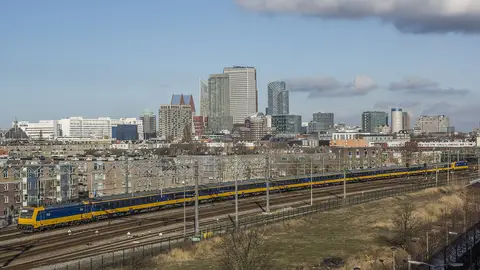
Amsterdam Schiphol (AMS) is one of the largest airports in Europe, with smaller airports in Eindhoven (EIN) and Rotterdam (RTM). From Germany, the ICE runs from Frankfurt and Cologne via Utrecht to Amsterdam. Within the country, trains are fast and frequent, and you simply pay with a credit card at the card reader. The most important means of transportation, though, is the bicycle. There are more bikes than people, a network of numbered-junction bike routes covers the whole country, and rental bikes are available at almost every train station. Drivers will find few and expensive parking spaces in cities; park-and-ride on the outskirts is usually the better choice.
Best Time to Visit the Netherlands
The best time to visit the Netherlands depends on your destination. Tulip season runs from late March to mid-May, and the Keukenhof is only open during this period. Between June and August, daytime temperatures usually range from 68 to 77 degrees Fahrenheit (20 to 25 degrees Celsius), the North Sea reaches about 64 degrees Fahrenheit (18 degrees Celsius), and a fresh breeze almost always blows along the coast. September and October are well suited to city trips and bike tours without the crowds. Winter is mild but often windy and gray; on the upside, museums and breweries are pleasantly empty at that time.