Flevoland: The Youngest Province, Wrested from the Sea
Travel guide · editorialWhere fields, forests, and cities lie today, there was still sea floor a hundred years ago. Flevoland is the youngest province in the Netherlands, founded in 1986 and almost entirely reclaimed from the water. A vacation in Flevoland shows you how a country is built on the drawing board, with surprising nature, modern architecture, and boating waters all around.
Land from the Sea
After the Afsluitdijk was built in 1932, the salty Zuiderzee became the freshwater IJsselmeer, and engineers began diking in polders within it. The Noordoostpolder was the first to be drained, in 1942, linking the former island village of Urk and the island of Schokland to the mainland. Eastern and Southern Flevoland followed in the 1950s and 1960s. The landscape is strictly geometric: long dikes, ruler-straight roads and canals, large farm fields growing tulips, potatoes, and onions, and wind farms along the shore. The terrain lies up to about 5 meters below sea level.
Cities and Towns
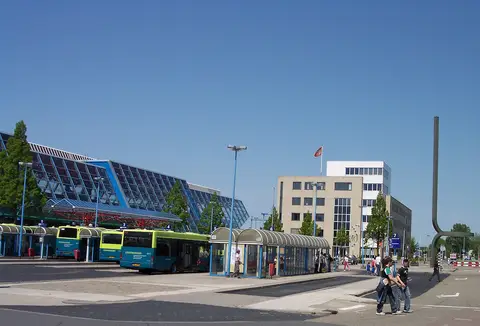
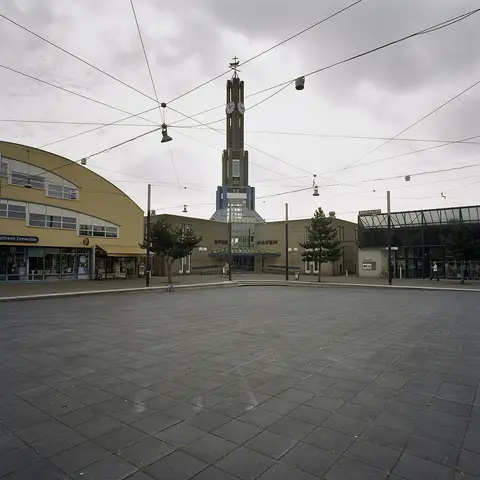
Almere, founded in the 1970s, already has more than 200,000 residents, making it one of the larger cities in the country, and it draws many people from nearby Amsterdam. The Almere Stad district, with buildings based in part on a master plan by Rem Koolhaas, showcases contemporary architecture, while the Oosterwold area experiments with self-built housing. The Floriade horticultural world expo was held here in 2022. Lelystad, the capital, named after the engineer Cornelis Lely, sits on the Markermeer. Dronten, Zeewolde, and Biddinghuizen are smaller planned towns; near Biddinghuizen you'll find the Walibi Holland amusement park and big festivals such as Lowlands. Emmeloord is the main town of the Noordoostpolder.
Sights in Flevoland
In Lelystad's harbor, Batavialand is home to the Batavia, a faithful replica of a 17th-century East Indiaman; next to it, a museum tells the story of land reclamation and archaeology. Schokland, once an island in the Zuiderzee, is now a long, narrow rise in the farmland and a UNESCO World Heritage site. Urk, the old fishing village with its lighthouse, harbor, and strictly religious traditions, remains a center of Dutch fishing to this day. The Oostvaardersplassen between Almere and Lelystad are a marshland where a rich birdlife, including white-tailed eagles, spoonbills, and greylag geese, settled without any planning; Konik horses and Heck cattle graze there. In the Waterlandbos and the Groene Kathedraal (Green Cathedral) artwork near Almere, a cathedral made of poplars, nature and land art come together.
Nature, Water, and Recreation
Because Flevoland is surrounded by water, there is plenty of sailing, surfing, and paddling here. The border lakes, narrow lakes between the polder and the old mainland such as Veluwemeer and Gooimeer, are shallow and therefore ideal for beginners. The Horsterwold near Zeewolde is one of the largest deciduous forests in the country, even though it was only planted after 1970. In recent years, the Marker Wadden, artificial islands made of silt, have been created in the Markermeer; birds breed there, and visitors stroll along boardwalks.
Food, Getting There, and Best Time to Visit
In Urk, small fish stands sell smoked eel and plaice, and in Biddinghuizen and Dronten, farm shops selling strawberries and vegetables are worth a stop. Almere is about 20 minutes from Amsterdam by train, and the Hanzelijn line connects Lelystad with Zwolle. Lelystad Airport has hardly any scheduled service. The best time to visit is spring, when the tulip fields bloom, or summer for sailing trips on the IJsselmeer and Markermeer.