


Discover Amsterdam: Canals, Gables, and Bicycles
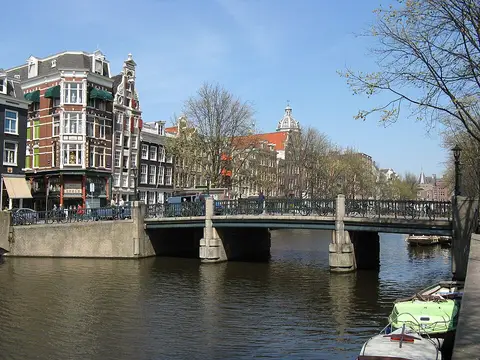
Travel guide · editorialAbout 1,500 bridges, narrow gabled houses leaning slightly forward, and more bicycles than residents: at first glance, Amsterdam is exactly what you imagine – and at second glance, far more layered. A city trip to Amsterdam takes you from Rembrandt and Anne Frank through markets and brown cafés to new neighborhoods along the IJ waterfront.
A Dam Becomes a World City
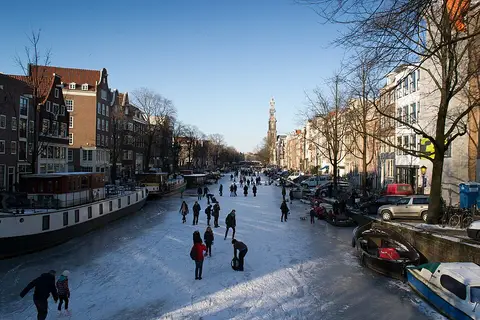
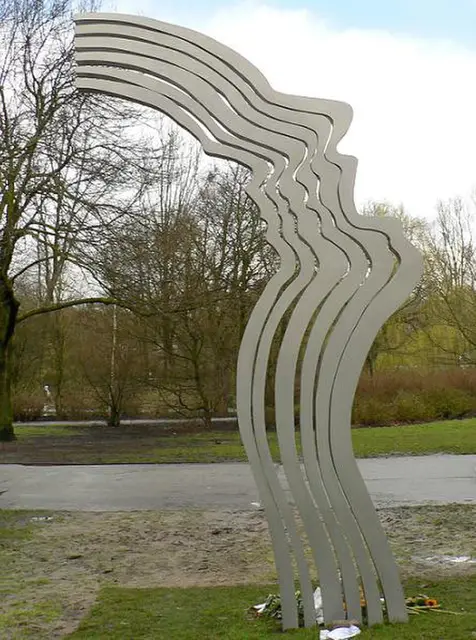
Around 1270, fishermen built a dam on the Amstel – giving the city its name and the Dam, today's main square with the Royal Palace and the Nieuwe Kerk. In the 17th century, the Golden Age, Amsterdam was the world's trading and financial center; the Dutch East India Company was headquartered here, and merchants had the crescent-shaped canal ring laid out with Herengracht, Keizersgracht, and Prinsengracht, now a UNESCO World Heritage Site. This history also includes colonialism and the slave trade, which the National Slavery Monument in Oosterpark commemorates. Amsterdam was an early refuge for religious refugees, including Sephardic Jews – a tradition that came to an abrupt end when roughly three quarters of the Jewish population were deported during World War II.
Sights in Amsterdam
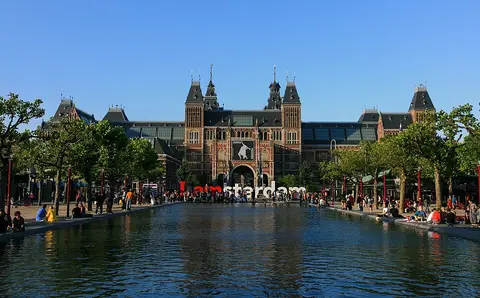
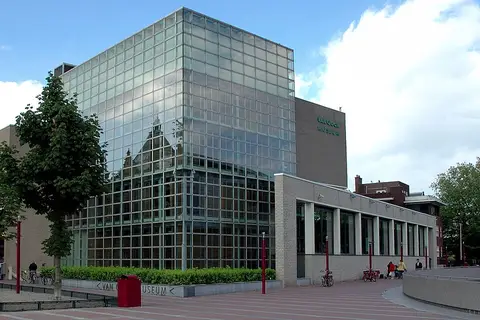
On Museumplein you'll find the Rijksmuseum with Rembrandt's "Night Watch" and Vermeer's "The Milkmaid," the Van Gogh Museum with the world's largest collection of the painter's work, and the Stedelijk Museum of modern art. The Anne Frank House on the Prinsengracht is in high demand; tickets are sold only online and should be booked weeks in advance. In the Jewish Quarter, the Jewish Museum, the Portuguese Synagogue of 1675, and the National Holocaust Museum tell the story of the Jewish community. A canal cruise is part of every first visit, and it's most atmospheric in the evening. The Begijnhof, a quiet medieval courtyard, is only steps from the bustling Kalverstraat. Vondelpark is the city's green lung, and at the Rembrandt House you can see where the painter lived and worked.
Neighborhoods: Jordaan, De Pijp, and Noord
The Jordaan, west of the canal ring and once a working-class district, is now one of the most sought-after residential neighborhoods, with its hofjes (almshouse courtyards), galleries, and corner pubs. In De Pijp, in the Zuid district around the Albert Cuyp Market, students, families with Moroccan and Surinamese roots, and creatives mix. Amsterdam-Oost, with Oosterpark and the Tropenmuseum, is more relaxed, as is West, with the Westergasfabriek cultural complex. Free ferries behind Central Station take you to Noord, where former shipyard grounds are home to the EYE Film Museum, the A'DAM Lookout with its swing over the abyss, and the NDSM site with its flea market and street art.
Eating in Amsterdam: Markets and Brown Cafés
At the Albert Cuyp Market you'll find fresh stroopwafels, herring with onions, and kibbeling, fried pieces of fish. Indonesian rijsttafel with its many small dishes is a legacy of the colonial era, as are the Surinamese roti restaurants. In the bruine cafés, wood-paneled pubs, you drink beer or jenever with bitterballen. The Foodhallen in a former tram depot in West gathers numerous stalls under one roof. Nightlife ranges from clubs on Leidseplein and Rembrandtplein to techno parties in Noord; the city is also cracking down on rowdy party tourism in De Wallen, the red-light district, where smoking weed on the street is no longer allowed.
Museums Beyond the Classics
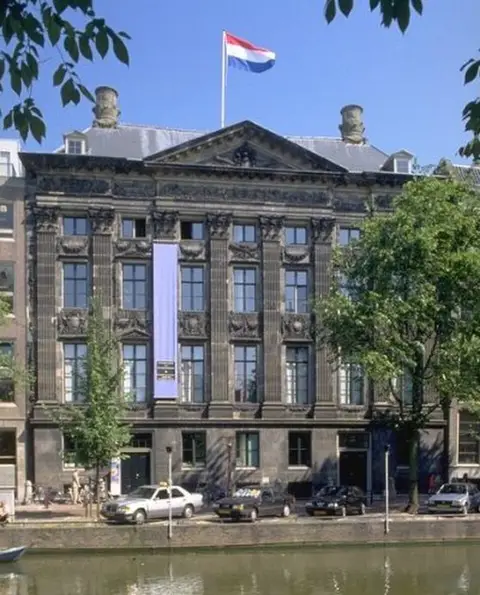
Besides the Rijksmuseum and the Van Gogh Museum, Amsterdam has many smaller museums that are often less crowded. The Museum Van Loon and the Museum Willet-Holthuysen show how wealthy merchants lived behind the canal facades. Our Lord in the Attic is a hidden Catholic church in the attic of a canal house from a time when Catholics could only worship in secret. In front of the Maritime Museum, a replica of an East Indiaman lies at anchor, and the Moco Museum on Museumplein shows Banksy and contemporary art. If you plan to visit many museums, you'll save money with the Museumkaart.
Getting Around Amsterdam and the Best Time to Visit
Schiphol Airport is about 15 minutes from Central Station by train, and ICE trains connect the city directly with Frankfurt and Cologne. Trams, the metro, and buses cover the city; you pay contactlessly with a bank card. If you cycle, learn the rules and watch out for tram tracks. The best time to visit is spring, when the tulips bloom at nearby Keukenhof, and summer. At the end of April, the whole city celebrates King's Day in orange. Day trips lead to the windmills of Zaanse Schans, to Haarlem, Edam, and Volendam on the IJsselmeer, or to the beach at Zandvoort.