About Rasphuispoort
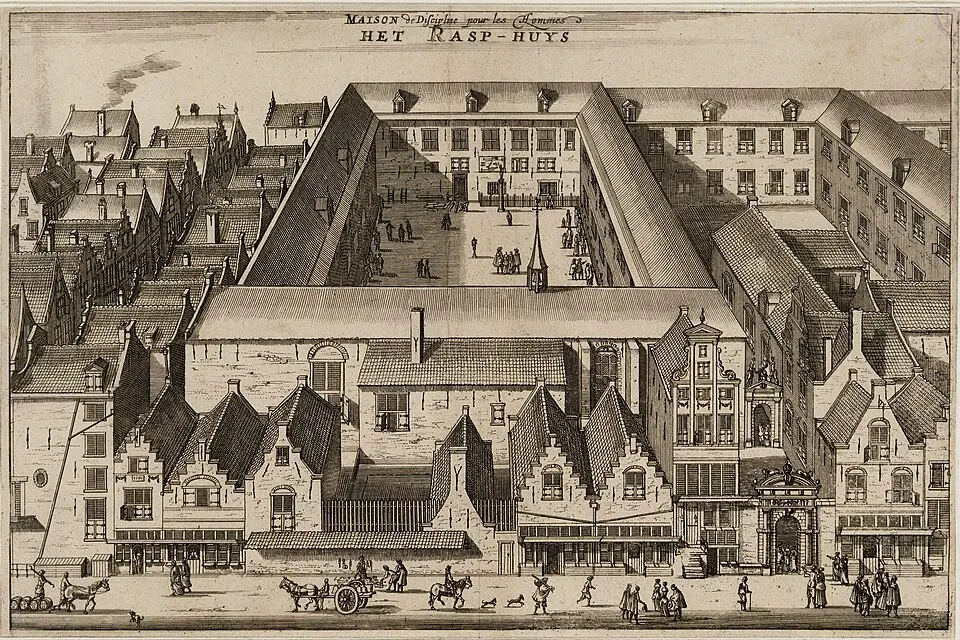
The Rasphuis in Amsterdam was the first workhouse of its kind in Europe. It was established in 1596 in a former Poor Clare convent on the Heiligeweg and primarily housed beggars and young petty criminals. The name comes from the work the inmates were made to do: they sawed Brazilian redwood to extract dye for textiles. Life in the house was governed by strict rules, including a daily schedule planned down to the minute, mandatory communal labor, and the chance to shorten your sentence through good behavior. The prisoners were put on public display, which outraged critics at the time as inhumane treatment, while others saw it as a moral path to reform through shame. Although the concept served as a model for similar institutions in Germany and elsewhere, the revenue never covered the high costs. After it was shut down in 1815, the building was demolished in 1892, so today all that remains is the site's historical significance as a pioneer of European prison reform.
At a glance
- Category
- Sight › Historic sites
- Rating
- no reviews yet · write a review
- Address
- Heiligeweg
1012 XN Amsterdam, Netherlands - District
- Centrum
- Phone
- +31204273901
- Website
- it.wikipedia.org
- —
- Coordinates
- 52.36767° N · 4.89105° E
- Data quality
- confidence 0.78
- Identifier
- ID ae5e1ed9-a6e…
Location & surroundings
Toggle layersRatings & comments
none yetNear Rasphuispoort
closest 5 per category · 2 kmSights
Restaurants
Museums
Hotels
More:Historic sites in Amsterdam (397)Sights in Centrum (132)All sights in Amsterdam (475)
300 places within 2 km loaded.
You need a free account to leave reviews and photos – that keeps comments genuine and lets you edit them later.