About Paleis Huis ten Bosch
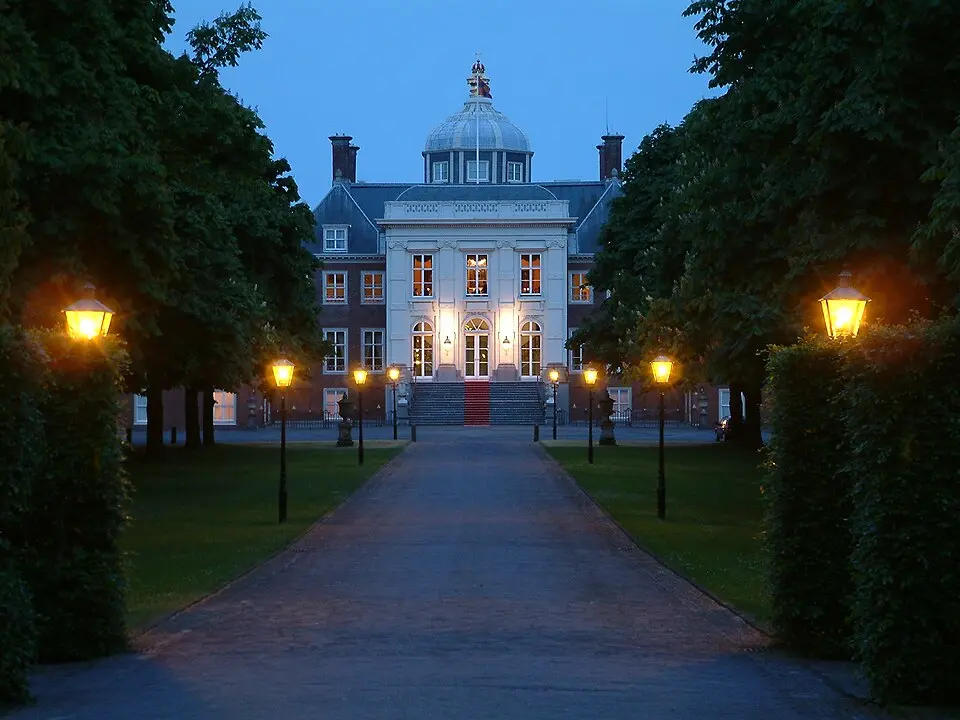
Huis ten Bosch Palace lies in the northeast of The Hague, set within the sprawling Haagse Bos park. Originally built in the 17th century as a summer residence for Stadtholder Frederick Henry, the building, now protected as a Rijksmonument, serves as the residence of the Dutch royal family. The architecture of the central structure shows features of Dutch Baroque, with a two-story brick construction resting on a basement level. Its hallmarks are the central dome above the Orange Hall (Oranjesaal) and the side wings added in the 18th century, which flank the main facade. The western wing is known as the Hague Wing, while the eastern part is called the Wassenaar Wing. This extension, designed by the architect Daniel Marot, left a lasting mark on the complex's appearance today.
The palace's historical significance is underscored by its eventful past. After it was confiscated during the Batavian Republic, it served for a time as a place of internment for political opponents and later as the residence of King Louis, who had the rooms refurnished in the Empire style. These pieces of furniture have been preserved in the building to this day and bear witness to the art-historical importance of the French era. In the 19th century, the palace returned to its role as a royal summer residence, and among other events, it hosted the first Hague Peace Conference. Despite heavy war damage and the threat of demolition by German occupying forces in World War II, the building was restored after the conflict and has served once again as the royal family's permanent residence since the 1980s.
The palace itself is not open to visitors, since it is used as a private residence, but the surrounding gardens offer an impressive glimpse of its historic splendor. The garden, measuring roughly 300 by 400 meters, is enclosed by a moat and features a central avenue as well as a pond to the south. Inside the palace are significant rooms such as the Orange Hall, whose monumental paintings glorify the reign of Frederick Henry, as well as the ballroom and various state rooms in Chinese and Japanese style. These interiors, which captivate with their rich decoration and historic furnishings, reflect the different eras in which the palace served as a seat of power and culture.
At a glance
- Category
- Sight › Monuments
- Rating
- no reviews yet · write a review
- Address
- Bezuidenhoutseweg
2594 BD The Hague, Netherlands - District
- Haagse Hout
- Phone
- —
- Website
- www.hethuisvanoranje.nl
- —
- Coordinates
- 52.09374° N · 4.34348° E
- Data quality
- confidence 0.87
- Identifier
- ID dcddcd7b-65b…
Location & surroundings
Toggle layersFAQ about Paleis Huis ten Bosch
quick answersWhat is Paleis Huis ten Bosch in The Hague?
Paleis Huis ten Bosch is a palace in the northeast of The Hague and the residence of the Dutch royal family. It was built in the 17th century as a summer residence for Stadtholder Frederick Henry and is now a protected national monument (Rijksmonument). The palace sits in the Haagse Hout district on Bezuidenhoutseweg, set within the sprawling Haagse Bos park.
Can you tour the inside of Paleis Huis ten Bosch in The Hague?
No, Huis ten Bosch Palace in The Hague is not open to visitors, as the royal family uses it as a private residence. The surrounding gardens give you a sense of its historic splendor. The grounds measure roughly 300 by 400 meters and are enclosed by a moat, with a central avenue and a pond to the south.
What is the history of Paleis Huis ten Bosch?
Paleis Huis ten Bosch in The Hague has had an eventful history as a summer residence, a place of internment, and a royal seat. During the Batavian Republic, the palace was confiscated and at times served as a place of internment for political opponents, and later as the residence of King Louis, whose Empire-style furniture has survived to this day. In the 19th century, it hosted, among other events, the first Hague Peace Conference. After suffering severe damage and being threatened with demolition by the German occupiers in World War II, the building was restored and has been the royal family's permanent residence again since the 1980s.
How is Paleis Huis ten Bosch built, and what is inside?
The core building of Paleis Huis ten Bosch in The Hague shows Dutch Baroque style: a two-story brick structure above a basement level, with a central dome over the Orange Hall (Oranjesaal). In the 18th century, the side wings were added under the architect Daniel Marot: the Hague Wing to the west and the Wassenaar Wing to the east. Inside are the Orange Hall with monumental paintings honoring Frederick Henry, the ballroom, and lavish rooms in Chinese and Japanese style.
What can you see around Paleis Huis ten Bosch in The Hague?
Several historic sites and a museum lie in the vicinity of Paleis Huis ten Bosch in The Hague. travelguide195 lists the historic site De Houten Troon in the Haagse Bos about 460 meters away and the Julianakazerne monument about 630 meters away. About 830 meters away is the Louwman Museum, a history museum.
Ratings & comments
none yetNear Paleis Huis ten Bosch
closest 5 per category · 2 kmSights
Restaurants
Museums
Hotels
Cocktail bars
None within 2 km.
More:Monuments in The Hague (31)Sights in Haagse Hout (24)All sights in The Hague (179)
99 places within 2 km loaded.
You need a free account to leave reviews and photos – that keeps comments genuine and lets you edit them later.
The official residence of the King of the Netherlands, was built by Frederick Henry of Orange in the middle of the 17th century as a summer retreat. The building was upgraded to a palace in the first half of the 18th century during the reign of William IV. Aside from being the Royal Family's main residence, the stairs of the palace are used for presentation of newly-formed Dutch governments. The palace is, since becoming the main residence in 2019, not open to the public.
Source: Wikivoyage, „Official residences“ · authors per page history · CC BY-SA 4.0 · as of 7/17/2022