Gelderland: The Veluwe, Rivers, and the Cities on the Rhine
Travel guide · editorialThe Netherlands' largest province is also its most heavily forested: Gelderland stretches from the heathland of the Veluwe to the orchards of the Betuwe and the Rhine floodplains along the German border. A vacation in Gelderland combines nature, art, and old Hanseatic towns, all just an hour's drive from the Ruhr region.
Landscape: The Veluwe, Betuwe, and Achterhoek
Three landscapes define Gelderland. The Veluwe in the northwest is an Ice Age moraine ridge of sand, covered with pine and beech forests, heathland, and drifting sand dunes. Red deer and wild boar live here, and in August and September the blooming heather turns entire hills purple. In the south, between the Rhine, Waal, and Maas, lies river country with the Betuwe, where cherry, apple, and pear trees blossom in April and dikes protect the villages. The east, the Achterhoek, is a small-scale landscape of farms, hedgerows, and moated castles, culturally similar to the neighboring Münsterland. On the Veluwemeer in the north, Gelderland borders Flevoland.
Cities and Towns
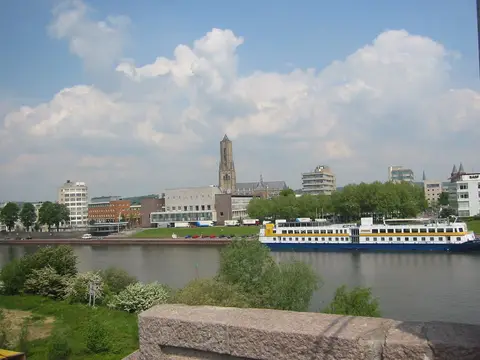
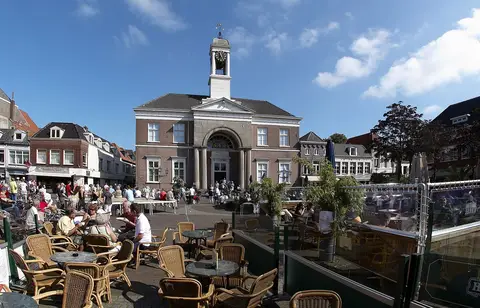
Arnhem, the capital on the Lower Rhine, is a green city with parks such as Sonsbeek and the Netherlands Open Air Museum (Nederlands Openluchtmuseum), which shows farmhouses, mills, and workshops from all parts of the country. The name is known internationally for the 1944 battle, when Allied airborne troops tried to capture the bridge over the Rhine; the John Frost Bridge and the war cemetery in Oosterbeek commemorate it. Nijmegen is considered the oldest city in the Netherlands, founded by the Romans, and celebrated its 2,000th anniversary in 2005. The Waalkade, the Valkhof, and a lively student scene shape the city; in July tens of thousands come for the Four Days Marches, the largest walking event in the world. Apeldoorn is the gateway to the Veluwe and is home to Het Loo Palace, the former hunting lodge of the House of Orange, with its baroque gardens. Ede, Harderwijk, Doetinchem, Zutphen, and Wageningen, home to a renowned agricultural university, round out the list.
Sights in Gelderland
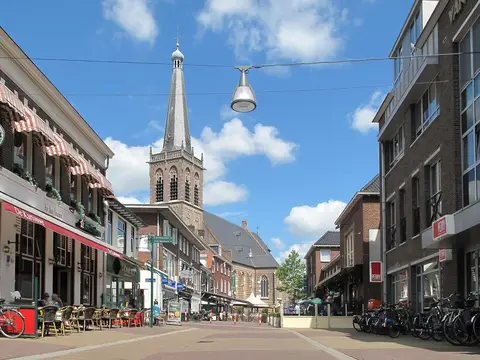
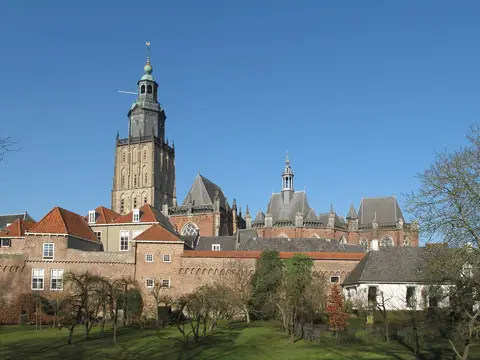
In De Hoge Veluwe National Park between Arnhem, Ede, and Apeldoorn, you can pick up white bicycles free of charge at the entrances and ride through heath and forest. In the middle of the park stands the Kröller-Müller Museum, which holds the world's second-largest Van Gogh collection after the Van Gogh Museum in Amsterdam, as well as one of the largest sculpture gardens in Europe. Zutphen, one of the Hanseatic towns on the IJssel, preserves a medieval chained library in the Walburgiskerk. Harderwijk, also a Hanseatic town, has a lovely old town on the water and a dolphinarium. Castles such as Kasteel Doorwerth and Huis Bergh in 's-Heerenberg bear witness to the era of the Dukes of Guelders.
Culture and History
In the Middle Ages the Duchy of Guelders was an independent territory that included parts of present-day Germany around the town of Geldern as well as what is now northern Limburg. After long struggles with the Habsburgs, it joined the Union of Utrecht in 1579. The Hanseatic towns on the IJssel (Deventer is already in Overijssel, but Zutphen, Hattem, Elburg, and Harderwijk are in Gelderland) flourished in the late Middle Ages. In World War II, Arnhem and Nijmegen suffered heavily; the National Liberation Museum in Groesbeek tells the story of the liberation.
Food and Drink
The Betuwe is the source of apples, pears, cherries, and juices as well as jams, such as those from the well-known cannery in Tiel. In the autumn, game from the forests of the Veluwe appears on menus. The Achterhoek is known for its breweries, including Grolsch, which is now brewed in Enschede but originated in Groenlo. Winegrowing is increasingly common on the slopes near Nijmegen and in the Veluwe.
Getting There and Best Time to Visit
You can reach Arnhem directly by ICE train from Frankfurt or Cologne; from Emmerich it is only a short hop. Gelderland has no airport of its own; Düsseldorf, Eindhoven, and Schiphol are within reach. The best time to visit the Veluwe is late summer, when the heather blooms, and autumn, during the rutting season; for the Betuwe, April, when the fruit trees are in blossom. On weekends the trails of the Hoge Veluwe are busy, but on weekdays you often have the heath and forest almost to yourself. In the Achterhoek, a summer bike tour from castle to castle is well worth it, for example around Vorden, where several country estates line up in close succession.