Discover Croatia: The Adriatic, Islands, and Old Towns
Travel guide · editorialFor most people, a vacation in Croatia means the Adriatic: more than a thousand islands, pebble coves with clear water, and old towns dating back to Roman and Venetian times. But the interior, with Plitvice Lakes, the hills of Istria, and the capital, Zagreb, is also worth a detour.
Istria and the Kvarner Bay
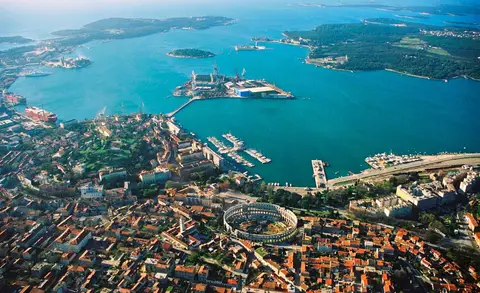
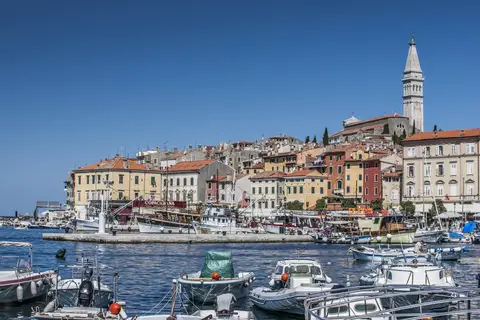
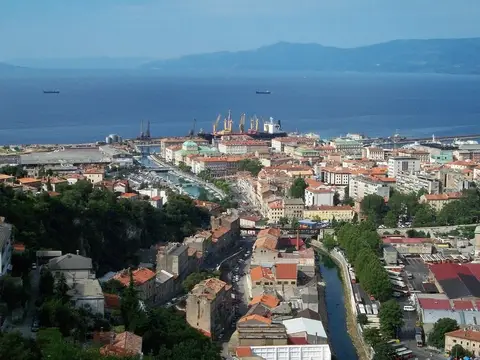
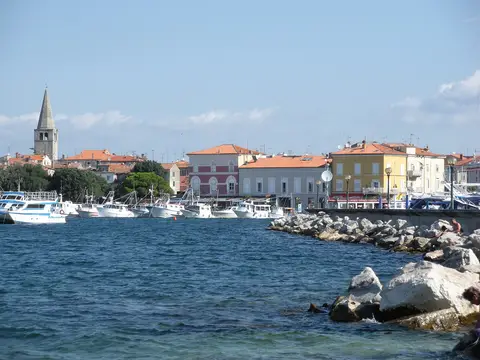
Istria, the heart-shaped peninsula in the north, is the part of Croatia closest to Italy, and you can tell from the place names, the food, and the language. Rovinj climbs a hill in a jumble of colorful houses, topped by the Church of St. Euphemia. In Poreč, the Euphrasian Basilica, with its 6th-century Byzantine gold mosaics, is a UNESCO World Heritage Site. Pula has one of the best-preserved Roman amphitheaters, which hosts concerts and film festivals in summer. Inland you'll find hill towns such as Motovun and Grožnjan, surrounded by vineyards and oak forests where white truffles are hunted in the fall. Farther east, the Kvarner Bay opens up, with the port city of Rijeka, the old spa town of Opatija, and the islands of Krk, Cres, and Lošinj.
Dalmatia: Zadar, Split, Makarska
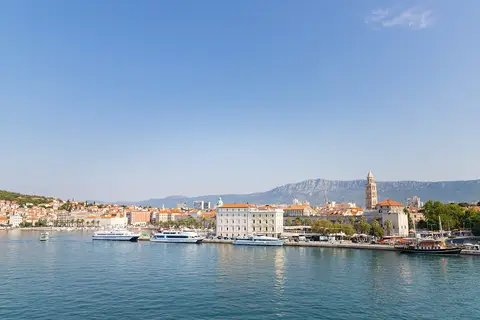
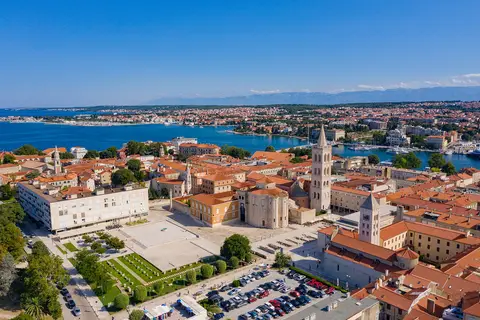
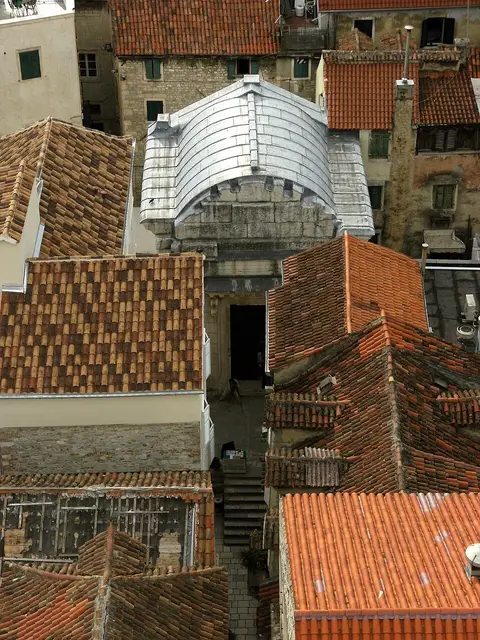
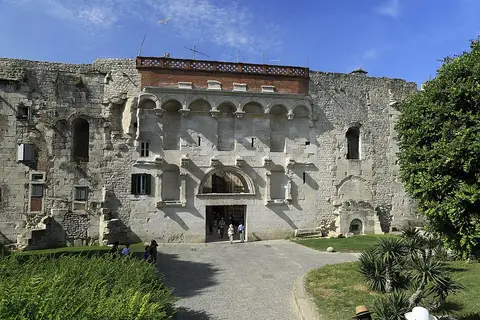
Zadar is a city on a peninsula with a Roman forum and the round Church of St. Donatus. Along the waterfront promenade, the Sea Organ plays: waves push air through pipes beneath the steps and produce tones. Next to it, the Greeting to the Sun light installation glows after sunset. Split is built around the palace that the Roman emperor Diocletian had constructed around A.D. 300 as his retirement residence. Within its walls you'll now find homes, bars, and shops; the peristyle serves as a square, and the cathedral was originally the emperor's mausoleum. South of Split stretches the Makarska Riviera, with long pebble beaches beneath the Biokovo mountains, which rise steeply to over 1,700 meters; a panoramic road takes you up to a glass skywalk high above the sea.
Dubrovnik and the Islands
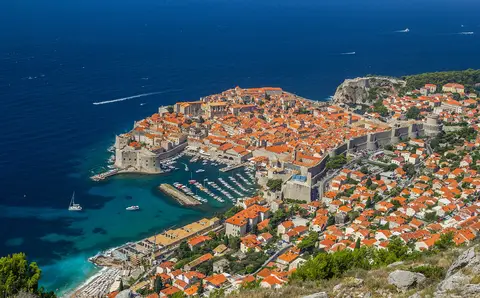
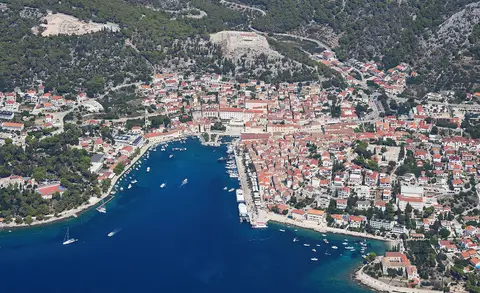
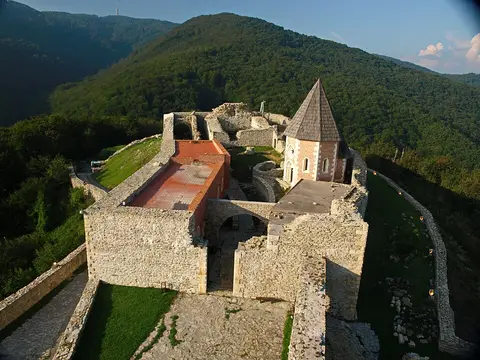
Dubrovnik, the old Republic of Ragusa, was an independent city-state with its own fleet and diplomacy for centuries. A wall of nearly two kilometers encircles the old town, and you can walk the entire circuit on top of it. On the Stradun, the gleaming, polished limestone main street, it is often crowded during the day; early in the morning and in the evening the city belongs more to its residents. Dubrovnik was besieged and shelled during the war in 1991 and 1992; the damage has been repaired, and an exhibition in the fort on Srđ, the hill above the city, commemorates it. The islands are among Croatia's most beautiful destinations: Hvar, with lavender fields, nightlife, and the ancient plain of Stari Grad; Brač, with the Zlatni Rat beach, which changes shape depending on the wind; Korčula, with an old town laid out like a fishbone; and green Mljet with its national park. Vis, long a restricted military zone, is still quieter than the other islands.
Sights in Croatia's Interior
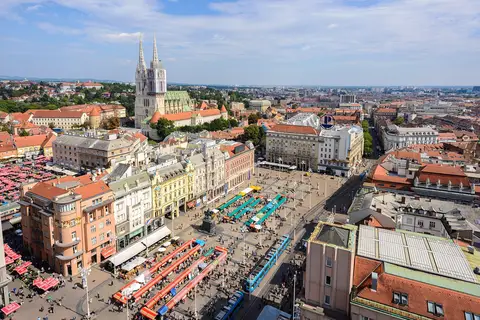
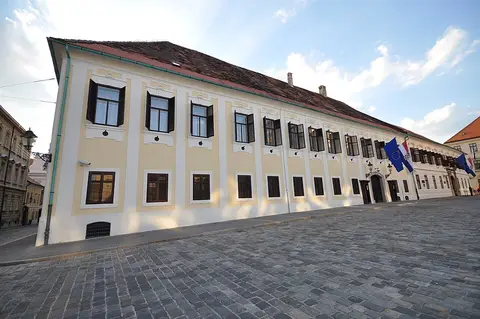
Plitvice Lakes National Park is the country's best-known natural attraction: 16 terraced lakes connected by waterfalls, with wooden walkways leading across them. Parts of the Winnetou films were shot here. In Krka National Park near Šibenik, the river plunges over travertine steps. Zagreb, the capital, has an Upper Town with St. Mark's Church, whose tiled roof shows the coats of arms of Croatia and Zagreb, and a Lower Town from the Austro-Hungarian era with parks and museums. The Dolac market under its red umbrellas is the belly of the city, and the Museum of Broken Relationships collects objects left over from couples who have split up. In the east, in Slavonia, Vukovar is a place of remembrance of the war of the 1990s, which had particularly severe consequences here.
Eating and Drinking on the Adriatic
Fish dominates along the coast: grilled sea bream or sea bass with Swiss chard and potatoes, black risotto made with cuttlefish ink, mussels in white wine. Oysters are farmed in Ston on the Pelješac peninsula. Pašticada, beef braised in wine and prunes and served with gnocchi, is Dalmatia's festive dish. For peka, lamb, veal, or octopus is cooked with vegetables under an iron bell covered with embers; at a konoba you usually have to order it in advance. On the island of Pag you'll find a spicy sheep's cheese, and in Istria pršut, air-dried ham, and pasta with truffles. On the wine list you'll find Malvazija from Istria, Pošip from Korčula, and the robust red Plavac Mali.
Getting There and Getting Around in Croatia
Croatia has been in the Schengen Area since 2023 and uses the euro. The main airports are Zagreb (ZAG), Split (SPU), Dubrovnik (DBV), Zadar (ZAD), Pula (PUY), and Rijeka (RJK), with many direct flights from Germany in summer. Many travelers drive in via Slovenia; the A1 motorway from Zagreb to Split and on toward Dubrovnik is a toll road. Since 2022, the Pelješac Bridge has connected southern Dalmatia with the rest of the country, so you no longer have to drive through the Bosnian coastal town of Neum. Car ferries and catamarans run to the islands, operated by Jadrolinija and private companies; in summer, book car ferries early. Trains play almost no role along the coast, while buses are well developed.
Best Time to Visit Croatia
The best time to visit Croatia is between May and October. In July and August, coastal temperatures climb to 86°F and above, the sea reaches 75 to 79°F, and prices and crowds are at their highest. For many people, June and September are the ideal months: the water is warm and the beaches are emptier. May and October are well suited to city visits, hiking, and Plitvice Lakes. In winter the coast is mild, but many accommodations close; in Advent, Zagreb draws visitors with one of Europe's best-known Christmas markets.