
Zadar County: Sea Organ, Pag, and Velebit
Travel guide · editorialA vacation in Zadar County takes you to a city where the sea makes music, to islands with salt meadows and sheep's cheese, and into the gorges of the Velebit mountains. North Dalmatia is a little quieter than the Riviera around Split, yet it has three national parks within reach and some of the most beautiful sunsets on the Adriatic.
Landscape and Location
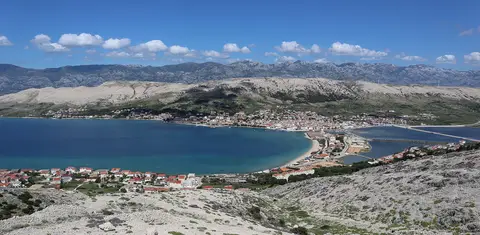
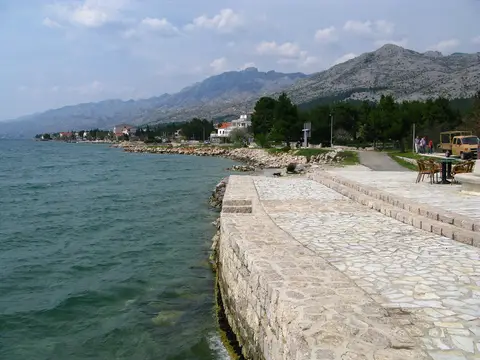
The county stretches from the island of Pag in the north to Lake Vrana (Vransko jezero) in the south. Behind the coast rises the Velebit, Croatia's longest mountain range, home to Paklenica National Park near Starigrad. Off Zadar lies an archipelago made up of Ugljan, Pašman, Dugi otok, and hundreds of smaller islands. The island of Vir is connected to the mainland by a bridge, as is Pag. In the hinterland, Ravni kotari, grapes, olives, and cherries grow.
Sights in Zadar County
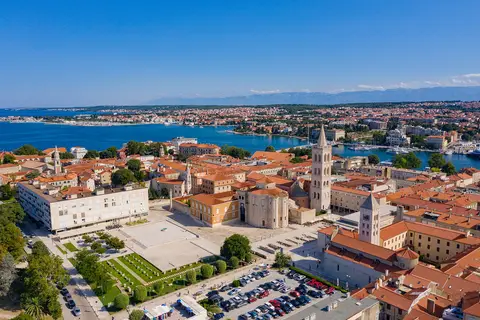
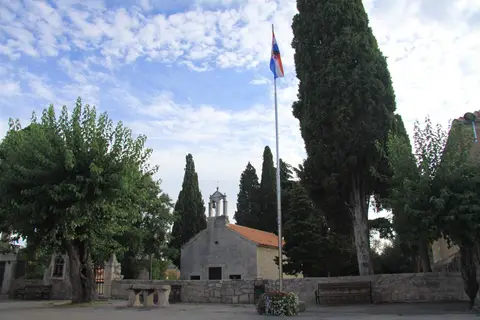
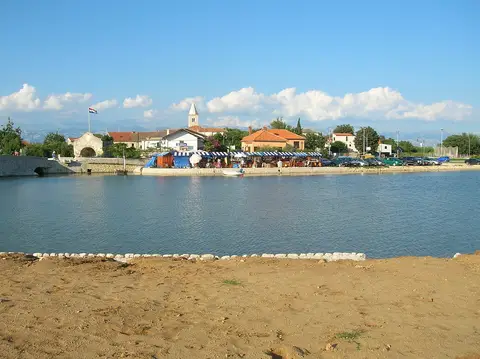
Zadar sits on a peninsula with nearly 3,000 years of history. Among the ruins of the Roman forum stands the round Church of St. Donatus from the 9th century, the symbol of the city. On the waterfront, architect Nikola Bašić's Sea Organ uses waves to produce tones in pipes beneath marble steps, and next to it the "Greeting to the Sun," a glass surface with solar cells, glows at night. The Venetian city walls are part of a UNESCO World Heritage site. Pag has a moonscape of bare rock, the town of Pag with its lace-making and salt pans, and beaches such as Zrće near Novalja, though these belong to the neighboring county. In Paklenica National Park, hiking trails lead through two gorges, and climbers prize the limestone walls. North of Zadar lies Nin, one of the oldest towns in Croatia, with the tiny Church of the Holy Cross from the 9th century, salt pans, and a shallow lagoon where you can also bathe in healing mud.
Coastal Towns and Islands
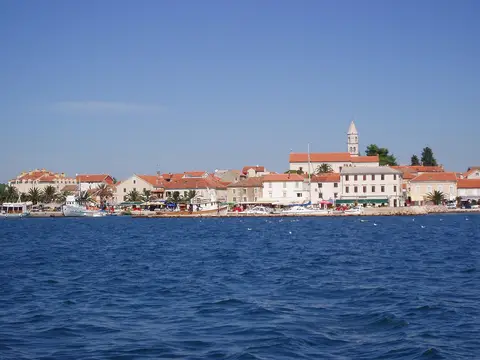
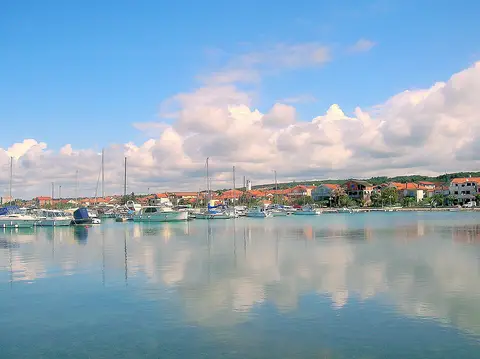
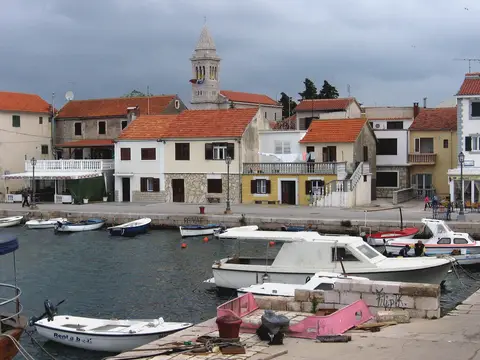
Biograd na Moru was a coronation city of Croatian kings and is now a sailing hub. From here, excursion boats head to Kornati National Park with more than 140 barren islands and to Telašćica Nature Park on Dugi otok with its salt lake and cliffs. Pakoštane lies on Lake Vrana, Croatia's largest natural lake and a bird paradise. Sukošan and Bibinje are beach resorts south of Zadar, and Vir is a vacation-home island with shallow beaches. Starigrad is the starting point for Paklenica.
Food and Drink
Paški sir, the hard sheep's cheese from Pag, owes its aroma to the salty herbs the sheep graze on. Pag lamb is grilled on a spit. Zadar is the home of maraschino, a liqueur made from sour cherries that was once enjoyed at European courts. The konobas (taverns) serve fish, shellfish, and dishes cooked under the peka. Wines such as Maraština and olive oil from Poličnik come from Ravni kotari.
Getting There and Best Time to Visit
Zadar Airport is served by many low-cost airlines in summer. The A1 motorway connects Zadar with Zagreb and Split. Ferries run from Zadar to the islands, and buses go to Plitvice Lakes and Krka national parks. The best times to visit are May, June, September, and October. In high summer the beaches are crowded, and hikes in the Velebit are strenuous because of the heat.