Split-Dalmatia: Imperial Palace, Islands, and Riviera
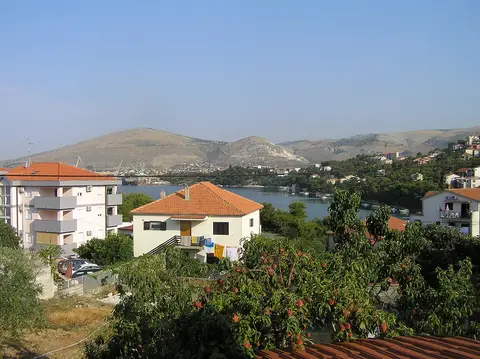
Travel guide · editorialA vacation in Split-Dalmatia County combines Roman history set in the middle of everyday life in a lively port city with islands, pebble beaches, and a steep coastal mountain range. Hardly any other stretch of the Adriatic offers so much in such a small area: from Split's Imperial Palace and the medieval lanes of Trogir to the lavender fields of Hvar. It is the most populous region on the Croatian coast.
Landscape Between Biokovo and the Islands
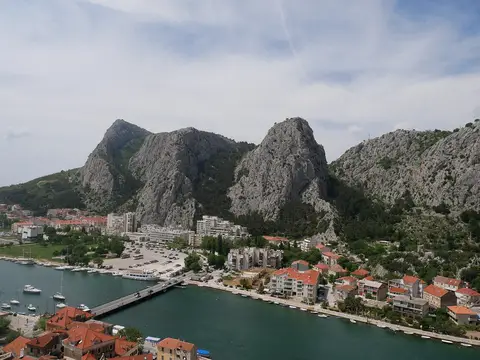
Split-Dalmatia stretches from the hinterland on the border with Bosnia and Herzegovina to the outermost islands of the Adriatic. Behind the coast rises the limestone Biokovo range, whose peak, Sveti Jure, tops 1,700 meters and towers steeply above the Makarska Riviera. Offshore lie the large islands of Brač, Hvar, Šolta, and Vis, and farther out, Biševo with its Blue Cave. In the hinterland, the Dalmatinska Zagora, the Cetina River flows through karst fields and a gorge before reaching the sea at Omiš (also known in German as Almissa). The climate is Mediterranean, with hot, dry summers and mild winters, when the bora wind blows down from the mountains.
Split and Trogir
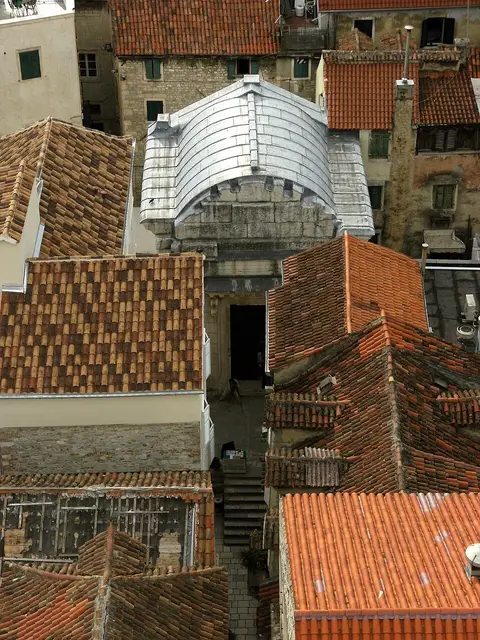
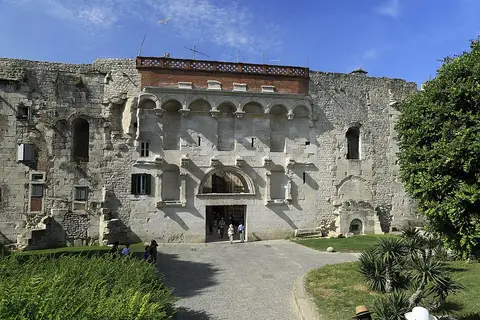
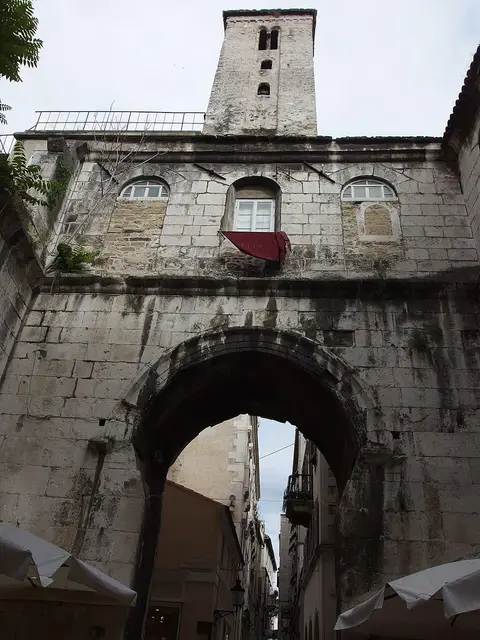
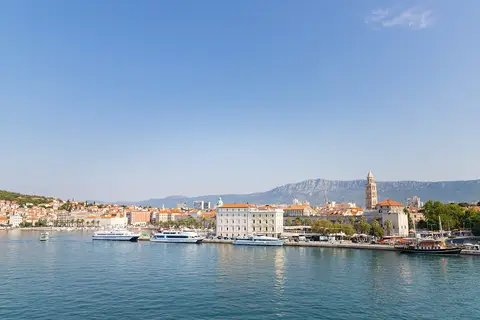
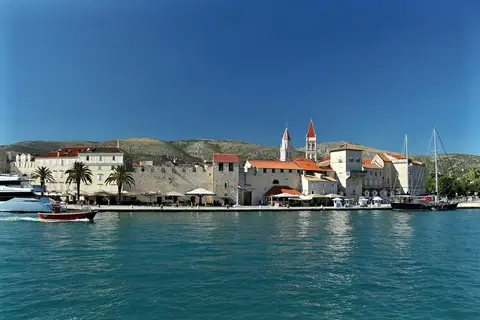
Around 300 AD, Emperor Diocletian had a vast retirement residence built on the bay. The city of Split later grew up within the walls of this palace, and to this day people live among Roman columns. The Peristyle with the emperor's mausoleum, now the Cathedral of St. Domnius, is the heart of the Old Town, which has been a UNESCO World Heritage Site since 1979. In the vaulted cellars beneath the palace, vendors sell souvenirs, and on the Riva promenade you can have a coffee under palm trees. The wooded Marjan hill offers hiking trails and swimming coves right next to the city. Trogir lies on a small island west of Split and preserves a Romanesque-Gothic old town, including Master Radovan's portal on the cathedral. Between the two cities you'll find the seven castles of Kaštela and beach resorts such as Okrug Gornji on the island of Čiovo.
Islands: Hvar, Brač, and Vis
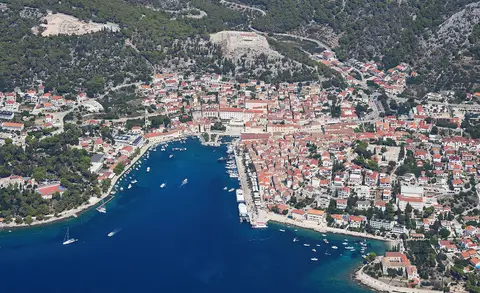
Hvar is considered Croatia's sunniest island. Hvar Town has a fortress above the harbor, a theater dating from 1612 that ranks among the oldest public theaters in Europe, and a lively nightlife. Stari Grad, with its ancient Greek agricultural plain, is a World Heritage Site, while Jelsa and Vrboska are quieter. On Brač you'll find the famous Zlatni Rat near Bol, a pebble spit that changes shape depending on the wind. Diocletian's Palace, and reputedly parts of the White House, were built from the island's white limestone. Vis was a restricted military zone until 1989 and has kept a pristine calm as a result; Stiniva Cove is considered one of the most beautiful beaches in the Mediterranean.
Sights on the Mainland of Split-Dalmatia
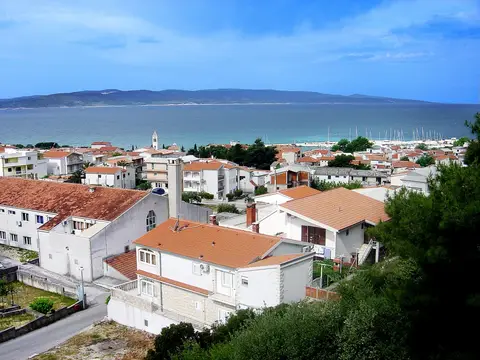
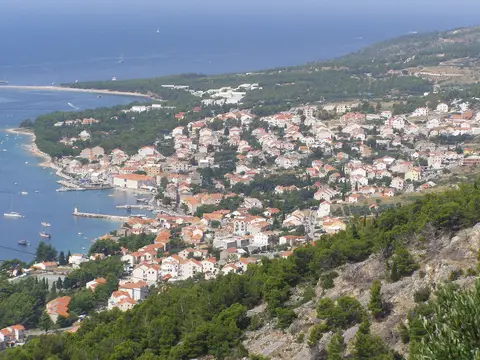
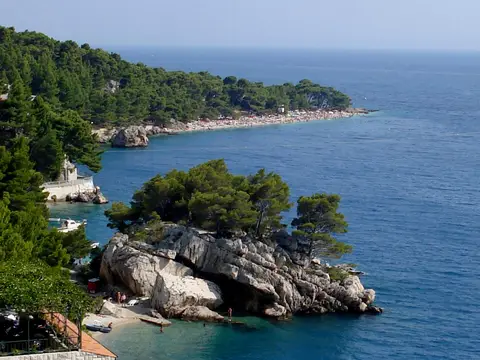
The Makarska Riviera runs for about 60 kilometers below Biokovo, with towns such as Makarska, Baška Voda, and Tučepi and light pebble beaches beneath pine trees. A panoramic road leads up Biokovo, where a glass skywalk hangs over the abyss. In the Middle Ages, Omiš was a pirate stronghold; today the Cetina Gorge is a destination for rafting and ziplining. Near Solin lie the ruins of Salona, once the most important Roman city in Dalmatia. In Sinj, the Sinjska Alka takes place every August, a knights' tournament commemorating the victory over the Ottomans in 1715 and part of UNESCO's intangible cultural heritage.
Eating and Drinking
Dalmatian cuisine is simple and relies on olive oil, fish, and vegetables. Pašticada, beef braised in wine and prunes and served with gnocchi, is the festive dish. Fish is often simply grilled, "na gradele," or stewed as brodetto. Dishes "ispod peke," cooked under a bell-shaped lid in the embers, come with lamb or octopus. Vis is known for viška pogača, a bread filled with anchovies, and Hvar for lavender and wines made from the Plavac Mali grape, as well as the white wines Pošip and Vugava. In the hinterland, people eat Sinjski arambašići, small cabbage rolls.
Getting There and Best Time to Visit
Split Airport lies between Kaštela and Trogir and is served in summer by flights from numerous German-speaking cities. The A1 motorway connects the region with Zagreb. From the port of Split, ferries and catamarans run to Brač, Hvar, Vis, and onward to Ancona in Italy. The best times to visit are May and June as well as September and early October, when the sea is warm and the beaches are less crowded. July and August are peak season, with high prices and full ferries.