Osijek-Baranja: Slavonia's Capital and Kopački Rit
Travel guide · editorialA trip to Osijek-Baranja reveals a Croatia far from the Adriatic: wide fields, vineyards on gentle hills, one of Europe's largest floodplain areas, and a Baroque fortress town on the Drava. The county in the east of the country is considered Croatia's breadbasket and is famous for its hearty cuisine featuring paprika and sausage.
Landscape and Location
The county lies between the Drava and the Danube, on the border with Hungary and Serbia. Baranja in the north is flat, with the exception of Bansko Brdo, a low range of hills dotted with wine cellars. At the confluence of the Drava and the Danube lies Kopački Rit Nature Park, a floodplain of lakes, reeds, and riparian forests that is home to white-tailed eagles, herons, black storks, and deer. To the south, the area extends to the episcopal seat of Đakovo and the hills around Našice.
Sights in Osijek-Baranja
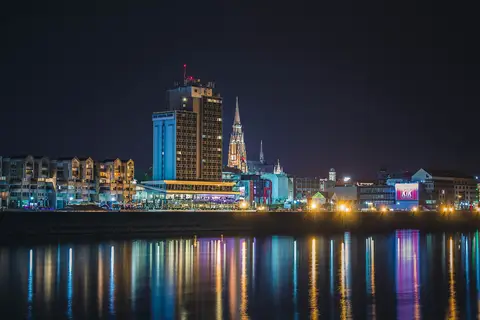
Osijek, Croatia's fourth-largest city, has its core in the Tvrđa, a Baroque fortress town built by the Habsburgs in the 18th century after the Ottomans withdrew. Today students, cafés, and museums bring its squares to life. The Co-Cathedral of St. Peter and St. Paul, with its tower rising more than 90 meters, is one of the tallest buildings in the country, and the riverside promenade along the Drava invites leisurely strolls; a pedestrian bridge leads to beaches on the opposite bank. Đakovo is dominated by its neo-Gothic cathedral of red brick and is home to a stud farm for Lipizzaner horses. In Baranja, a boat trip through Kopački Rit is well worth your time, as is a visit to the wine villages of Zmajevac and Suza, with cellars dug into the loess.
Food, Getting There, and Best Time to Visit
Slavonian cuisine is robust: kulen, a spicy paprika sausage; fiš paprikaš, a stew made with river fish; and čobanac, a goulash made with several kinds of meat. Graševina and Traminer come from Baranja and are served in family-run cellars. The small Osijek airport has seasonal connections, and highways and trains lead to Zagreb. The best times to visit are spring and fall, when birds stop over in Kopački Rit and the grape harvest is celebrated.