Dubrovnik-Neretva: City Walls, Korčula and the Delta
Travel guide · editorialA vacation in Dubrovnik-Neretva County takes you to the southernmost corner of Croatia: to Dubrovnik with its fully preserved city walls, to the island of Korčula and to the Pelješac Peninsula with its vineyards and oyster beds. The region is narrow, in places only a few kilometers wide, and extends all the way to the border with Montenegro.
Landscape and Location
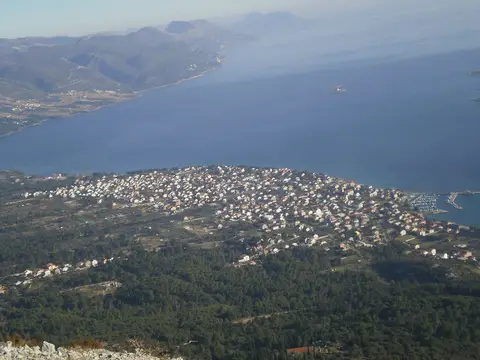
The county stretches along the coast from the mouth of the Neretva River to the Prevlaka peninsula. In the north, the Neretva Delta forms a fertile plain with tangerine groves and canals. The Pelješac Peninsula juts far out into the sea; since 2022, the Pelješac Bridge has connected the south with the rest of Croatia without having to cross the Bosnian corridor near Neum. Off the coast lie Korčula, Mljet, Lastovo and the Elaphiti Islands.
Sights in Dubrovnik-Neretva
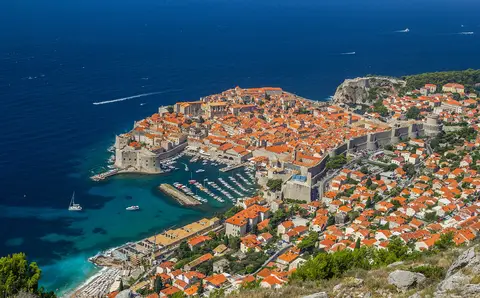
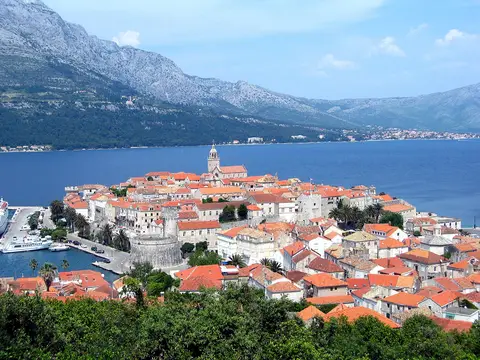
As the Republic of Ragusa, Dubrovnik was an independent city-state for centuries, surviving through diplomacy and trade. The city walls, roughly two kilometers long, enclose the Old Town with its main street, the Stradun, the Rector's Palace, the Franciscan monastery with one of the oldest pharmacies in Europe, and Lovrijenac Fortress. The Old Town is a World Heritage Site and served as a backdrop for "Game of Thrones." A cable car runs up Mount Srđ. Korčula, which claims to be the birthplace of Marco Polo, has an Old Town with herringbone-patterned streets and the Moreška sword dance. Mljet National Park encompasses saltwater lakes with a monastery on an island. In Ston you'll find the longest fortification walls in Europe.
Coastal Towns
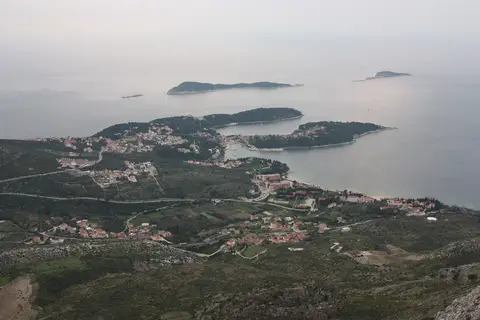
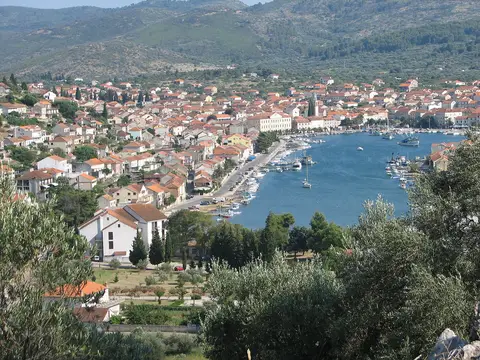
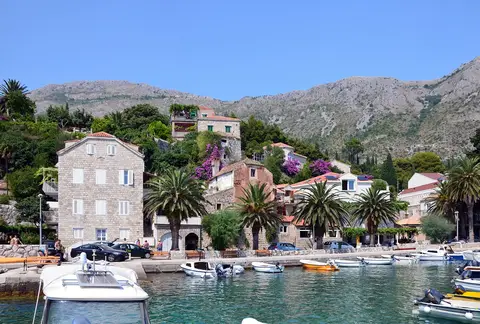
Cavtat, south of Dubrovnik, is a quieter little harbor town with a promenade, while Mlini and Zaton lie in green bays. Orebić on Pelješac was home to sea captains whose villas line the coast; Korčula lies directly across the water. Lumbarda is known for its sandy beaches and the white wine Grk, Vela Luka on the island's western end for a prehistoric cave. The Elaphiti Islands of Koločep, Lopud and Šipan are largely car-free and reachable by ferry from Dubrovnik; Lopud has Šunj, one of the region's rare sandy beaches. In the Neretva Delta around Metković and Opuzen, visitors glide through reed-lined canals in traditional flat-bottomed boats and visit tangerine groves, whose fruit is harvested in the fall. Lastovo, the most remote island, is a nature park with clear bays and quiet villages.
Food and Drink
Ston is famous for oysters and mussels from the Mali Ston Channel. Pelješac produces the red wine Dingač from Plavac Mali grapes, Korčula the white wine Pošip. In the Neretva Valley, people eat brudet made with eel and frogs; in Dubrovnik, sweet rozata, a caramel custard. Šporki makaruli are pasta with a meat sauce from Dubrovnik.
Getting There and Best Time to Visit
Dubrovnik Airport is located near Čilipi and is served from many European cities. Ferries and catamarans connect Dubrovnik with the islands and Split. The best times to visit are May, June, September and October. In midsummer the Old Town gets very crowded with cruise ship tourists; early morning or evening is more pleasant. The Summer Festival takes place in July and August. If you're driving from the north, you can take the Pelješac Bridge and no longer need to cross the Bosnian stretch near Neum; the A1 motorway currently ends at Ploče. Excursions to Kotor in Montenegro or Mostar in Bosnia and Herzegovina are possible as day trips from Dubrovnik.