
Primorje-Gorski Kotar: Rijeka, Kvarner and Gorski Kotar
Travel guide · editorialA vacation in Primorje-Gorski Kotar County (Croatian: Primorje-Gorski kotar) offers two worlds: the islands and Riviera resorts of the Kvarner Bay and, behind them, a densely forested highland home to bears and lynx. Here you'll find the Habsburg-era spa town of Opatija, the island of Krk and Lošinj, the island of dolphins. The port city of Rijeka is the hub.
Landscape and Location
The county encompasses the Kvarner Bay between Istria and the Velebit range. To the north lies Gorski kotar, a low mountain region with fir and beech forests, lakes, and Risnjak National Park. Off the coast lie the islands of Krk, Cres, Lošinj, and Rab. The Učka mountains shelter the Opatija Riviera from cold winds, which is why laurel and camellias thrive here. In Gorski kotar, towns such as Delnice, Fužine, and Lokve sit beside reservoirs and forests; hiking trails lead through the Vražji prolaz gorge and to the Lokvarka cave. Snow falls here in winter, and even in high summer the air stays cool. From the coast, in less than an hour you go from the Mediterranean to a landscape that is more reminiscent of the Alps.
Sights in Primorje-Gorski Kotar
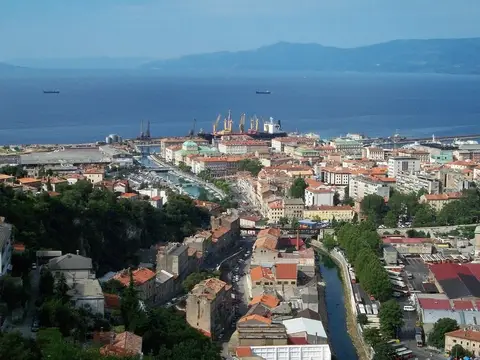
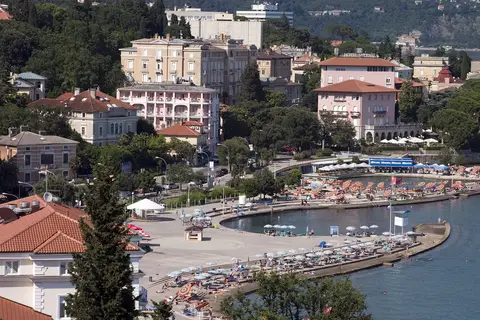
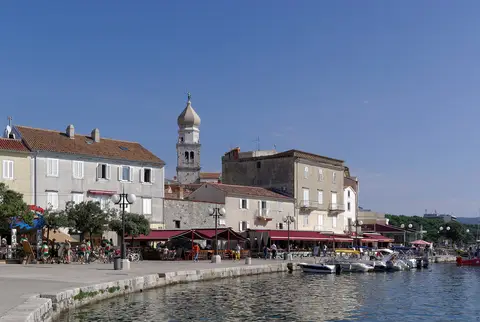
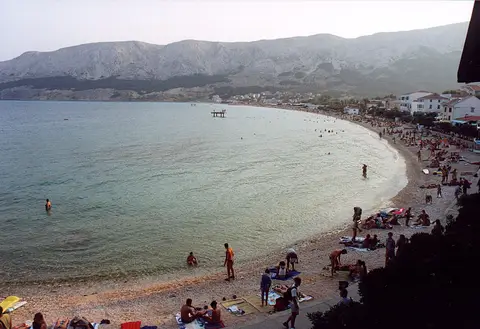
In the 19th century, Opatija became the winter resort of the Austrian nobility. Villas, parks, and the Lungomare seaside promenade, which runs twelve kilometers to Lovran, are reminders of that era. Rijeka, European Capital of Culture in 2020, has a large port, a city tower with a clock, and Trsat Castle with its pilgrimage church above the city; its carnival in February is the largest in Croatia. Krk, connected to the mainland by a bridge, offers the old town of Krk, the cliff-top village of Vrbnik, and the sandy beach at Baška, where the Baška Tablet was found, one of the oldest records of the Glagolitic script. On Lošinj, an ancient bronze statue, the Apoxyomenos, was recovered from the sea near Mali Lošinj; a dedicated museum displays it.
Coastal Towns and Islands
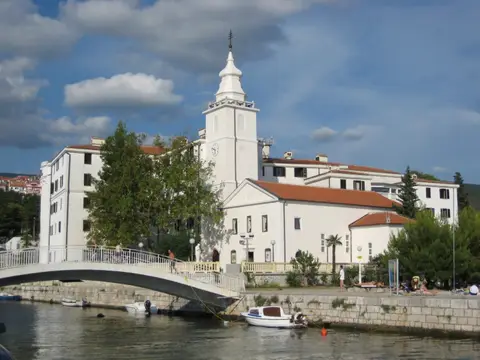
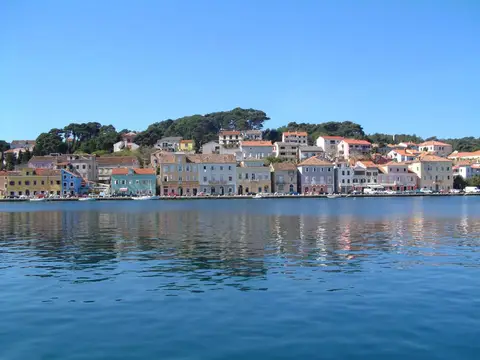
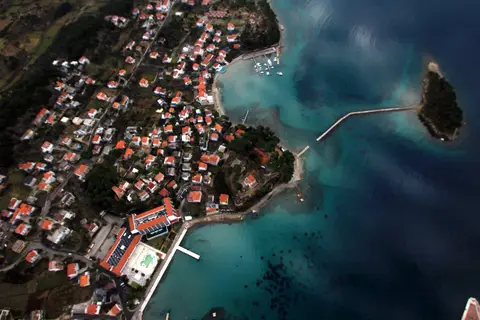
Crikvenica and Novi Vinodolski are family beach resorts with shallow beaches south of Rijeka. Cres is rugged and sparsely populated, and griffon vultures nest in its cliffs. Mali Lošinj is surrounded by pine forests; the waters are home to a group of bottlenose dolphins that is the subject of ongoing research. Banjol on Rab lies near the old town with its four bell towers, and Rab is known for sandy beaches such as Rajska plaža.
Food and Drink
Kvarner scampi are considered the finest in the Adriatic and are eaten raw, grilled, or as buzara in white wine and garlic. Žlahtina is the white wine from Vrbnik on Krk, and šurlice are the island's pasta, often served with goulash. In Gorski kotar, you'll find game, mushrooms, and blueberries. Lamb from Cres is known for its aromatic meat. In Opatija, restaurants combine these ingredients into refined cuisine, and the chestnuts of Lovran are celebrated with a festival of their own in October.
Getting There and Best Time to Visit
Rijeka Airport is located on the island of Krk; Pula and Zagreb are also nearby. Highways connect Rijeka with Zagreb and Slovenia. Ferries and catamarans serve Cres, Lošinj, and Rab. May, June, and September are considered the best times to visit; thanks to its mild climate, Opatija is also well suited to spring and fall.