Šibenik-Knin: Krka Waterfalls and the Kornati Islands
Travel guide · editorialA vacation in Šibenik-Knin County combines one of Dalmatia's most beautiful old towns with the waterfalls of the Krka and an archipelago that ranks among the most impressive on the Adriatic. Located between Zadar and Split, the region is somewhat less crowded than its neighbors. Inland lies Knin, a fortress town deeply rooted in Croatian history.
Landscape and Location
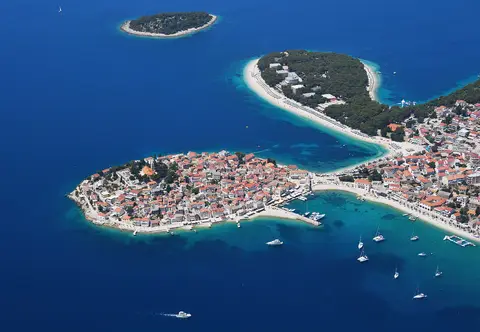
The county stretches from the coast between Pirovac and Rogoznica to the karst hinterland on the border with Bosnia and Herzegovina. The Krka River rises near Knin, flows through a deep gorge, and empties into the sea via a fjord-like bay near Šibenik. Offshore you'll find Murter, Prvić, Zlarin, and the Kornati Islands, most of which belong to the county. The landscape is shaped by maquis scrub, olive groves, terraced vineyards, and dry-stone walls; near Primošten these walls are so dense that the vineyards look like a net from above.
Sights in Šibenik-Knin
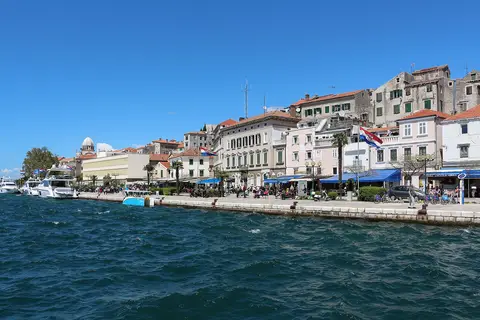
Šibenik was founded not by Romans or Greeks but by Croats, making it one of the oldest Croatian towns on the coast. The Cathedral of St. James, built entirely of stone without bricks or timber, is a UNESCO World Heritage Site; on its outer wall, 71 stone heads gaze down at passersby. St. Nicholas Fortress at the entrance to the channel is also part of the World Heritage listing for Venetian defensive works. Above the old town loom the fortresses of St. Michael, whose stage hosts concerts in summer, and Barone. In Krka National Park, the river tumbles over travertine steps, the best known of which is Skradinski Buk; wooden walkways lead through the park, and the Franciscan monastery of Visovac sits on an island in the lake. Kornati National Park is a barren archipelago of limestone, which you visit by boat from Murter, Vodice, or Šibenik.
Coastal Towns and Islands
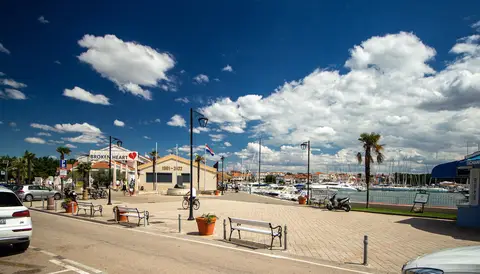
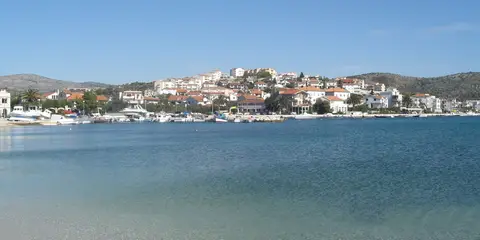
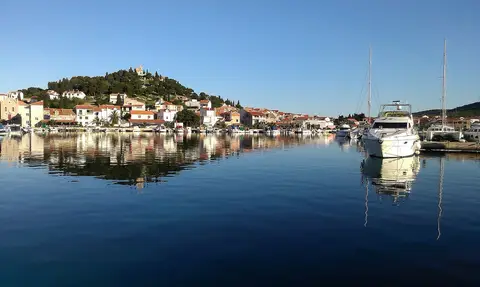
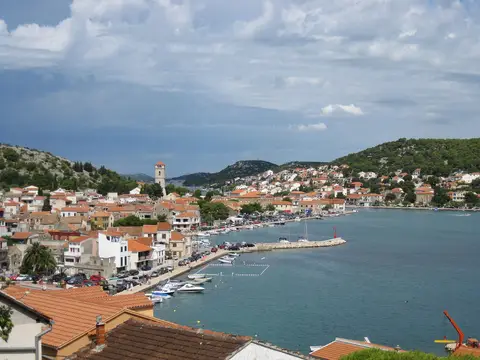
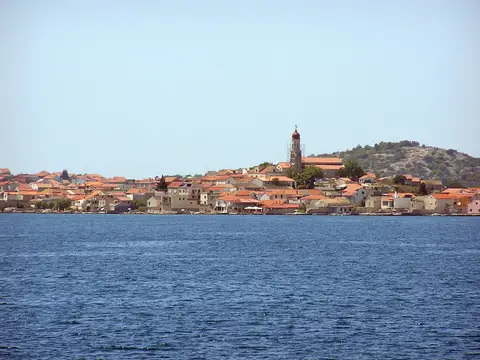
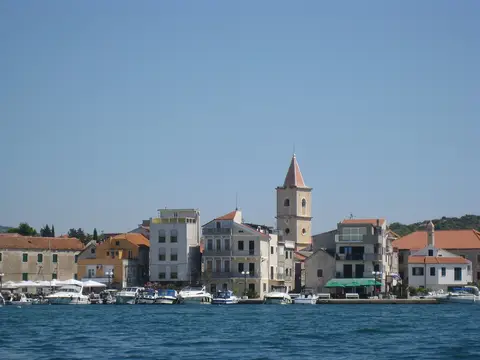
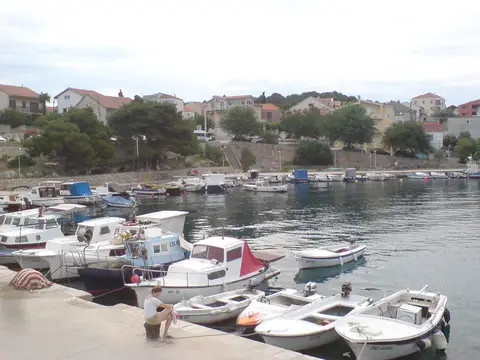
Vodice is the liveliest beach resort, with a promenade and nightlife, while Tribunj is a small fishing village on an island connected to the mainland by a bridge. Primošten sits on a peninsula with a church at its summit, and Rogoznica is known for its marina and the Dragon's Eye Lake, a saltwater karst lake. On Murter you'll find the towns of Murter; Betina, with a tradition of wooden boatbuilding; and Tisno, which is linked to the mainland by a small swing bridge and hosts music festivals in summer. Zlarin was once a center of coral fishing and is now car-free.
Food and Drink
Typical of the area is konoba cooking, with grilled fish, mussels from the Krka estuary, and lamb cooked under the peka. The Babić red grape from the terraces around Primošten yields robust wines, and in the hinterland, Drniš prosciutto is air-dried. Skradin is known for its Skradinski rižot, a risotto with veal and beef that is cooked for hours.
Getting There and Best Time to Visit
The A1 motorway passes close to Šibenik, and the airports at Split and Zadar are each about an hour away. Ferries connect Šibenik with the islands. The best times to visit are May, June, September, and October; in spring, the Krka waterfalls carry the most water. Since 2021, swimming at Skradinski Buk is no longer permitted.